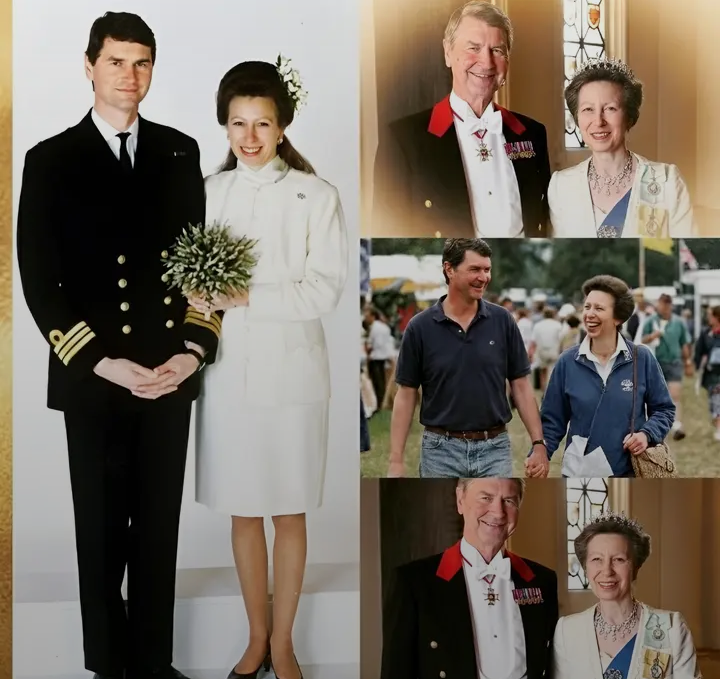
In a family known for crowns, carriages, and centuries of ceremony, Princess Anne did something radical. She stepped away from the spectacle.
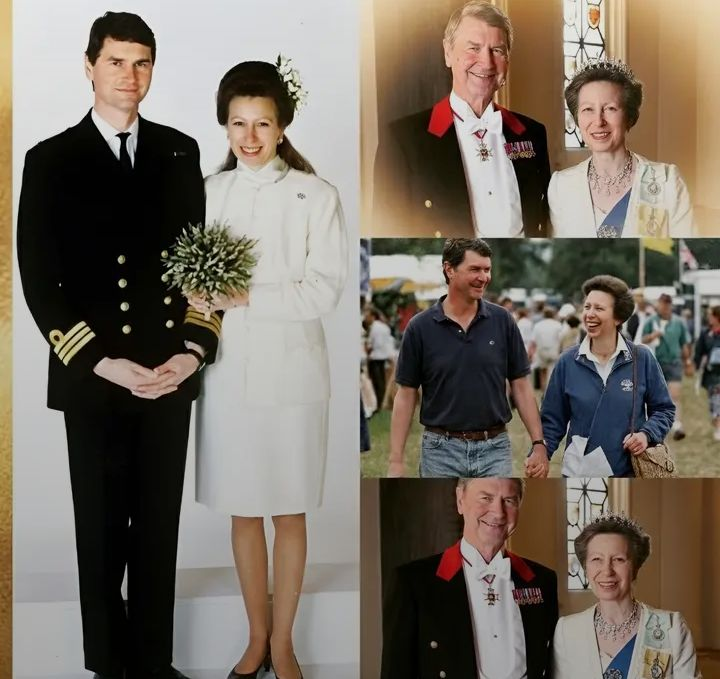
Thirty-three years ago, when Britain — and much of the world — expected another royal wedding wrapped in velvet ropes and public celebration, Anne chose something almost unheard of. No tiara. No balcony moment. No fairytale pageantry designed for cameras and history books. Instead, she chose privacy, restraint, and a love that asked for no applause.
At the time, it stunned Britain.
Today, it resonates deeply with America.
Because for many Americans — especially those in midlife and beyond — Princess Anne’s wedding wasn’t just unconventional. It felt
recognizable. It felt honest. It felt like the kind of choice people make when they understand that lasting love doesn’t need performance.
To understand why Anne’s wedding mattered, you have to understand who she is.
Princess Anne has never been a royal who chased affection or approval. She is famously direct, famously hardworking, and famously uninterested in being admired for appearances alone. While others leaned into symbolism, Anne leaned into service. While others embraced spectacle, she quietly accumulated one of the heaviest workloads in the royal family.
Her second marriage, to Sir Timothy Laurence in 1992, reflected that same ethos.
It was not a reinvention.
It was a declaration of self.
At a time when the monarchy was under intense pressure — divorces, scandals, shifting public trust — Anne did not attempt to distract or dazzle. She did the opposite. She stripped the moment down to its core. Two people. A commitment. A future chosen deliberately, not ceremonially.
For American audiences, this approach carries emotional weight. In the United States, we often romanticize grand beginnings, but we admire endurance even more. We know that marriages aren’t sustained by spectacle. They are sustained by mutual respect, shared values, and the quiet decision to show up — year after year.
Anne and Timothy’s wedding embodied that truth before it became fashionable to say so.
There was no attempt to sell a fantasy. No effort to rewrite history. Anne had already lived a public life shaped by duty, scrutiny, and expectation. She wasn’t interested in pretending otherwise. Her wedding acknowledged reality — and chose love anyway.
That honesty mattered.
For many Americans watching from afar in the early 1990s, the moment felt refreshingly human. Here was a woman born into one of the most rigid institutions in the world, quietly asserting control over the most personal decision of her life. Not with rebellion. Not with drama. But with calm certainty.
Sir Timothy Laurence, a former naval officer, fit seamlessly into that vision. He was not flashy. He was not seeking attention. He shared Anne’s sense of discipline and discretion. Their partnership felt less like a fairy tale and more like a truce between equals — a relationship built on understanding rather than illusion.
And perhaps that is why it has lasted.
Thirty-three years later, their marriage stands in contrast to so many high-profile unions that began with fireworks and ended in ashes. Anne and Timothy didn’t invite the world into their vows. They invited each other into a shared life.
For Americans in the 45–65 age range, this resonates powerfully. Many have lived long enough to see that the most meaningful commitments are often the quietest. That love matures. That romance changes shape. That partnership becomes less about display and more about steadiness.
Anne’s wedding offered a version of love that didn’t ask to be envied. It asked to be respected.
There is also something deeply American about Anne’s refusal to lean on inherited privilege for emotional validation. She did not trade on her title to elevate the moment. She did not demand attention. She trusted that her choice did not need external approval.
In a culture that values independence and authenticity, that restraint feels almost revolutionary.
Over time, public perception has shifted. What once seemed odd now feels prescient. In an era where celebrity weddings are curated for viral moments and monetized memories, Anne’s choice looks wiser with every passing year.
She anticipated a truth many would learn later: that intimacy is not enhanced by an audience.
As anniversaries pass quietly, Anne and Timothy continue to appear together without theatrics. No forced gestures. No performative affection. Just presence. Familiarity. Ease. These are not the qualities of a relationship built for headlines. They are the markers of something built to last.
For Americans who have navigated divorce, remarriage, blended families, and second chances, Anne’s story carries a subtle reassurance. It says: you are allowed to choose differently the second time. You are allowed to value peace over performance. You are allowed to define love on your own terms — even if the world expects a show.
That message feels especially poignant today.
Institutions everywhere are being questioned. Traditions are being re-examined. People are asking not just what we celebrate, but why. Anne’s wedding offers a quiet answer. Tradition matters — but not at the expense of truth. Ceremony has value — but not at the expense of sincerity.
Her decision did not weaken the monarchy. In many ways, it strengthened it. It showed that adaptability and authenticity could coexist with duty. That respect for tradition did not require blind obedience to it.
Looking back now, Anne’s wedding feels less like an anomaly and more like a blueprint. A reminder that leadership does not always announce itself. Sometimes, it simply lives its values consistently, year after year.
On their anniversary, there are no lavish tributes. No grand reenactments. Just well-wishes and quiet admiration from those who understand what endurance really looks like.
And perhaps that is the most powerful legacy of all.
In choosing a wedding without spectacle, Princess Anne didn’t reject her role. She redefined it. She reminded the world — and especially those watching from across the Atlantic — that love does not need a tiara to be real, a palace to be profound, or an audience to be enduring.