Meghan Markle’s Netflix Christmas special arrived with the promise of warmth, tradition, and festive sincerity, but what unfolded instead left many viewers bewildered rather than comforted. Marketed as a heartfelt holiday gathering, the 56-minute program quickly drew criticism for feeling hollow, staged, and strangely disconnected from the emotions it claimed to celebrate.
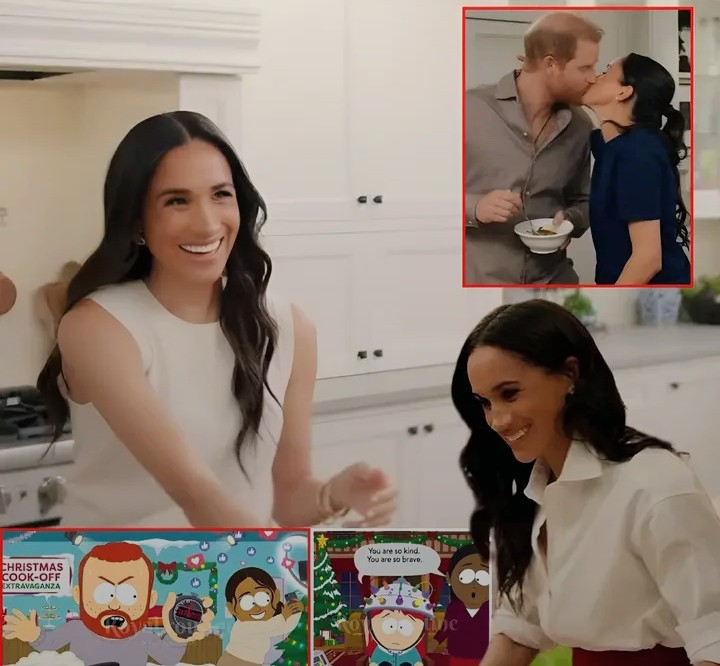
From the opening moments, the atmosphere appeared uneasy. Guests on screen looked polite rather than joyful, present rather than engaged. The holiday advice offered throughout the episode was widely described by viewers as vague and interchangeable, delivering platitudes without substance. One critic remarked online that the show felt less like a Christmas special and more like “background noise dressed up as meaning.”

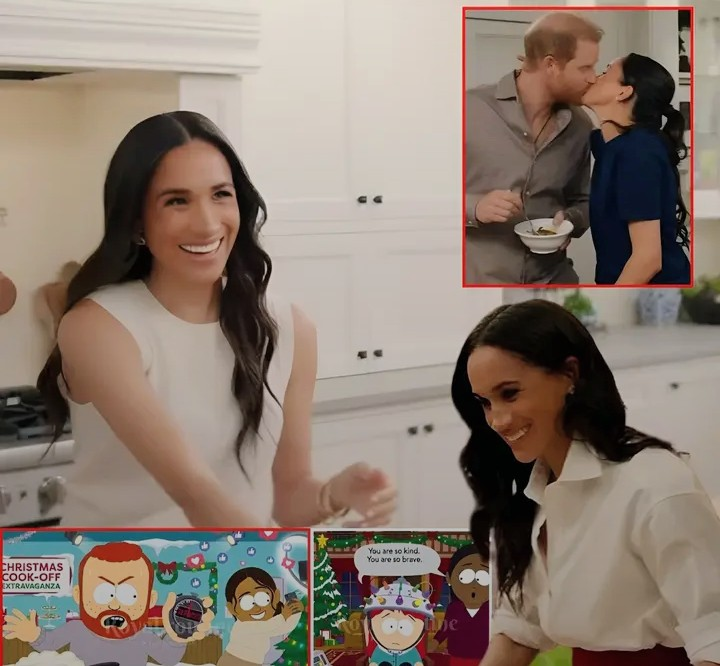
The tone of the program has since been compared to a parody, particularly in light of the viral reaction from South Park, whose brutal satire amplified what audiences were already sensing. Many viewers noted that the special seemed almost self-satirizing, as if it were unintentionally mimicking the very celebrity culture it sought to transcend. “Sincerity didn’t even get an invitation,” one commenter joked, echoing the sentiment that something essential was missing.

One of the earliest red flags came in the form of footage featuring Guy the beagle. Meghan had previously spoken publicly about the dog’s passing earlier in 2025, yet in the Christmas special, Guy is shown alive and energetic, running through the kitchen as though nothing had happened. The inconsistency immediately raised questions. Viewers speculated that Netflix may have repurposed older footage under the guise of a “magical” holiday timeline, an approach some described as misleading. A media analyst commented, “When continuity breaks this visibly, trust breaks with it.”
The appearance of Prince Harry was positioned as a late-stage emotional anchor, but it only deepened the discomfort. Harry appears briefly near the end of the episode, at which point Meghan enthusiastically presents him with a salad composed almost entirely of ingredients he has openly disliked. Rather than playful intimacy, the exchange struck many viewers as awkwardly performative. Harry’s hesitant responses contrasted sharply with Meghan’s dominant narration, prompting online commentary that described the dynamic as infantilizing rather than affectionate.
That impression extended further when Meghan launched into detailed descriptions of Harry’s eating habits and sensitivities, speaking with a tone that critics likened to a parent explaining a child’s quirks. “It didn’t feel like partnership,” one viewer wrote. “It felt like control framed as charm.” The moment quickly became one of the most discussed scenes, often cited as emblematic of the show’s broader issues.

Visually, the special leaned heavily into curated perfection. The kitchen was immaculate, the tree flawless, the color palette carefully coordinated. Yet for all the visual polish, the absence of key figures was conspicuous. The children were nowhere to be seen. Meghan’s parents were absent as well, with viewers noting the particularly stark contrast given her father’s reported hospitalization during the same period. The result was a celebration that looked full but felt empty.

Attempts to invoke British tradition added another layer of confusion. Meghan demonstrated Christmas crackers with exaggerated reverence, presenting them as treasured artifacts from her time in the UK. Critics found the moment contradictory, given her past rejection of royal life. “You can’t burn the bridge and then sell souvenirs from it,” one commentator remarked.
The guest list did little to soften the impression. Two close friends appeared wearing matching pajamas, offering continuous praise with little depth or shared history. Their presence felt more like casting than companionship. “It was a one-woman show,” wrote a reviewer, “and everyone else was set dressing.”
The most striking guest appearance came from tennis star Naomi Osaka, whose subdued demeanor contrasted sharply with Meghan’s energy. Osaka, a multi-time champion, appeared detached, offering brief answers and little engagement. When she mentioned designing her own Nike outfits, viewers noticed a visible shift in Meghan’s expression, as if genuine achievement had momentarily disrupted the scripted hierarchy of attention.
Meghan’s holiday advice segment further fueled criticism. Her advent calendar ritual involved placing affirmations inside each pocket, messages emphasizing kindness, bravery, and self-worth. While some found the sentiment harmless, others felt it crossed into something more unsettling, particularly when paired with rigid assumptions about her children’s identities. The choice of a lavender roll-on deodorant as a gift for her four-year-old daughter sparked additional discomfort, with many questioning the appropriateness.
By the end, a broader interpretation had taken hold. Viewers speculated that Netflix released the special not as a celebration, but as a quiet conclusion to a faltering chapter. “This didn’t feel like a beginning,” one media critic observed. “It felt like a report on an ending.”
Rather than reviving holiday magic, the special exposed fractures it may have hoped to conceal. The laughter it generated was not festive, but incredulous. As one viral comment put it, “Sometimes the script writes itself — and karma is the sharpest editor of all.”