The controversy surrounding Meghan Markle and Prince Harry’s departure from the British Royal Family has taken a startling new turn, as reports now suggest Meghan is indirectly blaming Prince George for what became known as “Megxit.” The claim has ignited fierce backlash, not only because of its implications, but because it drags a child — third in line to the throne — into a long-running narrative of grievance and resentment.

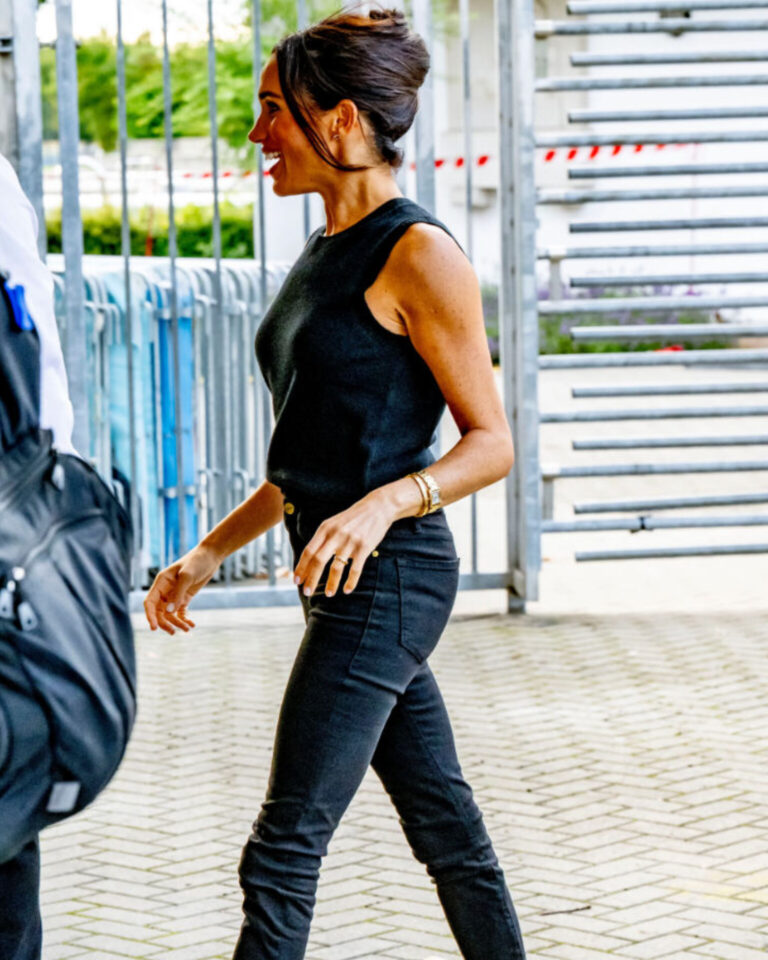
Prince Harry and Meghan Markle issue major announcement | Royal | News | Express.co.uk
According to commentary drawn from royal reporting and analysis, the alleged trigger centers on a now-famous photograph taken in 2019, showing four generations of the monarchy: Queen Elizabeth II, then-Prince Charles, Prince William, and Prince George. The image was widely celebrated as a symbol of continuity and stability, a visual affirmation that the future of the monarchy was secure. Yet insiders claim that Meghan interpreted the photograph very differently — as proof that she and Harry were expendable.
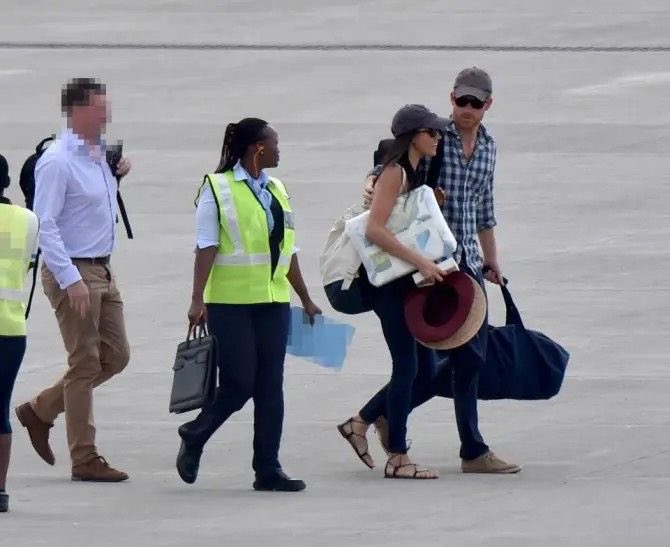
Prince Harry Appears on Meghan Markle’s With Love Special
Royal author Andrew Morton, whose writings are frequently cited in discussions surrounding the Sussexes, has previously suggested that Meghan and Harry viewed the institution as quietly closing ranks around the direct heirs. To them, the photograph allegedly served as a “wake-up call,” reinforcing the belief that there was no meaningful long-term role for them within the royal hierarchy. Critics argue this interpretation reflects not exclusion, but a fundamental misunderstanding — or rejection — of how monarchy functions.
Meghan Markle and Prince Harry Look So Loved Up in New Video Filmed by Their Daughter, Princess Lilibet – Yahoo News UK
Observers have been quick to point out that the photograph was never about popularity or favoritism. It depicted the sovereign and the next three direct heirs in line, a standard and historically consistent practice. Harry, Meghan, and their children remained part of the Royal Family and the line of succession at the time. However, hierarchy, not equality, defines royal life — a concept that commentators say Meghan struggled to accept.
Prince Harry priorities shift as he grows tired of being in Meghan Markle’s shadow
Public reaction to the idea that Prince George could be blamed, even indirectly, has been overwhelmingly negative. One royal watcher remarked that “this is where sympathy runs out — when adult choices are retroactively pinned on a child who represents nothing more than constitutional reality.” Others noted that Prince George did not “replace” Harry, nor did he alter Harry’s status; he merely existed as the next generation in a centuries-old system.
The situation has also revived long-standing rumors about financial tensions behind the scenes. Unsubstantiated but persistent claims suggest Meghan believed Harry deserved access to wealth streams traditionally reserved for the heir, particularly the Duchy of Cornwall. When those expectations were not met, resentment allegedly deepened. Royal experts stress that such assets are not personal rewards but institutional mechanisms designed to fund the role of the future monarch.
Several commentators have highlighted what they see as a pattern: moments that symbolize continuity or hierarchy are reframed as personal slights. “This isn’t about a photograph,” one royal analyst stated. “It’s about control, relevance, and an unwillingness to accept a supporting role.” Another added that the Sussexes appeared to want the privileges of royalty without the limitations imposed by rank and duty.
The backlash has been intensified by the broader context of declining public goodwill toward Meghan in the UK. Polling in recent years has shown steadily worsening perceptions, with critics arguing that repeatedly reopening old wounds — particularly by reframing Megxit as something that was “forced” — undermines earlier claims of empowerment and independence. For many, the attempt to shift responsibility years later feels less like revelation and more like revisionism.
null
Even sympathetic voices have expressed discomfort with the framing. A former palace aide, speaking hypothetically, noted that “once you start positioning a child as the reason your life went wrong, you lose the moral high ground entirely.” Social media reaction has echoed this sentiment, with many users accusing Meghan of crossing an unspoken line by involving Prince George in adult disputes.
Ultimately, the renewed controversy reinforces a core divide in how Megxit is understood. To supporters, it remains a story of self-preservation in a hostile environment. To critics, it increasingly resembles a refusal to accept limits — institutional, symbolic, and personal. What is clear is that blaming Prince George, directly or indirectly, has only deepened public skepticism and hardened opposition.
Rather than rewriting the past, royal commentators suggest that true closure would require acknowledging a simple truth: the monarchy moves forward through succession, not sentiment. And no photograph — and certainly no child — can be held responsible for decisions made by adults who chose to walk away.