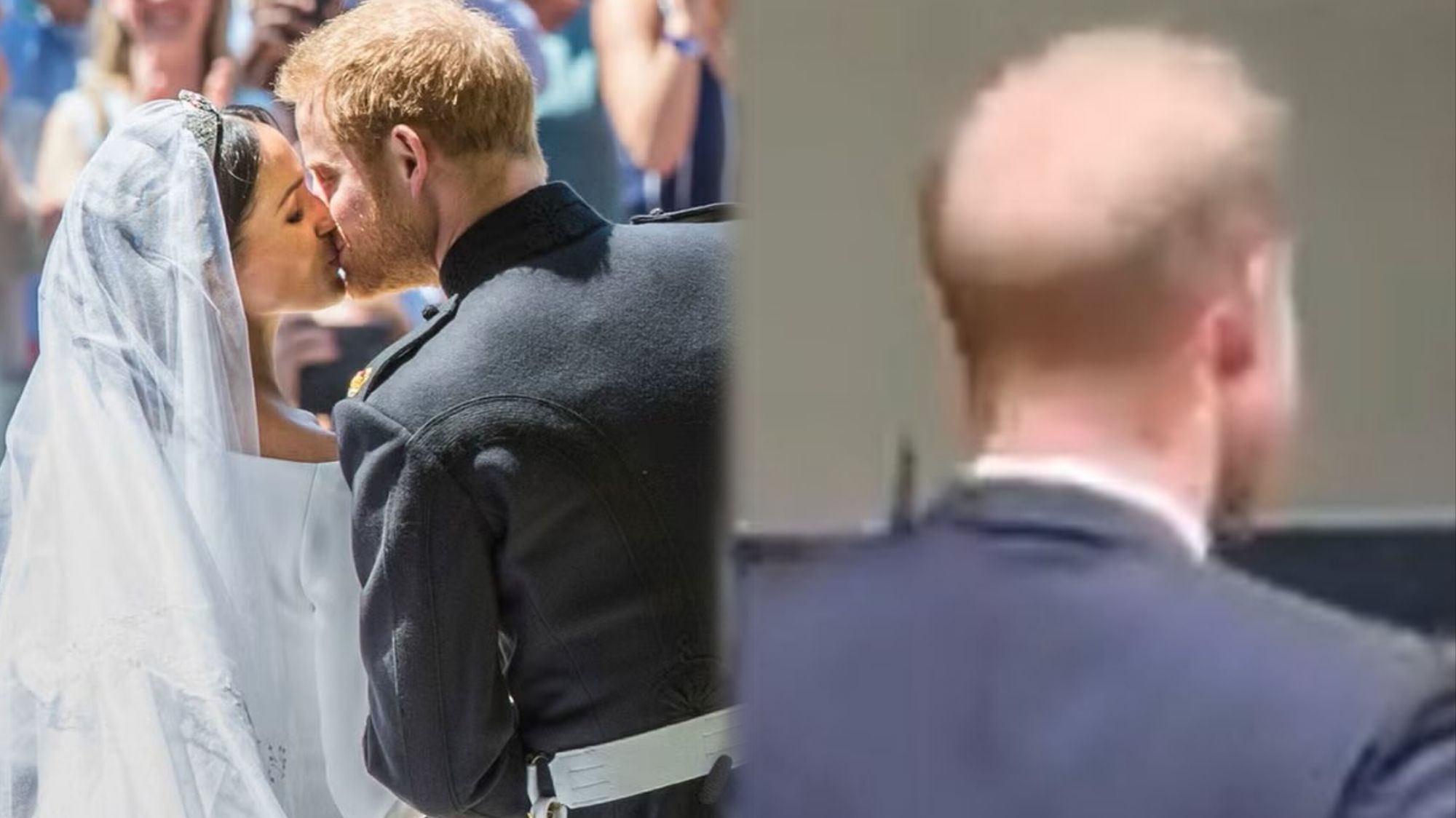
In the glittering halls of Windsor Castle on that fateful May day in 2018, Prince Harry stood as the epitome of youthful vigor – a dashing ginger prince with a full head of tousled locks, beaming beside his radiant bride, Meghan Markle. Fast-forward eight harrowing years to 2026, and the once-vibrant Duke of Sussex appears a shadow of his former self, his scalp now a barren battlefield of thinning strands and glaring bald patches. What happened to the man who once mocked his brother’s “alarming” baldness? Has Harry contracted some insidious “Meghan Markle virus” – a metaphorical plague of stress, exile, and endless controversy that’s stripped him bare, follicle by follicle? The evidence is undeniable, the transformation startling, and the implications condemnable. This isn’t just hair loss; it’s a royal downfall writ large on his receding hairline.
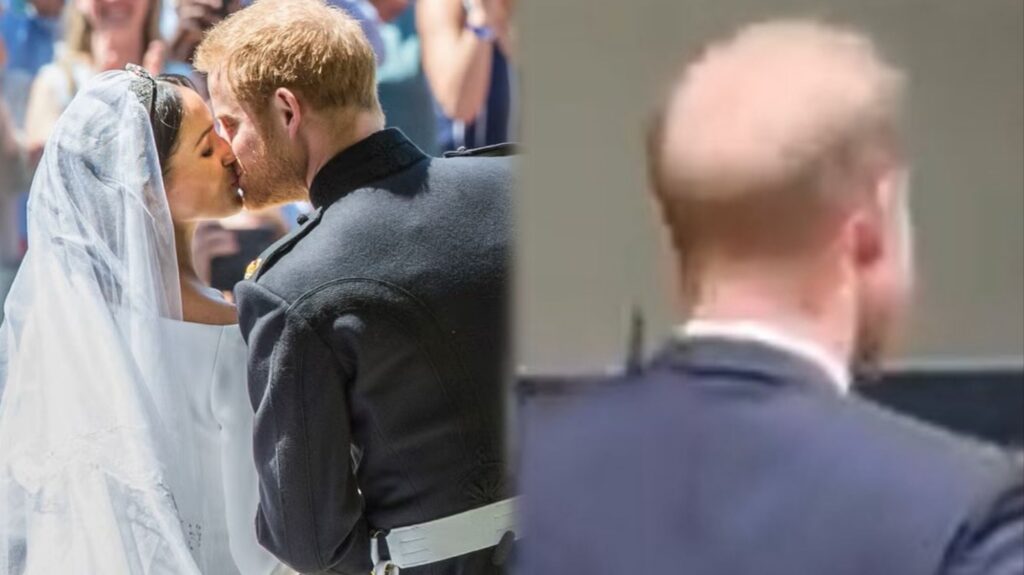
Let’s rewind to the wedding that captivated the world. On May 19, 2018, Harry, then 33, sported a thick, curly mane that framed his face with effortless charm. Photos from the event show a confident prince, his hair dense and voluminous, defying any early whispers of genetic doom. His temples were full, his crown lush – a stark contrast to his elder brother, Prince William, whose own hairline had already begun its retreat. Harry seemed immune, perhaps buoyed by the fairy-tale romance that promised a life of Hollywood glamour and royal privilege. But as experts have noted, this was the peak; the decline began almost immediately after the vows were exchanged.
By 2019, mere months into married life, the cracks – or rather, the bald spots – started to show. Media outlets buzzed with images of Harry’s rapidly thinning crown during public appearances. Hair transplant surgeon Dr. Asim Shahmalak observed that Harry’s baldness gene, while not as aggressive as William’s, was accelerating at an alarming rate, primarily around the crown. Speculation mounted: Was it the stress of newfound fame, the relentless tabloid scrutiny, or something more personal? Whispers suggested Harry had been using hair-thickening treatments before the wedding but discontinued them post-nuptials, leading to a swift and visible regression. One can’t help but point fingers at the whirlwind of his union with Meghan – the “Megxit” drama, the family feuds, the transatlantic upheavals. If hair loss is often tied to stress and genetics, Harry’s case screams of a toxic cocktail where marital pressures play the villain.
The progression through the 2020s is nothing short of tragic. In 2020, reports emerged of Harry visiting London’s Philip Kingsley Clinic for non-surgical hair-thickening therapies, a desperate bid to combat the widening bald patch. Yet, by 2022-2023, photographs revealed advanced balding on the crown, with the front holding on by a thread – literally. Experts like those at Cosmedica Clinic traced the timeline: fuller in 2017 (pre-Meghan), receding by 2018 (wedding year), and noticeably sparse by 2020. Harry’s hair density plummeted, particularly at the top and back, aligning with classic androgenetic alopecia – male pattern baldness exacerbated by life’s relentless blows.
Fast-forward to January 2026, and the stark reality hits like a crown jewel to the gut. Recent photos from Harry’s solo appearance at the Royal Courts of Justice in London for his ongoing tabloid lawsuit show a man profoundly changed. His once-iconic red locks are now a patchy remnant, the bald spot sprawling like a royal scandal exposed. Side-by-side comparisons with his 2018 wedding snaps are jaw-dropping: what was once a full, enviable head of hair has withered to a sparse, uneven thatch. In X posts from just days ago, users mercilessly highlight the irony – Harry, who in his 2023 memoir *Spare* derided William’s “alarming” baldness and fading resemblance to their mother, Princess Diana, now mirrors that very fate. One viral thread quips, “Spare some hair??? Prince Harry arrives at court… I wonder if he has any regrets about mocking his brother.” The karma is as thick as his former mane.
But let’s address the elephant in the room – or rather, the “virus” named Meghan. Since tying the knot, Harry’s life has been a maelstrom of controversy: the Oprah interview bombshells, the Netflix docuseries exposés, the endless lawsuits against the press. Sources suggest the strain of their Montecito exile, coupled with familial estrangement, has accelerated his hair loss. Hair specialist Jacques Abrahamian attributes it to genetics progressing “fairly quickly at such a young age,” but insiders whisper of deeper woes – marriage tensions, public backlash, and a sense of lost control. Rumors even swirl that Meghan has warned Harry his thinning locks make him resemble “slaphead” William, fueling his insecurity. Is this the “Meghan Markle virus” at work? A insidious blend of ambition, drama, and displacement that’s left Harry not just balding, but broken?
The irony bites harder when recalling Harry’s own words in *Spare*: he scrutinized William’s scowl and baldness with sibling spite, claiming his brother’s looks had “faded.” Yet here Harry stands in 2026, his own resemblance to a youthful royal eroded by the very traits he mocked. Failed hair transplants? Reports indicate at least two botched attempts, leaving him with a “scrotum head” or “pube thatch” in cruel online jabs. X users pile on: “Umm did Harry leave his hair in Montecito? Because Meghan’s ‘recent’ video shows him with plenty of hair, but in the UK today he’s alarmingly bald.” Even in lighter moments, like his 2025 “hat-gate” quip about using caps to hide hair loss, the desperation seeps through.
This isn’t mere genetics; it’s a cautionary tale of hubris and heartache. Harry’s alarming baldness since 2018 isn’t just startling – it’s a symbol of a life derailed. From wedding day glory to 2026’s court appearances with a scalp screaming surrender, the “Meghan Markle virus” has claimed its victim. Will he seek more treatments, or embrace the bald truth? One thing’s certain: the prince who once had it all now has far less on top – and the world can’t look away.