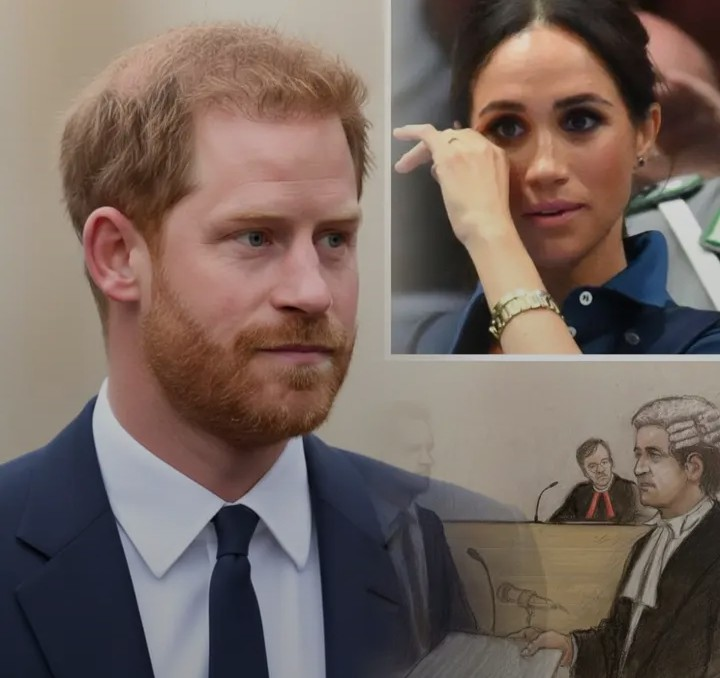
Prince Harry walked into London’s High Court with the composure of someone who has spent his entire life being watched, judged, and written about, but by the time he stepped down from the witness box hours later, that control had visibly frayed. His testimony against the publisher of the Daily Mail was not just a legal argument about sources and articles; it was a raw account of how years of media scrutiny, suspicion, and intrusion have shaped his life and, in his words, “made my wife’s life an absolute misery.”
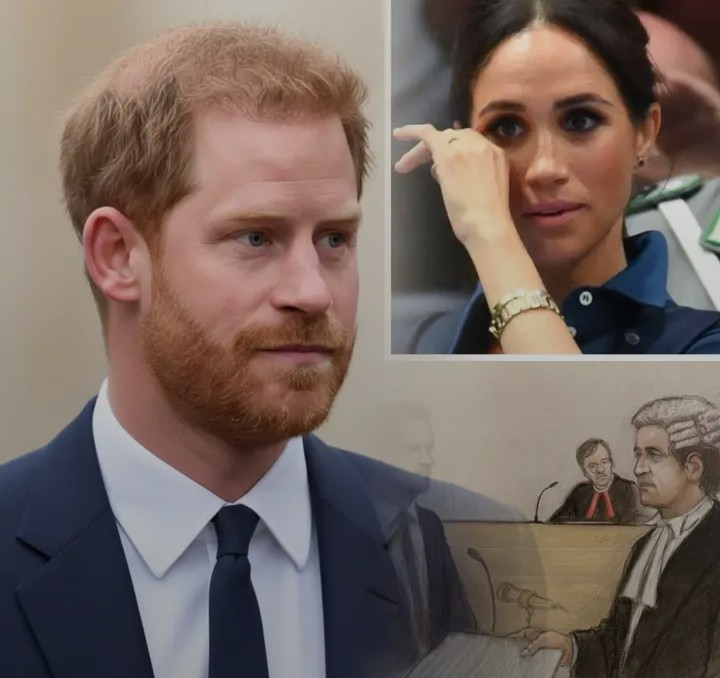
From the outset, Harry adopted a defensive tone, firmly rejecting the suggestion that journalists relied on legitimate sources when publishing deeply personal details about him. He described a sense of relentless pursuit, a feeling that there was never an off switch, never a moment when private life was truly private. As he spoke, the courtroom was offered a rare glimpse of a royal figure stripped of ceremony, openly describing the emotional cost of living under what he called “24-hour surveillance.”
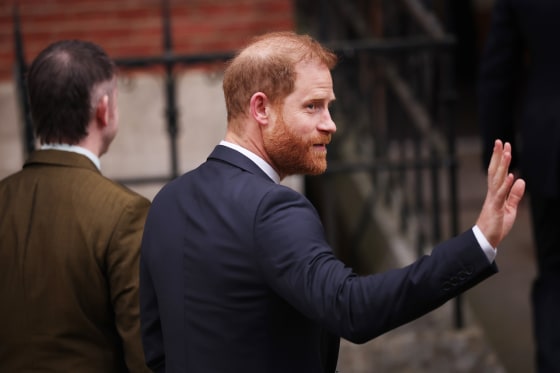
The case, brought by Harry alongside six other high-profile figures including Sir Elton John and Elizabeth Hurley, accuses Associated Newspapers Ltd. of engaging in unlawful information-gathering practices over a period of two decades. According to the claimants, this was not the work of a few rogue reporters but a systematic approach that blurred, and at times crossed, the boundaries of legality. The publisher has flatly denied these allegations, branding them preposterous and insisting that the articles in question were sourced through lawful means, including friends and associates willing to talk.

Yet Harry’s account painted a very different picture. In his written witness statement, he said that the constant intrusions during his youth left him “paranoid beyond belief,” a phrase that echoed repeatedly as the day went on. He denied being close to royal reporters or benefiting from cosy relationships with journalists, pushing back hard against the idea that his own social circle could have been responsible for leaking information. “My social circles were not leaky,” he told the court, a simple sentence that seemed to carry years of frustration behind it.
As cross-examination began, defense lawyer Antony White maintained a measured, almost soothing tone, probing whether the articles might have been the result of routine reporting at public events or tips from insiders. Harry’s responses, however, grew increasingly clipped. He suggested that details could only have come from phone hacking, eavesdropping, or private investigators, and accused journalists of hiding behind vague phrases like “unidentified source” to mask unlawful methods. At one point, the tension prompted an intervention from the judge, Justice Matthew Nicklin, who reminded Harry that he did not need to argue the entire case from the witness stand.
For some observers, this moment crystallized the central conflict. To supporters, Harry appeared as a man finally refusing to be silenced by tradition, pushing back against a media culture he believes destroyed his mother and later targeted his wife. “If you complain, they double down,” he said, explaining why he often stayed quiet at the time of publication. To critics, his defensiveness reinforced a long-held view that he struggles to distinguish between invasive reporting and uncomfortable but lawful journalism.
The shadow of Princess Diana loomed large throughout the proceedings. Harry has long framed his legal battles as part of a broader mission to reform the British press, which he blames for contributing to his mother’s death in 1997 while she was being chased by paparazzi. That history, he argued, made the press coverage of Meghan all the more painful. He spoke of “vicious persistent attacks,” harassment, and even racist undertones in some reporting, saying these experiences ultimately drove the couple to step back from royal duties and relocate to the United States in 2020.
Outside the courtroom, reactions were sharply divided. Some commentators praised Harry for confronting powerful media organizations head-on, seeing his testimony as a necessary challenge to an industry with a troubled past. Others questioned whether the lawsuit risks reopening wounds without offering the closure he claims to seek. One legal analyst noted that juries and judges are often swayed less by emotion than by hard evidence, a reality that could make Harry’s deeply personal narrative a double-edged sword.
When asked how he felt about the publisher’s defense strategy, Harry’s answer cut through the legal language. Despite pushing for accountability, he said it was “fundamentally wrong” to force everyone involved to relive the experience when all he wanted was an apology. It was a striking admission, suggesting that beneath the legal arguments lies a desire for acknowledgment rather than victory.
As he mentioned Meghan near the end of his testimony, Harry’s voice faltered. He paused, visibly struggling to maintain composure, before leaving the witness box and walking slowly out of the courtroom. In that moment, the case felt less like a battle over journalistic ethics and more like a personal reckoning, one that continues to play out in public, even as Harry insists his life should never have been treated as “open season” for commercialization.