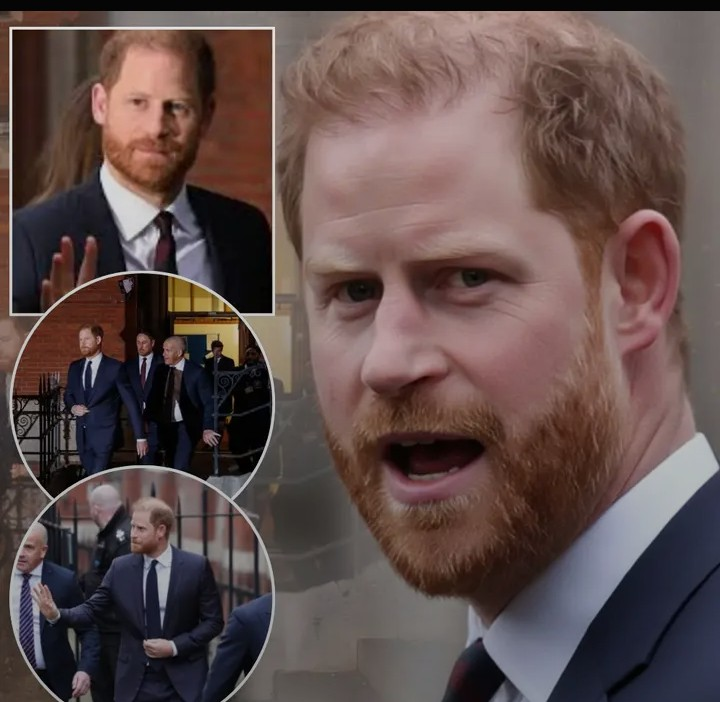
Prince Harry’s long-running legal crusade against the British press is rapidly unraveling, and the courtroom drama is now turning decisively against him. What was once framed as a principled fight for accountability and justice has begun to resemble a personal meltdown, played out under the unforgiving scrutiny of a London court.
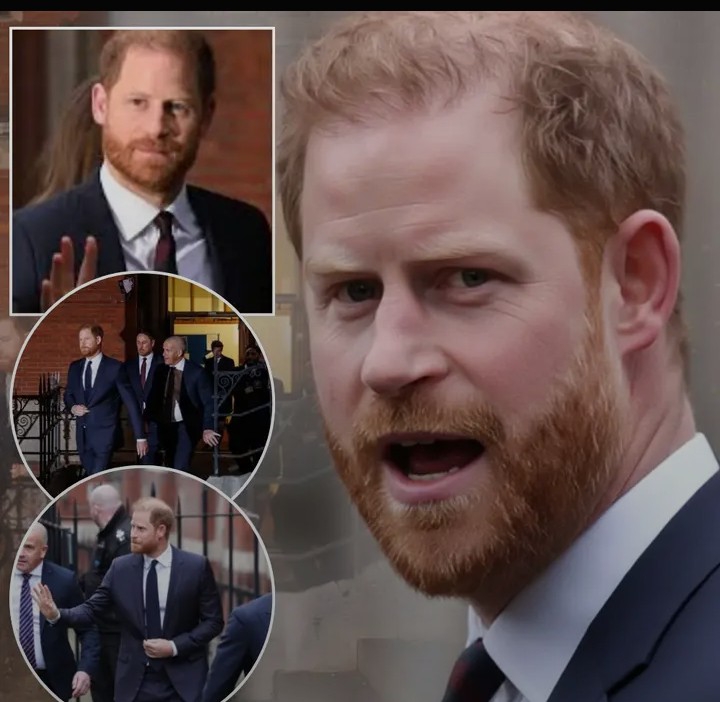
The most damaging development came when several key members of Harry’s legal team abruptly resigned mid-proceedings. Legal analysts were quick to point out that this was not a routine reshuffle or a tactical recalibration. In British legal circles, such withdrawals are widely interpreted as a calculated retreat, a clear signal that the lawyers themselves no longer believe the case is winnable under the client’s current instructions.
:max_bytes(150000):strip_icc():focal(736x385:738x387)/prince-harry-court-012026-1-0bb7dcc7574b4532a62b1365e881f31a.jpg)
Inside the courtroom, tensions have reportedly escalated. Harry appeared visibly agitated as his central claims were subjected to relentless cross-examination. At one point, the presiding judge issued a stern warning, reminding him that sweeping allegations require concrete, verifiable evidence — not assumptions, impressions, or emotional narratives. For a case built on claims of illegal information-gathering, the lack of decisive proof has become impossible to ignore.
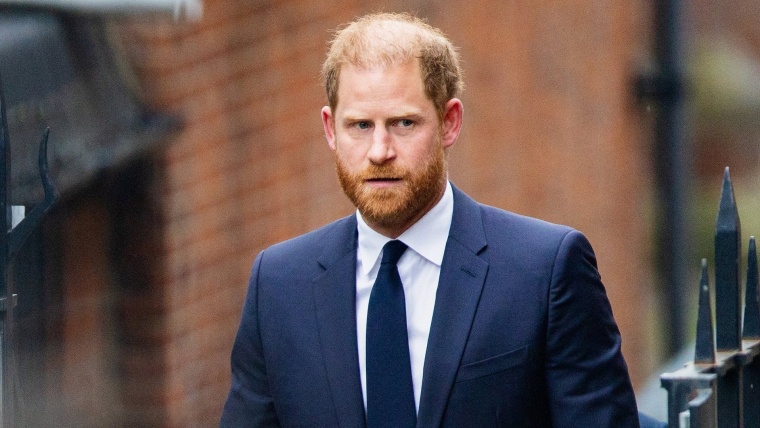
Observers noted that Harry’s accusations against journalists Katie Nicholl and Rebecca English were particularly vulnerable. The defense painted a picture not of shadowy criminals conspiring against an innocent prince, but of professional reporters operating within the accepted norms of royal journalism. Evidence suggesting Harry had socialized with members of the press — even inviting at least one journalist to private events — severely undercut his portrayal of himself as a passive victim of relentless persecution.
:max_bytes(150000):strip_icc():focal(719x379:721x381)/prince-harry-court-01-0330-0968b20da87d49f8949c88a3c5c3085a.jpg)
“This is where his case really starts to collapse,” one courtroom watcher remarked quietly outside the courthouse. “You can’t claim criminal harassment while also admitting you willingly participated in the same media ecosystem when it suited you.”
The humanization of the journalists has further shifted the tone of the trial. Rebecca English was described as a seasoned royal correspondent with years of legitimate access during Harry’s time as a working royal. Katie Nicholl, who has recently recovered from a serious illness, has emerged as a composed and credible figure defending her professional integrity. In contrast, Harry’s testimony increasingly appears driven by personal grievance rather than demonstrable wrongdoing.
Public reaction has been swift and unforgiving. Online commentary and opinion columns suggest that sympathy for Harry — once abundant — is wearing dangerously thin. “He’s not exposing a corrupt system anymore,” wrote one reader in a popular British forum. “He’s just settling scores, and the court can see it.”
The optics have not helped. Harry has cut a lonely figure throughout the proceedings, seated without the visible support of Meghan Markle. For a couple who built a global brand around unity and mutual defense, her absence has not gone unnoticed. Some observers interpret it as a strategic distancing, an unspoken acknowledgment that this particular battle is becoming radioactive.
“If Meghan were there, it would turn into a media circus,” commented a royal commentator. “But her silence also sends a message — that this is Harry’s war now, and he’s fighting it alone.”
The irony of the situation is difficult to escape. Harry has repeatedly condemned the British media for intruding into his private life, yet he has simultaneously monetized that same life through bestselling memoirs, Netflix documentaries, and high-profile interviews. In court, this contradiction has been weaponized by the defense, raising uncomfortable questions about credibility and consistency.
As the trial progresses, the stakes are growing higher. Should Harry fail to produce compelling evidence, the consequences will extend far beyond a legal loss. He risks cementing a public image as combative, thin-skinned, and unable to distinguish between legitimate journalism and genuine malice. Worse still, a defeat could saddle him with enormous legal costs, compounding both reputational and financial damage.
“This feels like the moment the narrative finally turns on him,” one legal analyst observed. “Courts don’t care about victimhood branding. They care about facts. And right now, the facts aren’t lining up in his favor.”
What was intended to be the cornerstone of Harry’s moral campaign against the tabloids is now threatening to become its undoing. The resignation of his legal team reads like a vote of no confidence, not just in the case itself, but in Harry’s version of events. Each day in court appears to strip away another layer of the righteous crusader persona, revealing a man locked in a personal battle with his past — and losing.
If the evidence gap remains, British media will not show mercy. The press Harry hoped to humble may instead deliver the final verdict in the court of public opinion. And once that sympathy is gone, it is rarely recovered.