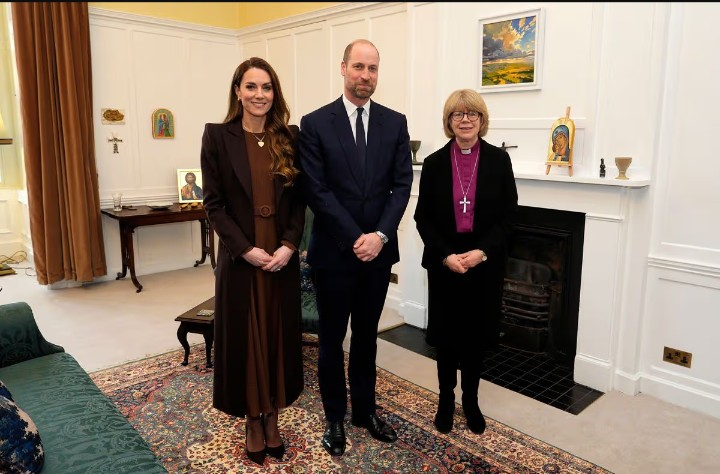
The Prince and Princess of Wales visited Lambeth Palace to meet the first female Archbishop of Canterbury, Dame Sarah Mullally – and Kate wore a never-before-seen piece of jewellery
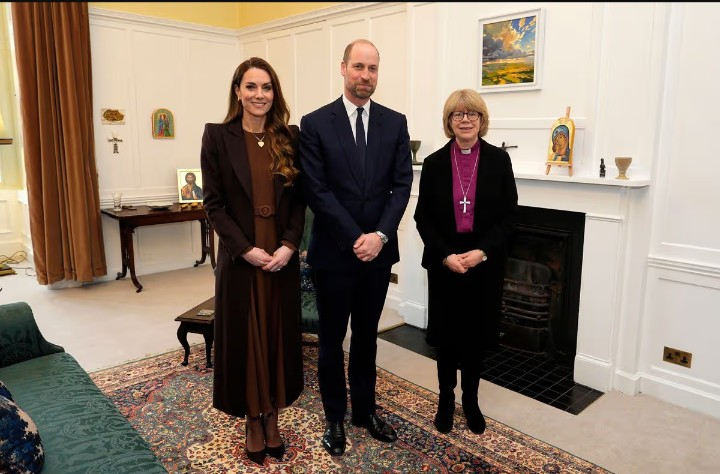
The Prince and Princess of Wales formally met the new Archbishop of Canterbury for the first time since she took on the role. William and Kate travelled to Lambeth Palace, the Archbishop’s official residence, where they sat down for informal talks, with William offering their ‘congratulations’ on her appointment.
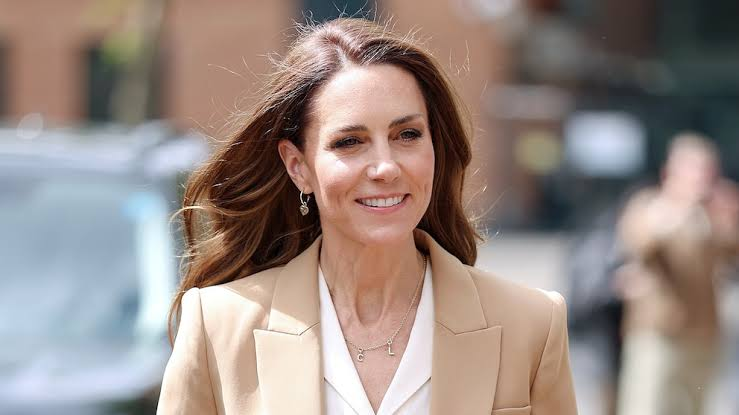
As they arrived for the meeting, Kate wore a custom Edeline Lee textured midi dress with a black coat and accessorised with a new Daniella Draper Gold Keeper’s Heart Trace Chain necklace. The £1,555 piece is said to symbolise ‘love and connection’ – themes that Kate has recently explored in her public work.
The trio’s chat came as an afternoon tea of cakes and fruit salad on a nearby table as they discussed Lambeth Palace’s garden outside a window. When Dame Sarah commented that in her previous role as the Bishop of London, the deanery had a “small patch of ground”, Kate said about central London: “It’s amazing how much green space there is.”
William asked Dame Sarah if she knew the layout of Lambeth Palace yet and was told she is “getting there”. It is understood the visit reflected the importance the royal couple place on faith and their desire to build a strong working relationship with the senior cleric.
Lambeth Palace said after the meeting, the trio discussed the contribution of churches around the country to their communities, and William and Kate’s work through their Royal Foundation
The Archbishop said afterwards: “It was a privilege to welcome the Prince and Princess of Wales to Lambeth Palace today. “I know we hold the same hope for a better world and I look forward to working together in the years to come. I will continue to hold them and their family in my prayers.”
Dame Sarah was confirmed as the 106th Archbishop of Canterbury at St Paul’s Cathedral last week and yesterday she made the oath of allegiance to the sovereign, in which she acknowledged the King as the supreme governor of the Church of England, in a traditional ceremony dating back to the reign of Elizabeth I.