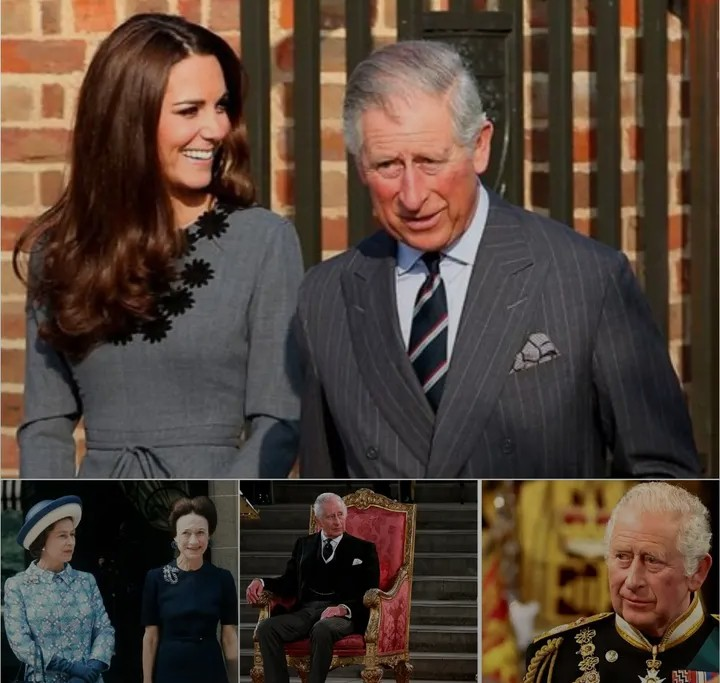
When King Charles III made his latest move inside the ancient machinery of the British monarchy, few expected it to land like a thunderclap. There was no dramatic speech from Buckingham Palace. No flashing headlines prepared the public in advance. And yet, when the news quietly emerged that
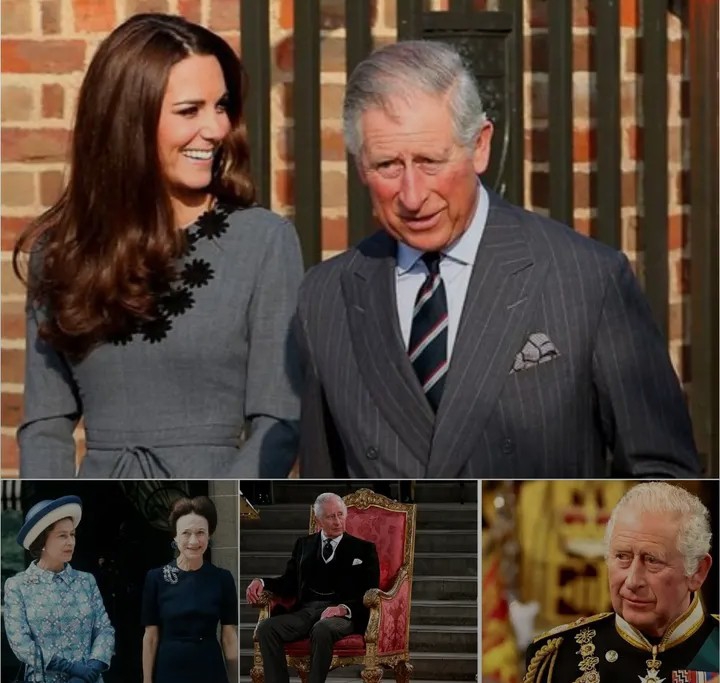
Catherine, Princess of Wales had been entrusted with a historic and symbolically powerful role, royal insiders reportedly found themselves stunned.
For Americans watching from across the Atlantic, it may seem like another ceremonial reshuffle in a family famous for tradition. But within the House of Windsor, symbolism is never “just” symbolism. Every title, every patronage, every public alignment carries weight measured not in headlines — but in centuries.
And this moment? It felt different.
It felt deliberate.
It felt like the future stepping forward.
A Monarchy at a Crossroads
The British monarchy has always survived by adapting — slowly, carefully, almost reluctantly. From the abdication crisis of
Edward VIII to the steady reign of Elizabeth II, the institution has endured wars, scandals, generational shifts, and cultural revolutions.
But today’s challenges are different.
Public trust fluctuates. Younger generations question inherited privilege. The global spotlight burns brighter than ever in the age of social media. And within the royal family itself, fractures have become painfully public — most notably after the departure of
Prince Harry, Duke of Sussex and Meghan, Duchess of Sussex.
Against that backdrop, every move by King Charles carries enormous meaning. He is not only ruling in the shadow of his mother’s historic reign — he is tasked with modernizing an institution that survives on public approval.
So when he chose to elevate Catherine in a way that insiders describe as “historic,” it wasn’t just recognition.
It was a signal.
Why Catherine Matters
To American audiences, Catherine’s appeal may seem obvious: poised, composed, elegant without appearing aloof. But within Britain, her role is far more layered.
From the moment she married Prince William, Prince of Wales, she entered an unspoken audition for the most scrutinized role in the Commonwealth — future queen.
Unlike modern celebrities, she did not speak loudly about her ambitions. She did not rebrand herself through interviews. She did not attempt to redefine the monarchy in radical ways.
Instead, she embraced the long game.
She built her portfolio around early childhood development, mental health, and family stability — causes that resonate deeply with both British and American audiences. She cultivated an image not of glamour, but of grounded commitment.
And perhaps most importantly, she mastered something the monarchy desperately needs in the 21st century: emotional steadiness.
In a time of royal turbulence, Catherine has been calm.
In moments of scandal, she has remained measured.
In the face of relentless scrutiny, she has been silent when silence was wise — and present when presence mattered.
The Weight of Charles’s Gesture
King Charles is not known for impulsive symbolism. Throughout his decades as Prince of Wales, he cultivated a reputation as thoughtful — sometimes to a fault.
So what does it mean when a monarch known for caution makes a move that insiders describe as reshaping royal dynamics?
It suggests trust.
It suggests preparation.
It suggests succession planning that extends beyond titles and into influence.
For Americans accustomed to elected leadership cycles, the concept of preparing a future queen decades in advance may feel foreign. But in monarchies, perception builds slowly. Authority matures over years, not election seasons.
By positioning Catherine in a historically significant role, Charles appears to be reinforcing something quietly but unmistakably: the future of the monarchy rests not just with William — but with Catherine at his side.
And What About Camilla?
In any royal story, silence can be as powerful as presence. Observers quickly noted that Camilla, Queen of the United Kingdom remained publicly quiet during this shift.
For decades, Camilla’s journey from controversy to queen consort was one of the most dramatic rehabilitations in modern royal history. Her marriage to Charles was once a source of division. Over time, through steady service and careful public engagement, she earned a measure of acceptance.
But this latest development subtly shifts the center of gravity.
It does not diminish Camilla’s role. It does not rewrite her story. But it does highlight something unavoidable: the monarchy’s emotional future — the face that younger generations may connect with most — increasingly appears to be Catherine.
For American observers who watched the saga of Diana, Princess of Wales unfold decades ago, this dynamic carries echoes of history. The Princess of Wales title has always held a unique emotional power.
And once again, that power is at the forefront.
The American Fascination
Why does this resonate so strongly in the United States — a country founded on rejecting monarchy?
Because Americans don’t watch the royals for governance. They watch for story.
They watch for legacy.
They watch for human drama wrapped in crowns and tradition.
In Catherine, many Americans see something familiar: a modern woman navigating an ancient institution with grace under pressure. They see partnership in her marriage. They see motherhood balanced with public duty. They see restraint in an era addicted to oversharing.
In a cultural climate where public figures often chase visibility, Catherine’s careful pacing feels almost radical.
And perhaps that is why Charles’s gesture feels so powerful. It affirms what many already sensed — that she is not merely participating in royal life.
She is shaping its next chapter.
A Quiet Power Shift
Monarchies rarely announce power shifts outright. They unfold through moments — who stands where on a balcony, who accompanies the monarch on key visits, who receives which patronage.
Each detail is studied.
Each choice whispers something about hierarchy.
If insiders are correct, this move by King Charles signals a consolidation around stability. It signals that despite past family fractures, the core line — Charles, William, Catherine — stands unified.
For a monarchy that has weathered public storms in recent years, unity is currency.
And Catherine, by all appearances, is central to that strategy.
The Emotional Undercurrent
Beyond politics and optics lies something deeper: emotion.
When Queen Elizabeth II passed away, millions felt the closing of an era. She was a constant in a world of change.
Now, the monarchy is redefining itself without her steady presence.
Charles leads with experience. William represents continuity. But Catherine brings something uniquely contemporary — warmth combined with composure.
Her evolution has not been loud. It has been gradual, almost organic. That makes Charles’s recognition feel less like a gamble and more like acknowledgment of reality.
She has earned her place.
The Future Taking Shape
What does this mean long-term?
It means the monarchy’s next phase is already being drafted.
It means Charles understands that his reign, however significant, is transitional by nature.
It means preparation for William and Catherine’s eventual ascension is no longer abstract — it is visible.
And perhaps most striking of all, it shows that the monarchy is learning from its past. Where once internal rivalries and emotional fractures spilled into public view, there now appears to be careful consolidation.
For American audiences, this reads like a masterclass in long-term branding.
For Britain, it may represent something more profound: reassurance.
A Crown Carried Forward
History will judge King Charles in many ways — by how he modernized, how he handled family tensions, how he navigated global shifts.
But in this quiet honoring of Catherine, he may have revealed his clearest priority: safeguarding the monarchy’s emotional continuity.
The crown is not just metal and jewels. It is perception. It is trust. It is the belief that stability endures beyond individual personalities.
By elevating Catherine, Charles may have done something both simple and seismic.
He may have shown the world who he believes can carry that trust forward.
And in royal history, belief from a reigning monarch is no small thing.
For now, the Palace remains measured. Official statements are restrained. Camilla remains poised. William remains steady.
But beneath the composure, something unmistakable has shifted.
Not loudly.
Not dramatically.
But decisively.
Because sometimes the future doesn’t arrive with a coronation.
Sometimes, it begins with a gesture — and the world only realizes its meaning years later.