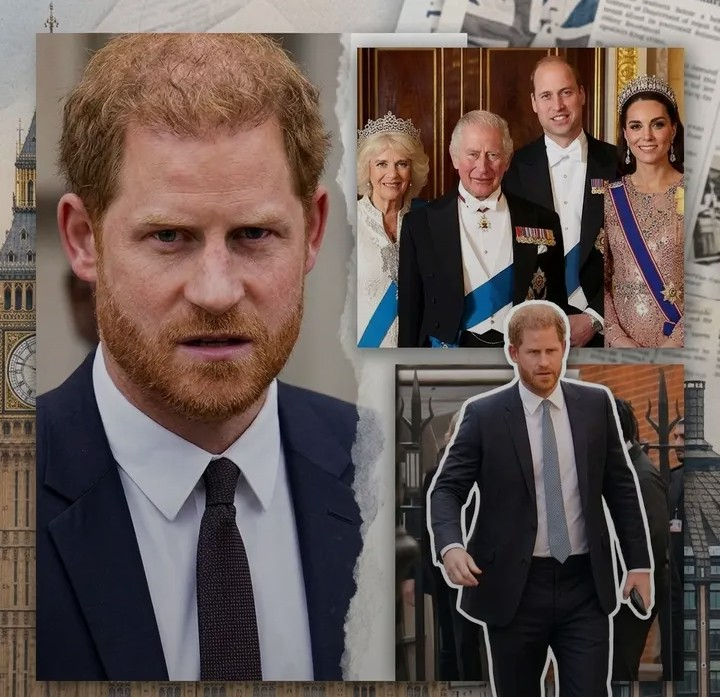
Prince Harry’s long-promised mission to “slay the dragons” of Britain’s tabloid culture was framed as a crusade for justice. He positioned himself as the royal willing to confront the media machine that he believes tormented his mother and hounded him throughout his life. Yet as his legal battle with the Daily Mail unfolds in court, observers are beginning to question whether the strategy is collapsing under the weight of its own contradictions.Meghan and Harry’s ‘crossroads’ – ‘fiery rows, dimming spark and indifference’ – The Mirror
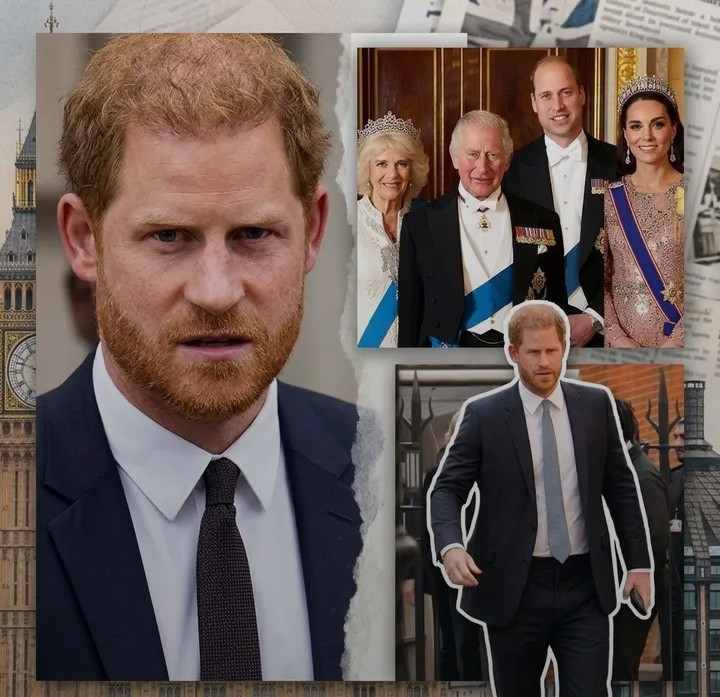
At the heart of the dispute lies Harry’s claim that damaging stories about him and his former girlfriend, Chelsy Davy, could only have been obtained through unlawful methods such as phone hacking. He argues that certain private trips and details about his movements were too specific to have come from anything but illegal intrusion. However, journalists called to testify have outlined a far more mundane explanation: information gathered from social circles, university acquaintances, palace confirmations, and old-fashioned tip-offs paid for modest sums.Meghan Markle and Prince Harry Step Out in Jordan for Surprise Visit
Media insiders have explained that during the years Davy studied in Leeds, her presence — and occasional absence — was hardly invisible. Students talked. Friends talked. Travel plans were often deduced from simple observation. In some instances, palace officials themselves allegedly confirmed certain engagements or overseas trips. If such accounts are accurate, the timeline of supposed “secret” events becomes less mysterious and more predictable. The allegation that only hacking could explain the coverage begins to weaken.Meghan Markle and Prince Harry’s Handwritten Messages to Recovering Addicts at Jordan Rehab Center Revealed
Complicating matters further is Harry’s own memoir, Spare. In it, he openly recounts periods of heavy drinking, drug use, and blurred memory during his youth. Legal commentators have quietly noted that this admission raises uncomfortable questions. If recollections from that period are admittedly hazy, how certain can he be about precisely who knew what — and when? One legal analyst remarked that in high-profile litigation, “certainty of memory becomes a weapon or a liability. It cannot be both.”
What has particularly unsettled senior members of the Royal Family, including Charles III and William, is the staggering financial exposure. Figures circulating in media circles suggest potential legal costs approaching £38 million. While that number remains speculative, even a fraction of it would represent a significant burden. If Harry were to lose or secure only a partial victory, the optics would be bruising. If he were to win but at enormous cost, questions would still linger about whether the fight was strategically wise.
Some royal watchers argue that the greatest irony is this: in attempting to expose media collusion, the case may instead be illuminating the long-standing, complex relationship between the Palace and the press. It has never been a simple story of villain and victim. Royal communications offices routinely brief journalists when it suits institutional interests. Charitable initiatives such as the Invictus Games have benefited from extensive press coordination. As one former editor bluntly put it, “The monarchy and the media have danced together for decades. To pretend otherwise is naïve.”
Public reaction has been sharply divided. Supporters of Harry view his campaign as long overdue accountability. They see a man determined to protect his family from what he perceives as systemic intrusion, intensified since his marriage to Meghan Markle. Critics, however, detect inconsistency. They point out that selective engagement with media — embracing coverage when favorable and condemning it when hostile — undermines the moral clarity of the crusade.
There is also the matter of Chelsy Davy herself. By all accounts, she has declined to be drawn into the proceedings. Friends say she has moved on, building a successful independent life. Her silence speaks volumes. In a case built partly on revisiting a past romance, the absence of its other central figure is striking.
Beyond the courtroom arguments lies a broader strategic concern. Harry’s earlier interviews and public statements framed this litigation as a defining battle. If the evidence continues to be challenged on grounds of inconsistent timing, the narrative risks shifting from righteous confrontation to costly miscalculation. Media executives, who once feared a sweeping precedent, now appear more confident in defending traditional sourcing practices.
For the Palace, the situation is delicate. While officially distanced from Harry’s legal affairs, any financial or reputational ripple inevitably touches the institution. The monarchy survives on public perception as much as constitutional function. Prolonged headlines about internal rifts, mounting legal bills, and contested evidence do little to strengthen that foundation.
In the end, the question is no longer simply whether Harry can “slay the dragons.” It is whether, in charging at them, he has inadvertently exposed vulnerabilities within his own camp. The trial’s outcome remains uncertain. But what is clear is that the battle has grown larger than one man’s grievance. It now tests the fragile balance between monarchy, media, and modern accountability — and whether a fight framed as moral necessity may ultimately be remembered as a strategic misfire.