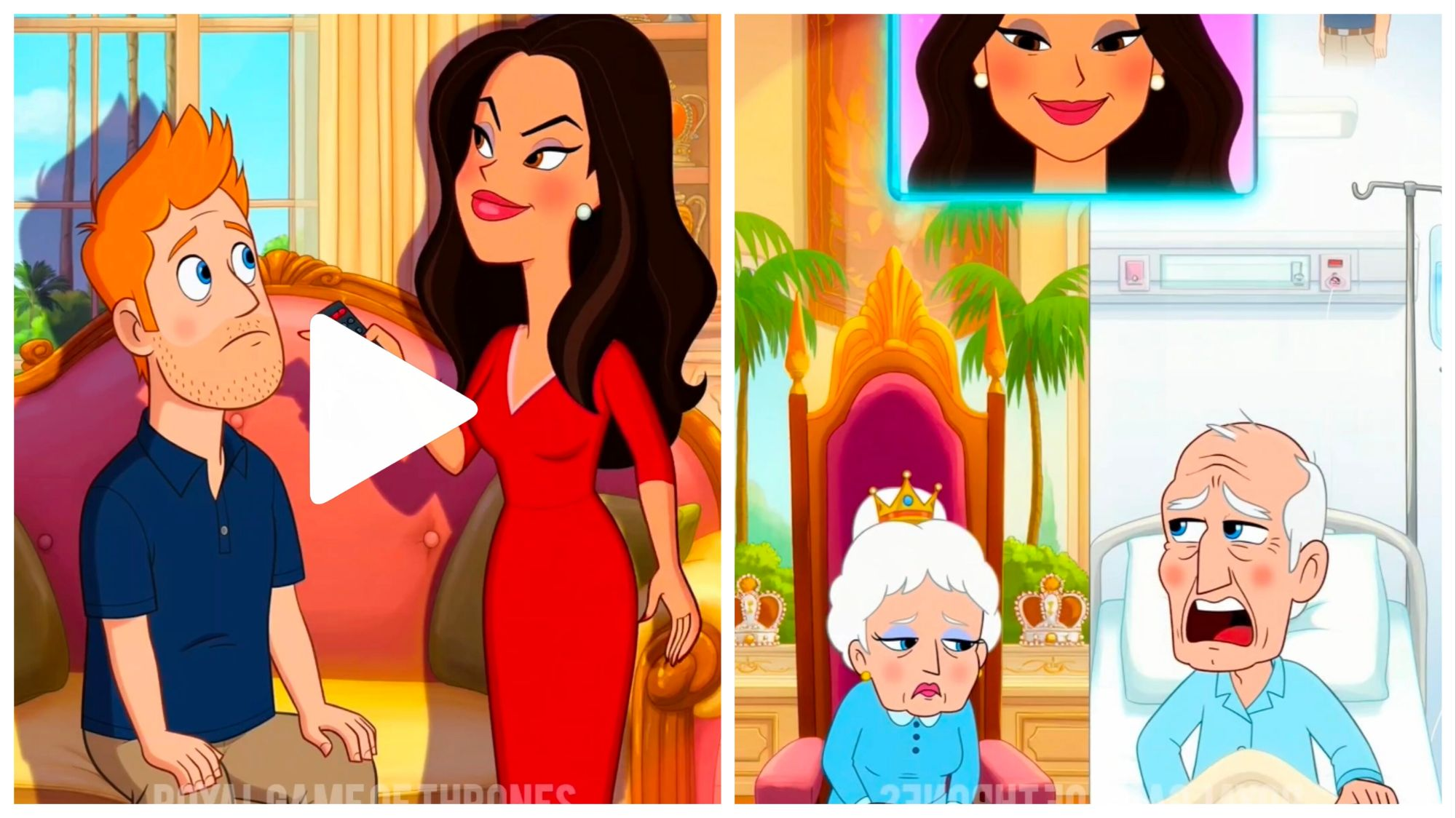
In a move that sent shockwaves through the world, Meghan Markle, the Duchess of Sussex, took to the global stage in 2021 to lob one of the most damaging accusations imaginable at the British Royal Family: racism. During her bombshell interview with Oprah Winfrey, alongside her husband Prince Harry, Meghan claimed that concerns had been raised within the palace about the skin color of their unborn son, Archie. This wasn’t just a passing comment; it was a calculated grenade thrown into the heart of an institution bound by centuries of tradition, duty, and silence. The Royals, ever the epitome of restraint, were left defenseless, unable to publicly rebut the claims without descending into the very tabloid fray they abhor. But what truly elevates this act from mere controversy to outright cruelty is the timing – a period when Prince Philip lay gravely ill in the hospital, and Queen Elizabeth II was navigating the twilight years of her historic reign.
The interview, aired on March 7, 2021, to an audience of millions, couldn’t have come at a more vulnerable moment for the monarchy. Prince Philip, the Duke of Edinburgh, had been admitted to King Edward VII’s Hospital on February 16, 2021, for what was initially described as a precautionary measure due to an infection. By the time the Sussexes’ tell-all hit the airwaves, the 99-year-old consort was undergoing treatment for a pre-existing heart condition, culminating in a successful procedure but leaving him hospitalized until March 16. He would pass away just weeks later, on April 9, 2021, marking the end of an era for the Queen, who had shared over seven decades of marriage with him. Meanwhile, Queen Elizabeth, then 94, was dealing with the immense pressures of the COVID-19 pandemic, the loss of her husband looming, and the weight of her own advancing age – she would ultimately pass in September 2022.
Meghan’s accusation was no off-the-cuff remark. It was delivered with precision, knowing full well the Royals’ unwritten code: they don’t engage in public spats, especially not on matters as sensitive as race. Harry confirmed in the interview that the unnamed family member who allegedly inquired about Archie’s skin tone was neither the Queen nor Prince Philip, but refused to name them, leaving a cloud of suspicion over the entire institution. This strategic vagueness amplified the damage, forcing the palace into a corner. Buckingham Palace’s eventual response was a measured statement expressing concern over the issues raised, particularly racism, but it was clear they were hamstrung – any vigorous defense would only fuel the fire. Critics argue this was Meghan’s masterstroke: an allegation explosive enough to dominate headlines, yet impossible for the accused to fully counter without breaking protocol.
The cruelty of the timing cannot be overstated. As Prince Philip fought for his health, the world watched Harry and Meghan paint the Royal Family as archaic, unsupportive, and racially insensitive. Reports from insiders reveal that the Duke himself viewed the interview as “madness,” believing no good could come from such public airing of grievances – a sentiment echoed by his long-standing advice to family members to avoid personal interviews altogether. For a man who had dedicated his life to service, often in the shadow of his wife, this must have been a bitter pill. Friends of the family noted that if Philip had passed before the broadcast, the interview likely would have been delayed, underscoring just how perilously close it came to compounding an unimaginable tragedy.
Queen Elizabeth, the stoic matriarch who had weathered wars, scandals, and personal losses, was reportedly “appalled” and “shocked” by the revelations. At a time when she should have been focusing on her husband’s recovery and her own well-being, she was thrust into crisis management. Palace aides scrambled for two days post-interview to craft a response, highlighting the deep rift it caused. The Queen’s final years were meant to be a graceful coda to her unparalleled reign, not marred by accusations that questioned the very integrity of her family. Yet, Meghan’s claims – including her own struggles with suicidal thoughts and lack of support – shifted the narrative, portraying the monarchy as cold and out of touch.
Public reaction in Britain was swift and unforgiving. The British media, often accused by the Sussexes of bias, didn’t hold back, labeling the timing as insensitive and the content as a “petty exercise in mean-spiritedness.” Headlines screamed of betrayal, with outlets like the Daily Mirror focusing on the “immense sadness” inflicted on Prince Charles and Prince William. Royal commentators pointed out the irony: while the couple sought freedom in California, complete with lucrative deals and a new life, they chose to “bomb” the family just as peace might have been possible. Polls reflected a divided public; a YouGov survey post-interview showed Britons split on whether the Royals had treated the couple fairly, but many viewed the Sussexes’ actions as vindictive.
Even beyond the immediate fallout, the interview’s shadow lingered. Subsequent appearances by Meghan, such as her 2021 chat on The Ellen DeGeneres Show, drew fresh criticism amid concerns for the Queen’s health, with fans decrying it as ill-timed. Detractors argue that the Oprah sit-down set a precedent for ongoing Sussex media ventures, each one chipping away at the monarchy’s dignity. Reports suggest Harry and Meghan may even harbor regrets about how the interview reflected on them, given Philip’s frailty – though such remorse, if real, came too late.
In retrospect, from our vantage in 2026, this episode stands as a pivotal moment in royal history. It exposed fractures that have yet to fully heal, with King Charles III now navigating a slimmer monarchy amid ongoing Sussex narratives. Meghan’s accusation, while sparking important conversations on race and mental health, came at a human cost – one borne by an elderly couple who had given everything to their nation. Was it a quest for truth, or a calculated strike? The evidence points to the latter, a move that forever altered the Windsors’ legacy. As one palace insider poignantly put it, “When the war is over, it’s probably best to stop bombing.” For the late Queen and Prince Philip, that bombing came far too late in their lives.