In the wake of mounting scrutiny over her professional ventures, Meghan Markle has once again stepped into the spotlight with a carefully curated announcement—this time blending business with family imagery in a way that has sparked renewed debate. Following reports that key media projects, including those linked to Netflix, failed to gain traction, Meghan appears to be pivoting بسرعة toward a more personal, lifestyle-driven brand strategy. But what has drawn the most attention is not the business itself, but who she chose to feature alongside it.
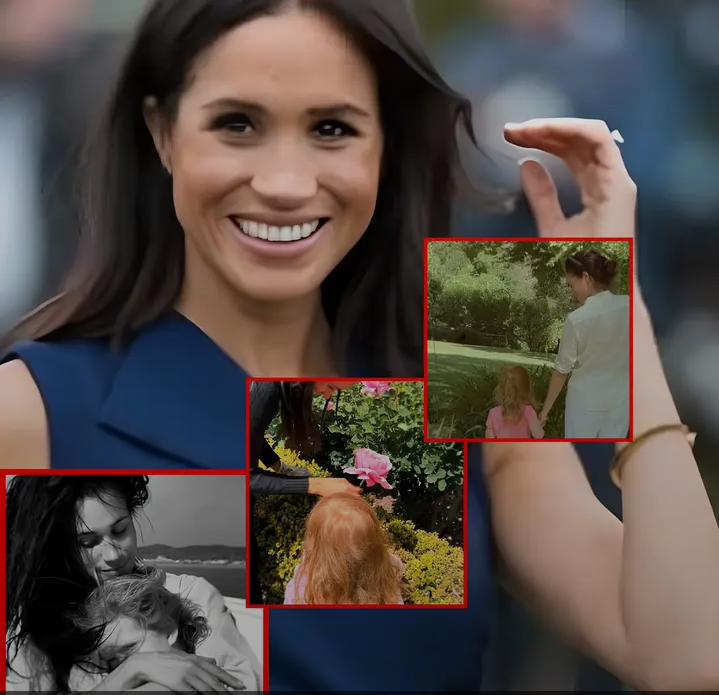
Red-haired Princess Lilibet’s heartwarming moment in Meghan Markle’s home video
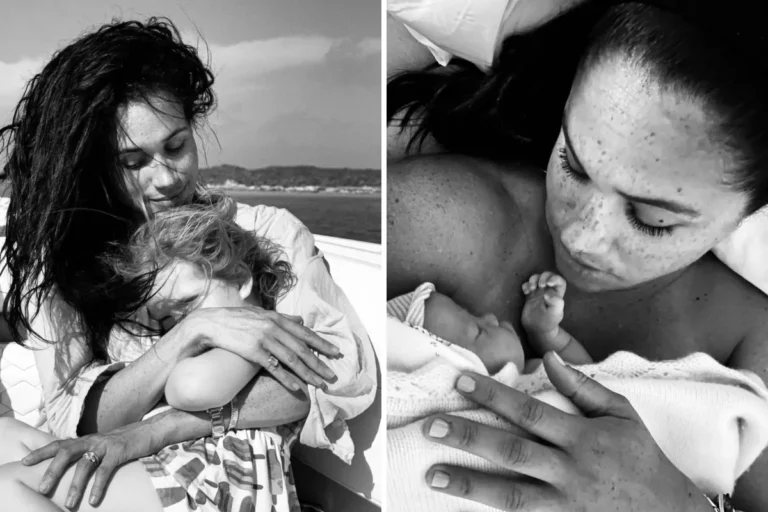
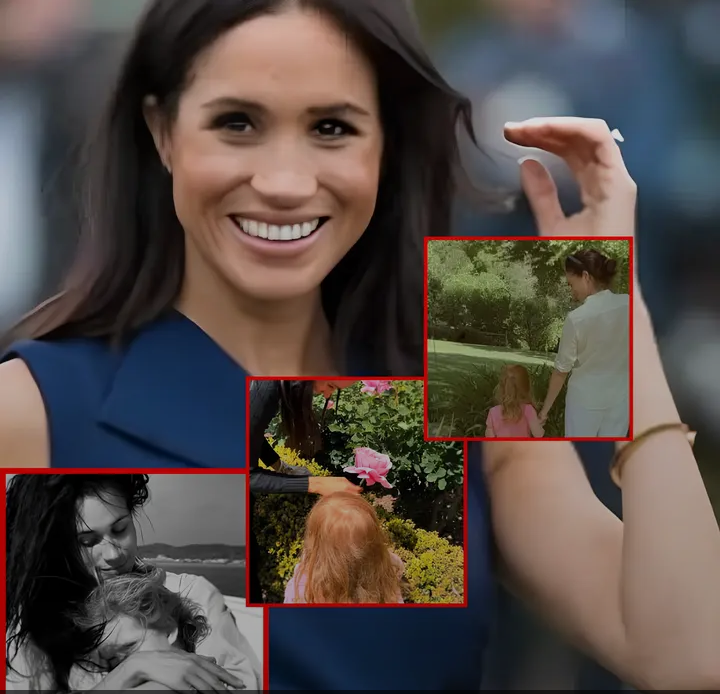
To unveil her latest collaboration with a luxury floral brand, Meghan shared a soft, intimate photograph of her daughter, Princess Lilibet, gently holding a white gardenia flower. The image, warm and understated, was paired with a teasing caption hinting at a new product launch. It followed a series of home videos showing Meghan arranging flowers, picking blooms in her garden, and documenting small family moments—all part of a broader narrative that merges domestic life with commercial storytelling.
Meghan and Lilibet barefoot at home
On the surface, the strategy is clear: authenticity sells. By inviting the public into her private world, Meghan reinforces an image of calm, creativity, and motherhood. The presence of Lilibet, even in brief glimpses, adds an emotional layer that resonates with audiences. Yet it is precisely this blending of family and business that has raised eyebrows. For some observers, the inclusion of a young child in brand promotion crosses a line that the couple had once seemed determined to maintain.
Meghan arranged flowers in another home video
Notably, Prince Harry has previously spoken about the importance of protecting their children’s privacy, particularly in contrast to the intense media exposure he experienced growing up. This has led to speculation about whether there are differing perspectives behind the scenes regarding how much of their family life should be shared publicly. While no direct conflict has been confirmed, the contrast between past statements and current actions has not gone unnoticed.
One commentator framed the issue succinctly: “You can’t build a brand on privacy and then selectively monetize visibility. People will question where the boundary is.” It’s a sentiment that reflects a broader unease among sections of the public, who see a potential contradiction in the Sussexes’ evolving approach to media and personal exposure.
At the same time, others argue that the reaction may be disproportionate. In today’s digital landscape, many public figures incorporate elements of their family life into their professional identity, particularly in lifestyle and wellness spaces. From this perspective, Meghan’s decision to include Lilibet could be seen as a natural extension of her brand rather than a calculated move. Supporters point out that the images remain carefully controlled, revealing only limited details and avoiding full exposure.
However, timing plays a crucial role in shaping perception. This latest campaign arrives at a moment when Meghan’s business ventures are under increased scrutiny, and expectations for her next move are high. By placing her daughter at the center of a promotional rollout, even subtly, the stakes are inevitably raised. What might have been received as a simple family moment in another context becomes, here, part of a larger narrative about strategy and intent.
The use of visual storytelling is particularly effective in this case. The soft tones, floral imagery, and gentle interactions create an atmosphere that feels both aspirational and accessible. It is a carefully constructed aesthetic, one that aligns seamlessly with the values often associated with modern lifestyle brands—wellness, authenticity, and emotional connection. Within that framework, Lilibet’s presence functions almost symbolically, reinforcing themes of growth, renewal, and continuity.
Yet symbolism can be double-edged. While it enhances the emotional appeal of the campaign, it also invites deeper analysis. Why now? Why this approach? And what does it signal about the direction of Meghan’s brand moving forward? These are the questions that continue to circulate, particularly among critics who view the move as part of a pattern rather than an isolated decision.
There is also an underlying tension between control and perception. Meghan clearly retains control over what is shared and how it is presented. But once released into the public sphere, those images take on a life of their own, interpreted through countless lenses. In that sense, even the most carefully managed narrative can produce unintended consequences.
Ultimately, this latest development underscores the complexity of navigating public life in the modern era. For Meghan, the integration of personal and professional identity is not just a choice—it is a defining feature of her brand. Whether that approach will yield long-term success remains to be seen. What is certain, however, is that each decision, no matter how small it may seem, contributes to a larger and increasingly scrutinized story.
And as that story continues to unfold, the balance between authenticity and strategy will likely remain at its center—shaping not only how Meghan is perceived, but how her ventures are received in an ever-watchful public eye.