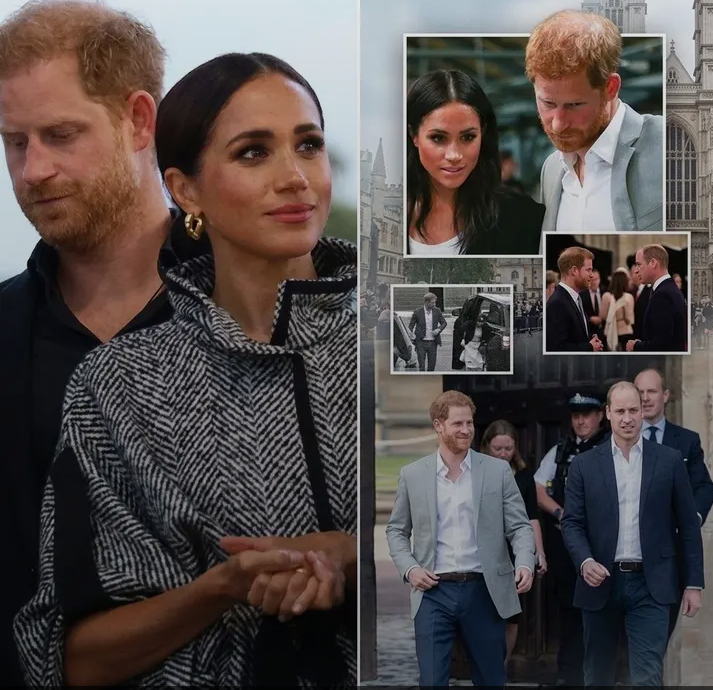
The British royal narrative has once again been shaken by fresh claims emerging from a new book by Tom Bower, a writer whose previous works have consistently stirred intense debate. This time, the focus turns to a moment in 2022 when Prince Harry made a sudden return to the United Kingdom—an event that, at the time, appeared routine on the surface but is now being reexamined under a far more controversial light.
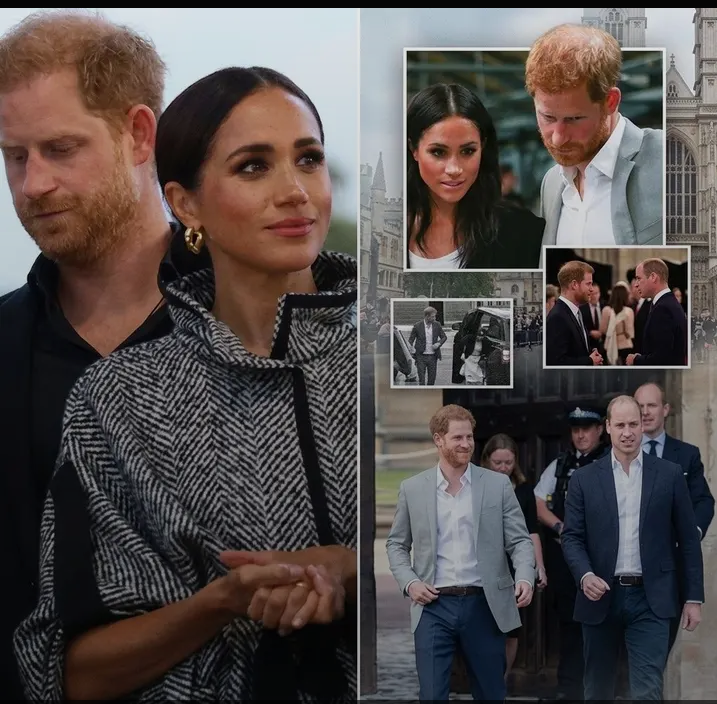
Prince Harry takes on British tabloid newspapers
According to the account presented, the trip was far from spontaneous or purely ceremonial. It is alleged that Meghan Markle played a decisive role in urging Harry to make the journey, despite the personal and emotional strain it may have caused him. The narrative suggests that he returned in a vulnerable state, driven less by personal choice and more by a sense of obligation tied to broader strategic considerations connected to their public image.
Prince Harry, Meghan Markle skewered in doc highlighting ‘encyclopedia of low points’: experts
At the time, the visit was framed through familiar royal themes—charity work, public appearances, and a continuation of the humanitarian identity Harry had cultivated over the years. However, the book argues that behind this carefully managed façade was a different objective: to reinforce visibility, maintain relevance, and sustain momentum for a brand that was under increasing pressure following their departure from royal duties.
Meghan Markle Makes Confession About Prince Harry in Netflix Trailer
This interpretation has divided public opinion sharply. Some observers see it as another example of how modern celebrity culture intersects with monarchy, where personal narratives are inevitably shaped by media strategy. Others, however, view the allegations more critically. One commentator noted that “if even part of this is true, it suggests a level of calculation that fundamentally clashes with the values people expect from royal figures.” Still, it is important to emphasize that these claims remain contested and have not been independently verified.
The ripple effects of this alleged episode appear to extend deeply into the internal dynamics of the royal family, particularly in the relationship between Harry and his older brother, Prince William. Already strained by years of public disagreements and differing paths, this moment is portrayed as a breaking point. Reports suggest that William perceived the situation not merely as a personal disagreement, but as a broader risk to the stability and reputation of the monarchy itself.
For William, whose future role places him at the center of the institution’s continuity, the stakes are inherently different. Insiders often describe him as pragmatic and protective, someone willing to make difficult decisions to safeguard the long-term credibility of the Crown. In that context, distancing himself from Harry—however painful—has been interpreted by some as a calculated necessity rather than an emotional reaction.
An observer familiar with royal affairs remarked that “there comes a moment when personal loyalty collides with institutional responsibility, and for William, that line seems to have been crossed.” Such reflections, while speculative, capture the broader sentiment among those who believe the divide between the brothers is now unlikely to be easily repaired.
At the same time, the portrayal of Harry as a passive participant in these events has sparked its own controversy. Critics argue that framing him as someone being “sent” or “directed” risks undermining his agency and oversimplifying a complex set of decisions. Supporters counter that his actions should be understood within the pressures of navigating a new life outside the royal framework, where expectations, opportunities, and vulnerabilities are all heightened.
The broader context cannot be ignored. Since stepping back from official duties, Harry and Meghan have sought to redefine their roles through media ventures, public speaking, and philanthropic initiatives. Their relationship with major partners such as Netflix has been closely scrutinized, with mixed outcomes fueling both criticism and continued interest. In such an environment, every public move is inevitably analyzed not just for its immediate impact, but for what it signals about their long-term strategy.
Yet beyond the headlines and competing narratives lies a more human dimension. Family conflict, especially under the glare of global attention, rarely conforms to simple explanations. The tensions described in the book—whether fully accurate or partially interpreted—reflect the challenges of balancing personal ambition, emotional bonds, and institutional expectations in an era where privacy is increasingly elusive.
In the end, these revelations add another layer to an already complex story. They do not provide definitive answers, but rather deepen the questions surrounding motive, responsibility, and consequence. For some readers, they reinforce existing doubts about the Sussexes’ choices. For others, they highlight the intensity of the scrutiny the couple continues to face. What remains clear is that the legacy of that 2022 moment, whatever its true nature, continues to shape perceptions and relationships within one of the most closely watched families in the world.