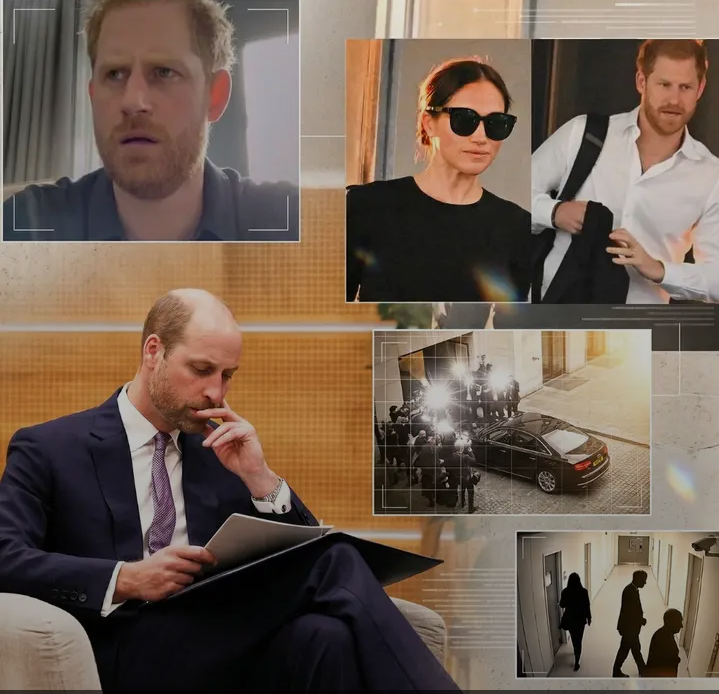
In recent weeks, a growing narrative has emerged around Prince William and his increasingly decisive role within the British royal family. According to royal commentators, his actions are no longer subtle or symbolic—they are structural. By redefining relationships and drawing clearer boundaries, William is said to be reshaping the internal dynamics of the monarchy in a way that leaves little room for ambiguity, particularly for the Duke and Duchess of Sussex.
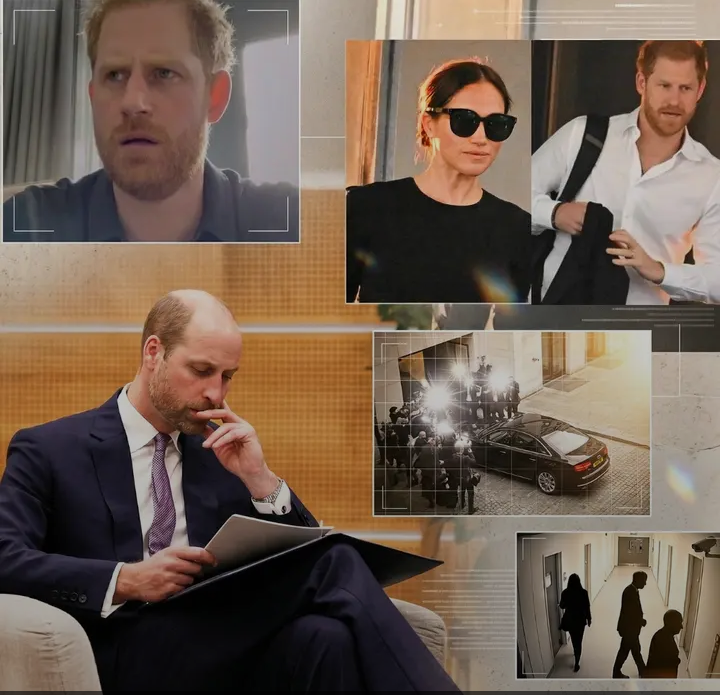
Meghan Markle’s fears over losing Prince Harry
At the heart of this shift is a reported strategy of separation. Rather than attempting to maintain a unified front at all costs, William appears to be organizing the family into distinct circles based on trust, loyalty, and public responsibility. This has had a direct impact on figures already under scrutiny, including Prince Harry and Meghan Markle, who many believe now find themselves firmly outside the core royal structure. One royal analyst described the situation bluntly: “This isn’t a temporary distancing—it looks more like a long-term recalibration of who is ‘in’ and who is ‘out.’”
Prince Harry & Meghan Markle’s Complicated Relationship With Netflix
The implications of such a shift are significant. For years, the Sussexes have navigated a complicated relationship with the monarchy, balancing independence with lingering ties. However, if William’s approach is indeed as firm as suggested, those ties may now be more symbolic than functional. Reports indicate that even indirect forms of contact—such as messages or gestures toward younger members of the family—have been quietly discouraged. To some observers, this signals not just personal tension, but a broader institutional stance.
Prince Harry and Meghan Markle send huge message amid royal crisis with ‘last chance’ move – The Mirror
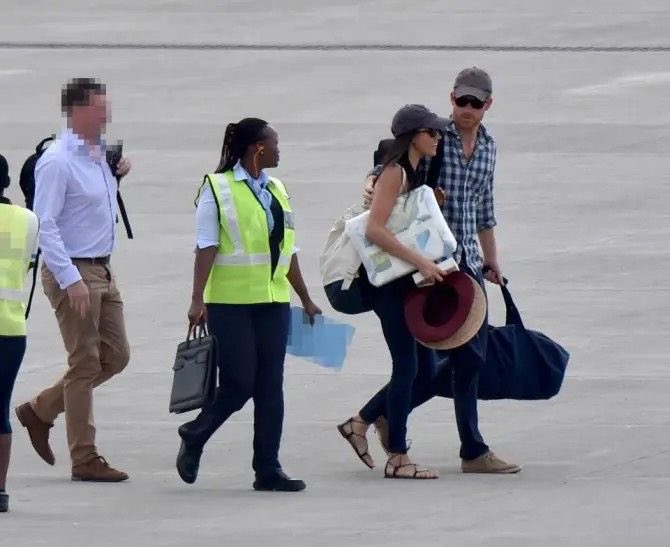
Interestingly, this internal restructuring may also help explain the Sussexes’ increasingly visible international activity. Their recent and rumored travel plans, including visits to places like Jordan and Australia, are being interpreted by some experts as more than routine engagements. Instead, they are seen as efforts to reinforce an alternative global identity—one that operates independently of royal endorsement. A media commentator noted, “When the center closes off, you build your own stage elsewhere. That’s what this looks like.”
There is also a strategic layer to this movement. Australia, in particular, holds historical and emotional significance within the Commonwealth, and the Sussexes’ interest in reconnecting with audiences there has sparked debate. While some supporters view it as a natural extension of their global outreach, critics argue it reflects a need to reclaim relevance in regions where royal interest remains strong. As one observer put it, “It’s not just about being seen—it’s about being seen where it still matters.”
Meanwhile, the pressure on King Charles III continues to mount. Balancing his constitutional duties with ongoing family tensions is no easy task, especially as the public becomes increasingly aware of these internal divisions. Yet, there is a sense that William’s growing influence may actually provide a form of stability—albeit a stricter, more controlled version of it. By setting firm boundaries, he could be attempting to protect the monarchy’s long-term credibility in an era where public perception is everything.
Not everyone agrees with this approach. Some voices suggest that such rigidity risks deepening fractures that may never fully heal. There remains a quieter hope, often associated with Catherine, Princess of Wales, that reconciliation might still be possible in the future. However, even those more optimistic perspectives acknowledge that the current trajectory points in the opposite direction.
For the Sussexes, the message—whether explicit or implied—appears to be clear: the path back into the inner workings of the royal family is narrowing. Whether their response will be to challenge that reality or to fully embrace a separate identity remains to be seen. What is certain is that the evolving dynamic is no longer just a family matter; it has become a defining storyline for the modern monarchy.
As one seasoned royal watcher remarked, “This is no longer about disagreements—it’s about direction. And right now, William seems to be the one holding the map.”