In an era where the British monarchy fights tooth and nail to prove its relevance amid rising republican sentiment, economic hardship for ordinary citizens, and endless scrutiny of taxpayer-funded privileges, the real danger isn’t coming from outside agitators or tabloid headlines. No, the greatest threat to the institution is staring back from the mirror: a cadre of entitled family members who cling to status, luxury, and royal perks while contributing next to nothing in return. Prince Andrew, Meghan Markle, Prince Harry, Sarah “Fergie” Ferguson, and even their lesser-known daughters—Princess Beatrice and Princess Eugenie—are prime examples of entitlement without contribution, status without service, and privilege without accountability.
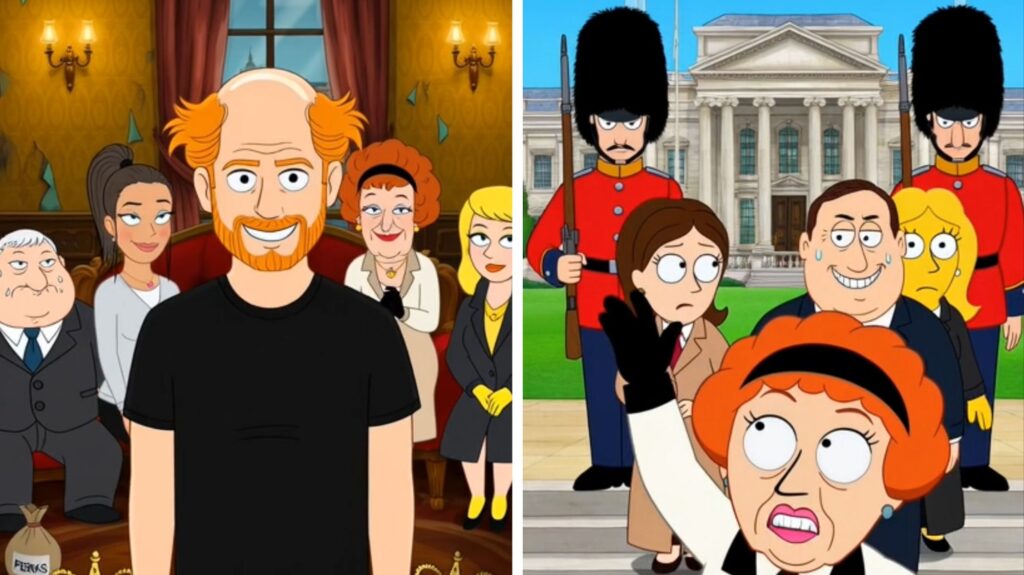
Let’s call this what it is: a slow internal hemorrhage. While King Charles III and Prince William diligently carry out hundreds of public engagements annually—representing the nation, championing causes, and upholding the monarchy’s ceremonial and charitable duties—these peripheral figures have turned royal association into a personal ATM and media weapon. They demand the trappings of royalty (security, titles, access, invitations) but deliver scandals, lawsuits, tell-all projects, and zero meaningful public service in exchange.
**Prince Andrew: The Poster Boy for Royal Freeloading**
Once hailed as a war hero for his Falklands service, Andrew has long since squandered that goodwill. His infamous friendship with the convicted sex offender Jeffrey Epstein has dragged the monarchy through years of reputational mud. Stripped of his titles, military affiliations, and even his home at Royal Lodge, Andrew’s 2026 arrest on suspicion of misconduct in public office—allegedly tied to passing confidential information—marks a new low. Yet even in disgrace, he has resisted full accountability, clinging to privileges while his actions force the Palace into constant damage control. The fallout isn’t just personal; it taints the entire institution, fueling calls for transparency and reform that distract from the working royals’ efforts.
**Sarah Ferguson: The Comeback Queen Who Never Really Left**
Fergie’s story is one of repeated reinvention at the monarchy’s expense. Divorced from Andrew since 1996, she has nevertheless hovered on the edges of royal life—attending events, living in grace-and-favor homes, and leveraging her connections for books, talk shows, and dubious friendships (including her own documented ties to Epstein). Her 2026 disappearance from public view amid the latest scandals only underscores the pattern: when things get hot, she retreats, but the damage lingers. Her presence has long been a PR liability rather than an asset, yet she continues to benefit from the royal brand without the burden of consistent service.
**Prince Harry and Meghan Markle: The Exit That Keeps on Costing**
The Duke and Duchess of Sussex’s 2020 departure was framed as a bid for independence, but it quickly morphed into a lucrative grievance industry. From bombshell interviews and a Netflix deal (now reportedly imploding amid unsold projects) to books and podcasts that air family laundry, Harry and Meghan have monetized their royal status while publicly criticizing the institution that gave it to them. Their 2026 plans—teasing “royal tours,” pushing for security funded by British taxpayers, and eyeing a potential UK return—suggest they want the perks without the protocol or duty. The result? A divided public, eroded trust in the monarchy, and resources diverted to manage the fallout instead of supporting frontline causes.
**Beatrice and Eugenie: The Invisible Non-Contributors Dragged Into the Spotlight**
Often overlooked but increasingly weaponized by the media, Princesses Beatrice and Princess Eugenie exemplify the problem of irrelevant royals. With minimal public engagements—Beatrice has focused on private-sector work, Eugenie stepped down from her anti-slavery charity role amid family scandal—they offer little to justify their titles or privileges. Yet whenever Andrew or Fergie make headlines, the sisters are hauled out as collateral damage or “human shields,” with reports of them being banned from events like Royal Ascot 2026 due to parental associations. Their desire to “hold on to royal status” as their identity, despite doing next to nothing for the Crown, highlights the entitlement at play: titles and access without the service that earns public support.
These individuals aren’t just personal embarrassments—they represent a systemic flaw. The monarchy survives on public goodwill, which is built on the perception of value for money. When “working royals” like Charles, Camilla, William, and Kate deliver visible service—patronages, visits, charitable leadership—the institution thrives. But when freeloaders drain resources (security costs, legal battles, PR crises) while generating negative stories, the math doesn’t add up.
Critics outside the family—republicans, budget hawks, social media skeptics—can be managed or ignored. But internal parasites? They erode the foundation from within. Every scandal involving these figures chips away at the monarchy’s credibility, forcing the core family to defend the indefensible rather than advance the Crown’s mission.
The solution is clear: a ruthless streamlining. Strip non-contributors of privileges, enforce accountability, and redirect focus to those who serve. The Crown’s future depends not on silencing critics, but on excising the freeloaders who profit from its name while hastening its decline. Until then, the real threat isn’t the mob at the gates—it’s the entitled relatives lounging in the drawing room.