A growing controversy in Australia is putting Prince Harry and Meghan Markle back under intense public scrutiny — and this time, it’s not about royal duties, but about who should pay for their visit.
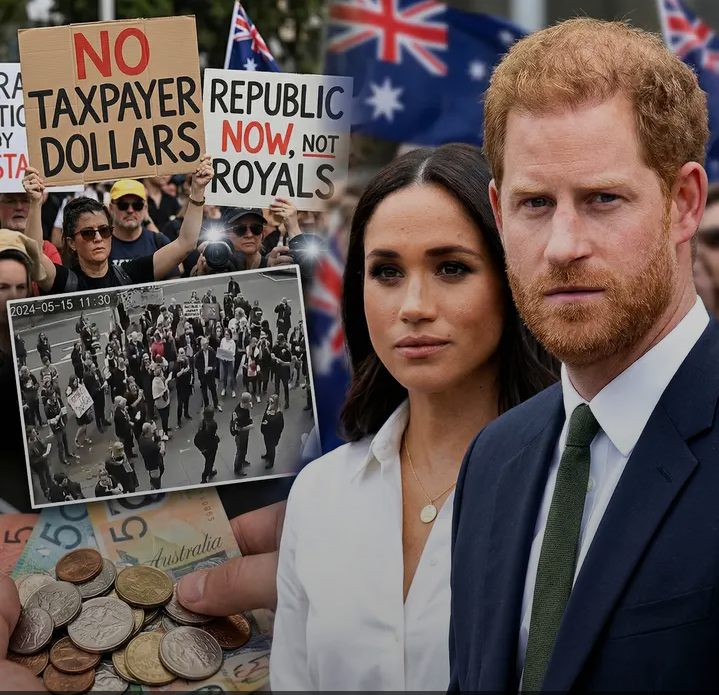
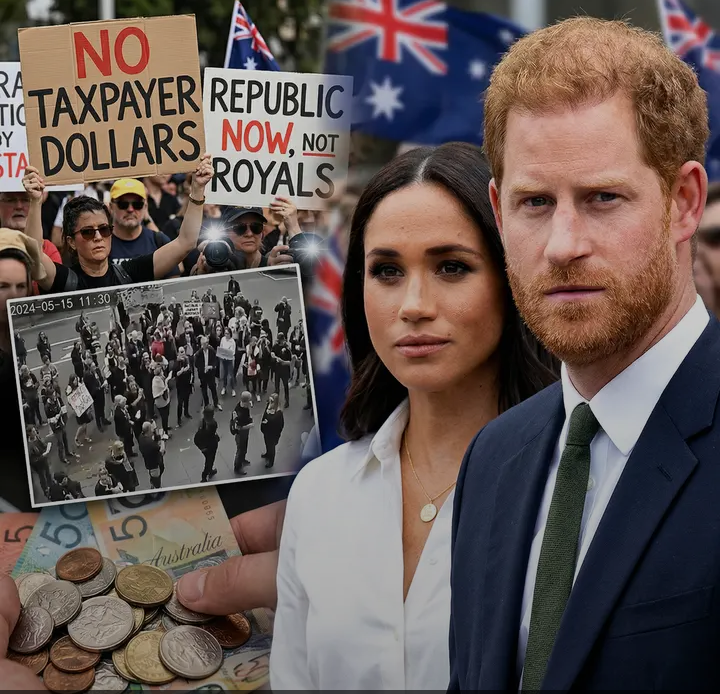
As reports emerged that the Duke and Duchess of Sussex are planning a trip to Australia in the coming weeks, what might have once been seen as a high-profile appearance has instead sparked a wave of backlash. At the center of the debate is a simple but increasingly loud demand: no taxpayer money should be used to fund any part of their visit.
The reaction has been swift and, in many cases, unusually blunt. A petition circulating online has begun attracting significant attention, calling for Australian authorities to ensure that public funds are not used for security, logistics, or any official support tied to the couple’s trip. The message behind it is clear — if the visit is private, then it should be treated as such in every sense.
For many Australians, the issue goes beyond a single trip. Critics argue that Prince Harry and Meghan Markle stepped back from their roles as senior working royals in 2020, choosing to pursue an independent life outside the structure of the British royal family. Because of that decision, some believe it would be inappropriate for them to receive any form of state-backed assistance during international visits.
The debate has also tapped into broader frustrations. With the cost of living continuing to rise, some members of the public have questioned why taxpayer resources should even be considered for figures who are no longer officially representing the monarchy. For these critics, the issue is not personal, but practical — a matter of fairness and accountability in how public money is spent.
At the same time, others have pointed out that visits by high-profile figures can carry complex security considerations, regardless of their official status. Ensuring safety in such situations often involves coordination with local authorities, which can blur the line between private travel and public responsibility. This has added another layer of complexity to an already heated discussion.
What makes the situation particularly striking is how quickly the conversation has escalated. What began as a report about a potential visit has evolved into a wider debate about titles, privilege, and public expectations. The involvement of social media has only accelerated this process, with strong opinions on both sides spreading rapidly and drawing international attention.
So far, there has been no official confirmation regarding how the visit would be funded or what level of support, if any, would be provided. However, the intensity of the public reaction suggests that any decision could face close scrutiny.
As the discussion continues, one thing is becoming increasingly clear: this is no longer just about a trip. It has become a reflection of how public attitudes toward Prince Harry and Meghan Markle may be shifting — particularly in countries where their connection to the monarchy once drew widespread enthusiasm.
Whether the visit ultimately goes ahead as planned or not, the debate it has triggered is unlikely to fade quickly. And as pressure continues to build, the question now echoing across Australia is both simple and loaded:
Should public money ever be used for a visit that is no longer officially royal — or has the line already been crossed?