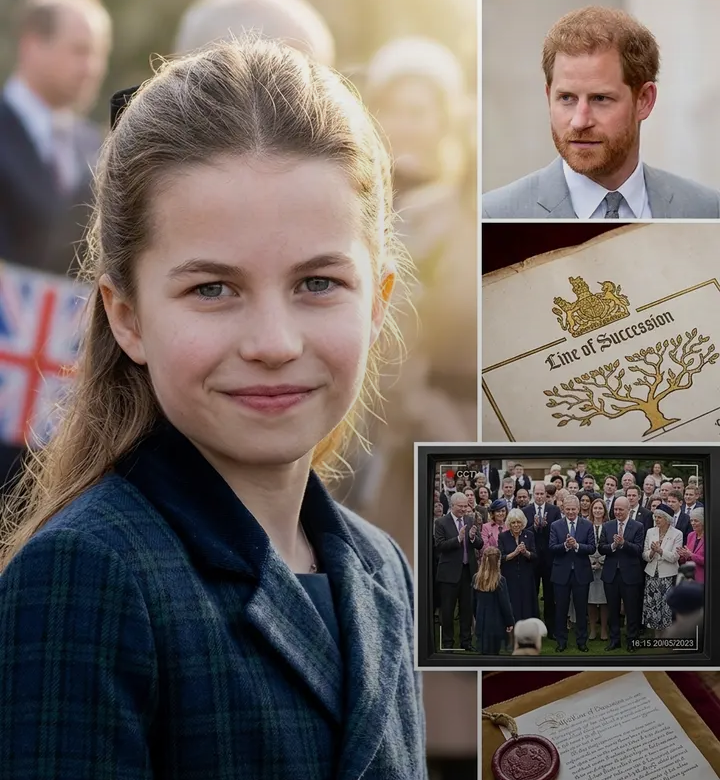
Prince Harry, Duke of Sussex, is currently eighth in line to the British throne. Princess Charlotte is third. The gap between them has been growing since May 2, 2015, the day Charlotte was born and immediately took fourth place in the succession, pushing Harry from fourth to fifth.
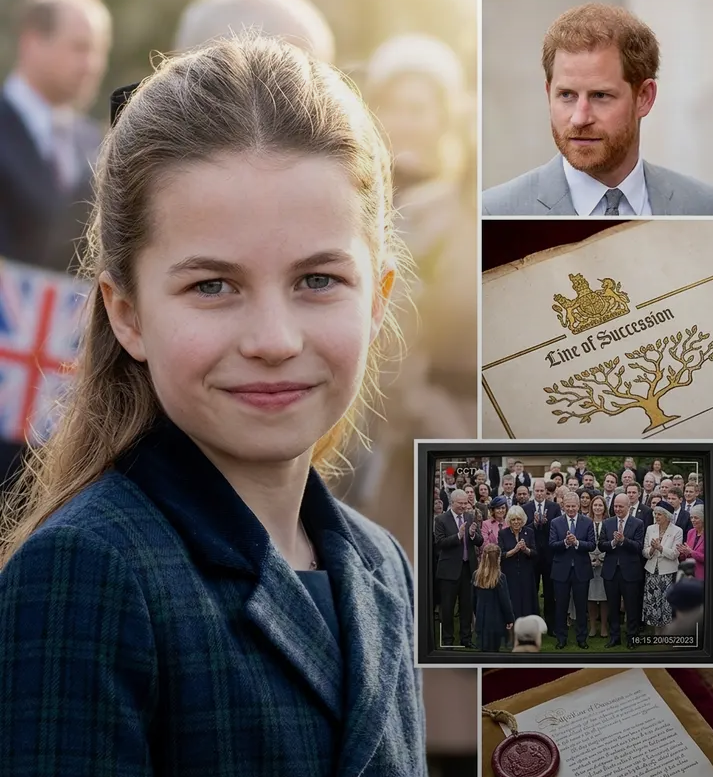
When Charlotte’s brother Louis was born in 2018, Harry moved further back — to sixth. Then Harry’s own son Archie was born, and his daughter Lilibet, moving Harry to eighth in the current order of succession.
But the structural fact — that Charlotte outranks the man who was once third in line and is now a private individual living in California — is one of the more quietly remarkable features of the current succession. Charlotte is nine years old. She attends school in Berkshire. She plays netball and does ballet, according to her father William. She does not yet have public duties, patronages, or a formal royal role.
And she outranks her uncle. Not symbolically — constitutionally. If William were to become King tomorrow, Charlotte would immediately become Princess of Wales and second in line to the throne. She would outrank every working royal except her father and her brother George.
Harry, in his memoir “Spare,” wrote extensively about the “heir and spare” dynamic — the way the royal family organises itself around the distinction between those who will inherit and those who will not. Charlotte is neither heir nor spare in the traditional sense. She is third in line, protected by a law that did not exist when her father was born, outranking an uncle who has left the institution entirely. The family she was born into has changed significantly in the nine years since she arrived in it. Her position within it has not moved.