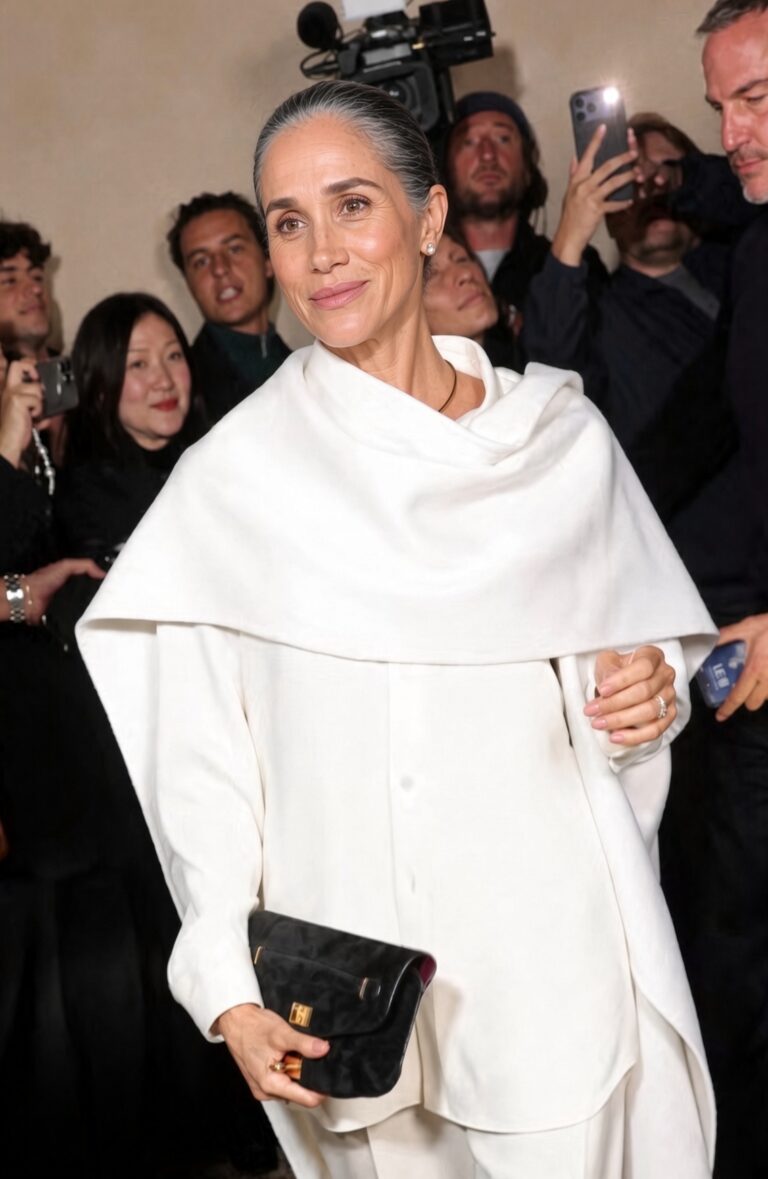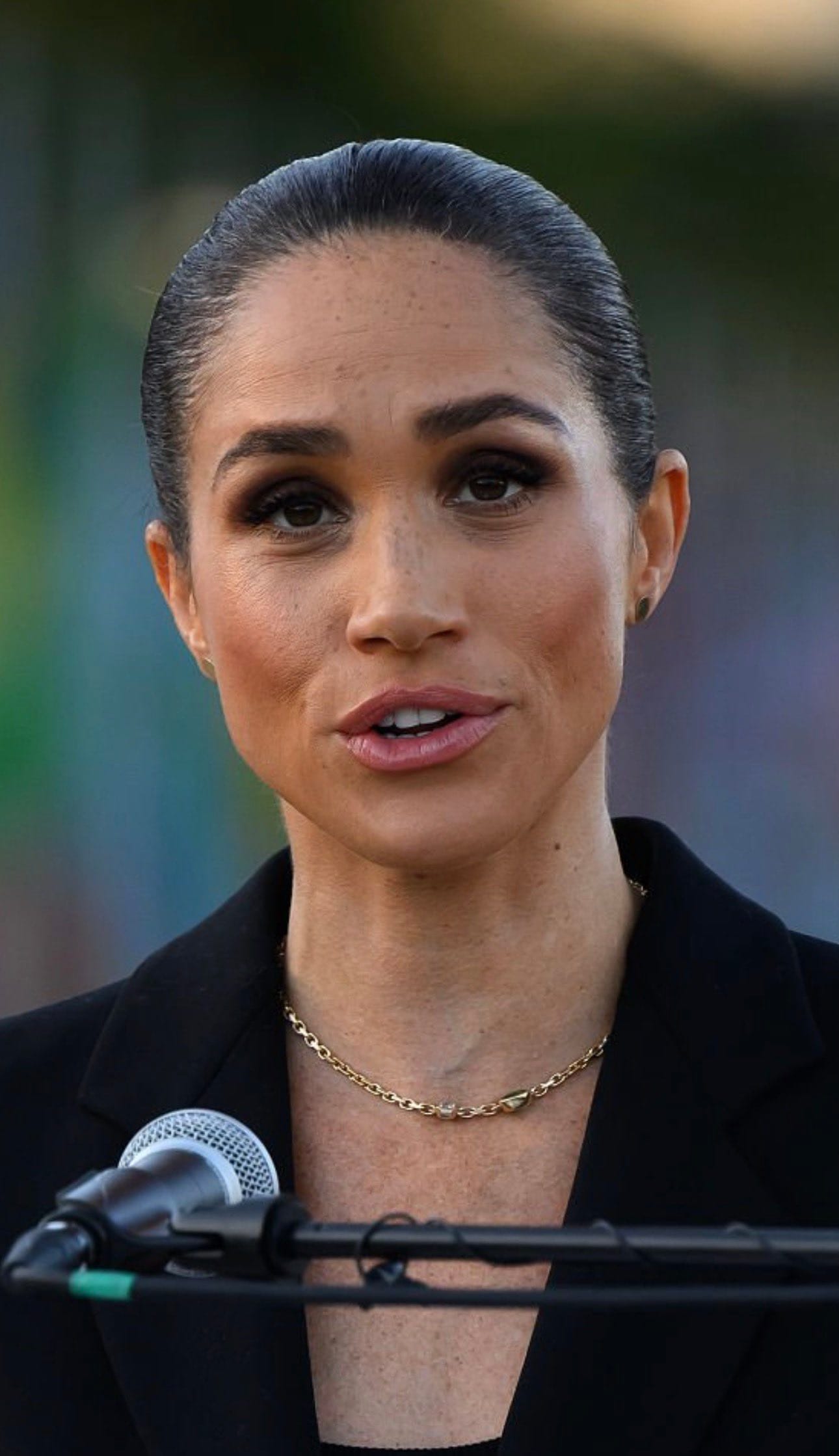
Geneva, Switzerland – Standing solemnly before the haunting Lost Screen Memorial, where fifty glowing screens lit up the night sky to honor children whose lives were tragically cut short by online harms, Meghan Markle delivered what many expected to be a powerful, unassailable call for change. “Children must be safe by design, not safe by chance,” she declared, her voice steady and impassioned. On the surface, who could argue? Grieving parents deserve a platform. Tech giants need accountability. Vulnerable kids should never fall victim to the digital wild west.
But in the hours and days since the speech, a firestorm has erupted online and in royal-watch circles. Far from earning universal praise, Meghan’s appearance has been slammed as the latest chapter in a now-familiar story: a high-profile advocate whose words ring hollow when measured against her own track record. The criticism isn’t about the cause itself—protecting children online is a noble goal. It’s about the messenger. And the widening chasm between the standards Meghan Markle publicly demands and the ones she appears unwilling to live by has left even some former supporters shaking their heads.
The event itself was undeniably moving. The Lost Screen Memorial transformed a public square into a sea of illuminated panels, each one representing a young life lost after encounters with harmful online content. Parents shared raw testimonies of bullying, grooming, and despair that spiraled out of control in digital spaces. Meghan, dressed in elegant black, positioned herself as an ally to these families, urging governments, corporations, and society at large to prioritize “safety by design.” It was the kind of polished, camera-ready moment the Duchess of Sussex has perfected since stepping back from royal duties and launching her post-royal brand.
Yet, as one commentator put it bluntly, “Speeches built on moral authority inevitably invite scrutiny of the messenger.” And scrutiny is exactly what has followed—intense, unflinching, and rooted in years of contradictions that refuse to fade.
For nearly a decade, Prince Harry and Meghan Markle have cast themselves as victims of relentless media intrusion. They’ve sued newspapers, railed against paparazzi, and framed their 2020 exit from the royal family as a desperate bid for privacy to shield their children, Archie and Lilibet, from the same “toxic” spotlight that they say damaged Harry’s mother, Princess Diana. Their Netflix documentary, explosive interviews, and public statements painted a picture of a couple desperate to live quietly, away from the glare.
But reality has told a different story—one of carefully curated, controlled visibility. Over time, glimpses of Archie and Lili have appeared in high-profile projects: the aforementioned Netflix series, Oprah interviews, social media posts tied to Meghan’s lifestyle relaunch, and personal anecdotes woven into her Archewell initiatives and lifestyle branding. These aren’t accidental leaks or unwanted paparazzi shots. They’re strategic, polished moments that humanize the Sussex brand while advancing commercial interests—from children’s books and podcasts to merchandise and media deals.
No one is suggesting a mother should never share joyful family moments. The uncomfortable question critics are raising is far more pointed: Is privacy a universal principle, or a selective privilege that applies only when it suits the Sussexes’ narrative? Demanding ironclad protection from the press while greenlighting exposure on their own terms doesn’t erase the exploitation—it simply shifts who profits from it. As the provided analysis notes, “This increasingly appears less like incidental sharing by a private mother and more like carefully managed visibility within a broader ecosystem of personal branding and image cultivation.”
The hypocrisy charge doesn’t stop at family photos. The Geneva speech zeroed in on the devastating toll of online cruelty—harassment, conspiracy theories, and digital mobs that can push vulnerable people, especially children, to the brink. Yet one of the most vicious recent examples of sustained online abuse in royal discourse unfolded during Princess Catherine’s serious illness earlier this year. False rumors, cruel memes, and outright conspiracy theories about Kate’s health exploded across social media, fueled in large part by Meghan’s most vocal online supporters. The attacks ranged from wild speculation to outright mockery of a woman battling cancer.
Where was Meghan’s condemnation? Public silence from the Duchess and her team in the face of this torrent has raised eyebrows. Anti-bullying advocacy, it seems, is straightforward when aimed at critics or the media. It becomes far more complicated when the bullies claim to be fighting in your corner. “Anti-bullying principles are easiest to defend when directed outward,” the critique observes. “They become more meaningful when applied to those perceived to be on your side.”
This pattern—of spotlighting important causes while sidestepping personal accountability—has become the defining shadow over Meghan’s public life. Vulnerable people and their stories risk becoming emotional props in what some call “carefully staged campaigns.” The grieving parents at the Lost Screen Memorial deserve dignity, not to be overshadowed by celebrity optics. Yet, as audiences streamed out of the event and scrolled through coverage, the dominant conversation wasn’t solely about the children or the memorial. It quickly pivoted to Meghan herself—her delivery, her wardrobe, her past, and now, inevitably, her inconsistencies.
That shift in focus is telling. When the messenger eclipses the message, the entire exercise begins to feel less like genuine leadership and more like performance. The powerful line—“Children must be safe by design, not safe by chance”—lands with less impact when it appears that the rules Meghan insists others follow somehow become flexible the moment they bump up against her own image, narrative, or business interests.
Royal observers have noted the pattern before: the Sussexes’ lawsuits against media outlets for privacy invasions, contrasted with their own selective disclosures; their calls for kindness in the digital age, contrasted with the aggressive defense (or silence) around supporter-driven online attacks. Advocacy without consistency, the argument goes, isn’t advocacy at all. It’s branding.
Of course, defenders will counter that the Sussexes have faced unprecedented scrutiny and that any public figure is entitled to control their story. They’ll point out that Meghan has long championed mental health, racial justice, and now online safety through Archewell. But the text’s core challenge remains: true leadership requires applying the same standards to yourself that you preach to the world. When that gap widens, trust erodes.
As the dust settles on the Geneva speech, the conversation has moved far beyond the memorial’s glowing screens. It has become a referendum on authenticity in the age of celebrity activism. The children represented there—and the parents left behind—deserve better than becoming footnotes in another round of royal drama. Their pain isn’t a backdrop for personal image rehabilitation or selective outrage.
Meghan Markle’s message was clear and compelling in isolation. But in the harsh light of her own history, it has invited the very scrutiny she once sought to escape. Practice what you preach, the critics say. Until that happens, speeches like the one in Geneva will continue to be met not just with applause, but with a very loud, very public question mark.
The original X post capturing the speech (https://x.com/i/status/2056135785787859344) has already racked up thousands of comments, many echoing the same sentiment: powerful words, but where’s the consistency? In a world drowning in digital noise, authenticity may be the rarest commodity of all—and for Meghan Markle, it’s becoming the one her critics say she can no longer afford to fake.