In a move widely branded as desperate headline-grabbing, Meghan Markle dropped intimate Instagram stories of herself cuddling and laughing with a friend’s young child on the very day the British Royal Family gathered for Trooping the Colour — and the backlash has been ferocious.
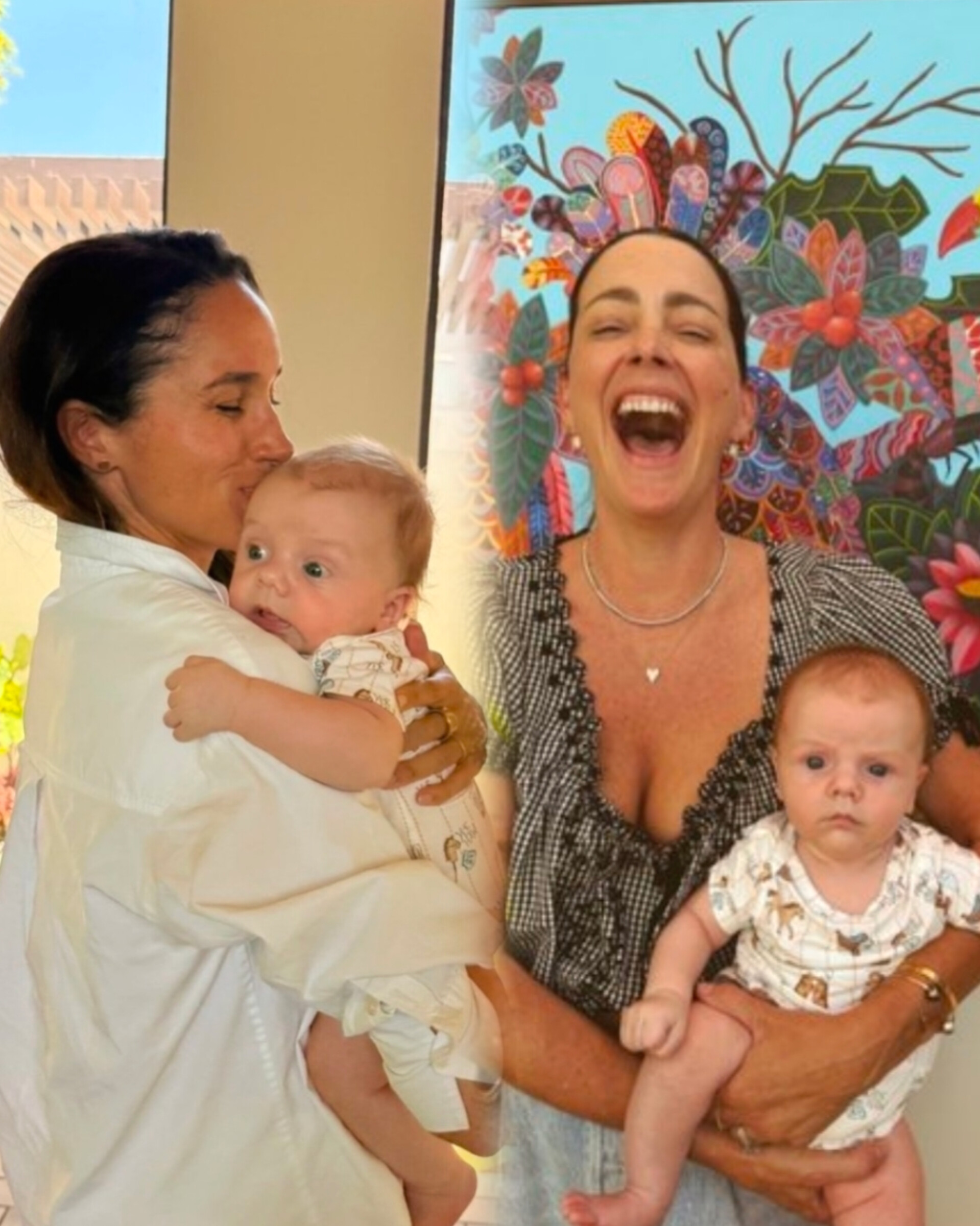
The images, now circulating widely across social media, show the Duchess of Sussex in two affectionate poses with a red-haired baby boy. In the first, she wears a crisp white shirt and holds the infant close, her eyes closed as she presses her face to his head. The caption reads: “We know I love a redhead. And let me stop you before they start, no it’s not his baby 😂”
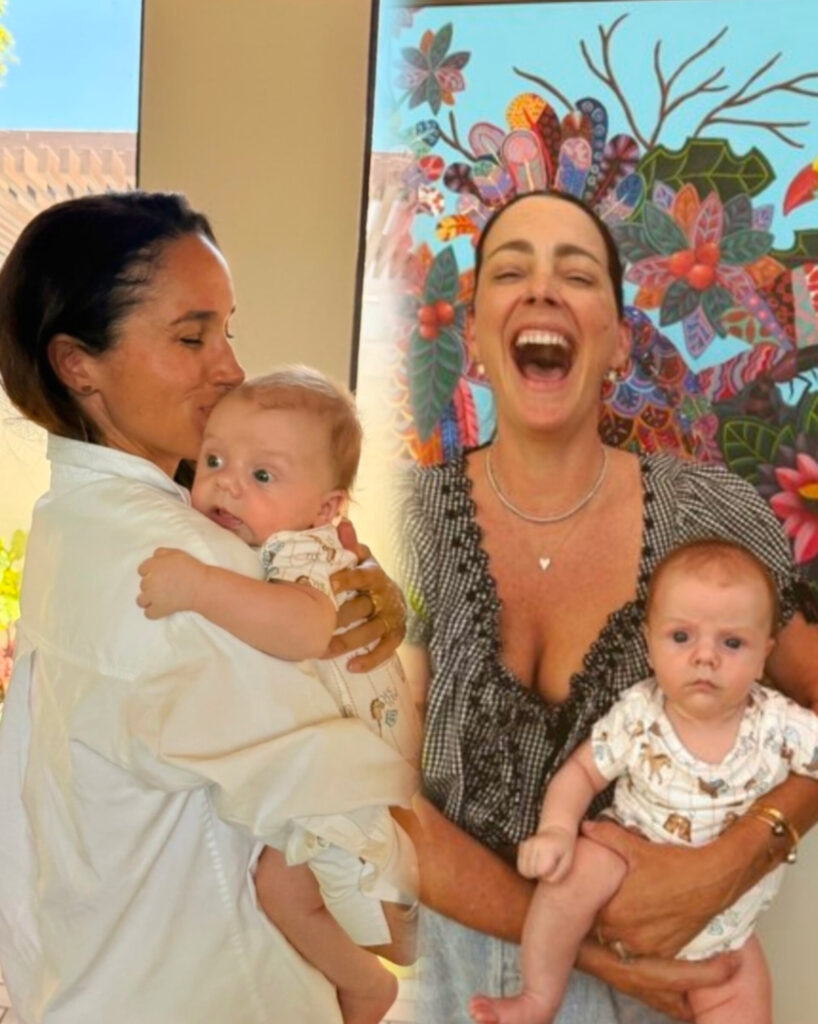
The second photo captures her in a black-and-white gingham top and jeans, mouth wide open in laughter in front of a vibrant parrot-and-toucan mural, cradling the same baby in an animal-print onesie. She tags the mother: “Love you @heartmom 💕”
While the child’s mother appears to have consented, critics are calling the timing and the decision breathtakingly hypocritical.
Trooping the Colour is one of the most important dates on the royal calendar — a centuries-old military parade honouring the Sovereign, attended this year by King Charles, Queen Camilla, Prince William, Princess Catherine, and their three children. The Sussexes were nowhere near the celebrations. Instead, Meghan chose that exact moment to flood feeds with high-resolution photos of another woman’s minor child.
The outrage intensified when old video clips of Meghan speaking about online harms resurfaced alongside the new photos. In the footage, she sits on stage at what appears to be a Fortune event, earnestly discussing the time she has spent “working on online harms, specifically surrounding protecting our children, not ours personally, but all of our children for what they’re susceptible to in the online space.”
She continues: “So, I’m sensitive to that. I also recognize…”
The contrast could not be starker. The same woman who has built a post-royal brand around shielding children from digital exploitation and media intrusion is now voluntarily publishing clear, identifiable images of a baby for the world to see, screenshot, comment on, and potentially target.
The Sussexes have long justified keeping Archie and Lilibet almost entirely out of public view by citing safety, privacy, and the toxic nature of online spaces. Their faces are routinely blurred or hidden. Yet the same standards, critics argue, do not appear to apply when it suits Meghan’s narrative.
“Why post someone else’s child in high definition while your own kids remain invisible?” one widely shared comment demanded. “If online harms are such a grave threat, why expose this baby to the exact spotlight you claim to hate?”
The “I love a redhead” caption has also drawn sharp commentary, viewed by many as a clumsy attempt to pre-empt tabloid speculation while simultaneously drawing more attention to the images. On a day when the working royals were carrying out centuries of tradition in front of cheering crowds, Meghan’s posts dominated certain corners of social media — exactly as intended, according to her detractors.
Royal watchers note this fits a familiar pattern: high-profile interventions timed to coincide with major royal events the Sussexes no longer participate in. Whether it is Netflix documentaries, podcasts, or Instagram stories, the couple frequently finds ways to remain part of the conversation even from 5,000 miles away in Montecito.
Supporters of the Duchess argue the posts were innocent moments of friendship and maternal affection shared with permission. But for a public increasingly sceptical of the Sussex brand, the photos have only reinforced perceptions of selective principles and opportunistic PR.
Harry and Meghan have repeatedly positioned themselves as champions of child welfare, mental health, and digital safety through Archewell and various speaking engagements. Yet every time they step back into the spotlight with content involving children — whether their own carefully managed appearances or, now, someone else’s baby — the same questions return louder than before.
How much of the concern for “protecting our children” is genuine principle, and how much is convenient branding?
As London celebrated Trooping the Colour with pageantry, precision, and public affection for the monarchy, Meghan’s Instagram activity provided a very different kind of spectacle. The images of the laughing Duchess and the wide-eyed baby are undeniably sweet on the surface. But in the context of years of lectures about online harms, privacy, and the dangers of exposing children to public scrutiny, they have landed with a thud.
The hypocrisy charge is now trending for a reason. And no amount of laughing emojis or redhead jokes appears to be washing it away.
The working royals got on with their duty. Meghan got the clicks. The public is left, once again, connecting the dots.