Fan-made mock-up uses decade-old photo to airbrush reality as Sussex PR stunt backfires once again
In what has to be one of the most spectacular own-goals in recent royal-adjacent PR history, a heavily photoshopped mock-up of Prince Harry gracing the cover of TIME Magazine’s first-ever “100 Most Influential People in Sports 2026” list has gone viral for all the wrong reasons.
The internet is howling with laughter after side-by-side images exposed the desperate editing job that tried — and failed spectacularly — to turn the Duke of Sussex into a youthful, full-haired “Champion. Changemaker. Game Changer.”
The fake cover, which has been widely shared and mocked online, shows Harry looking serious and statesmanlike in a black shirt with the Invictus Games logo. The headline treatment screams influence: “THE 100 MOST INFLUENTIAL PEOPLE IN SPORTS.” Subtext gushes about how he uses “the power of sport to inspire, heal, and unite.”
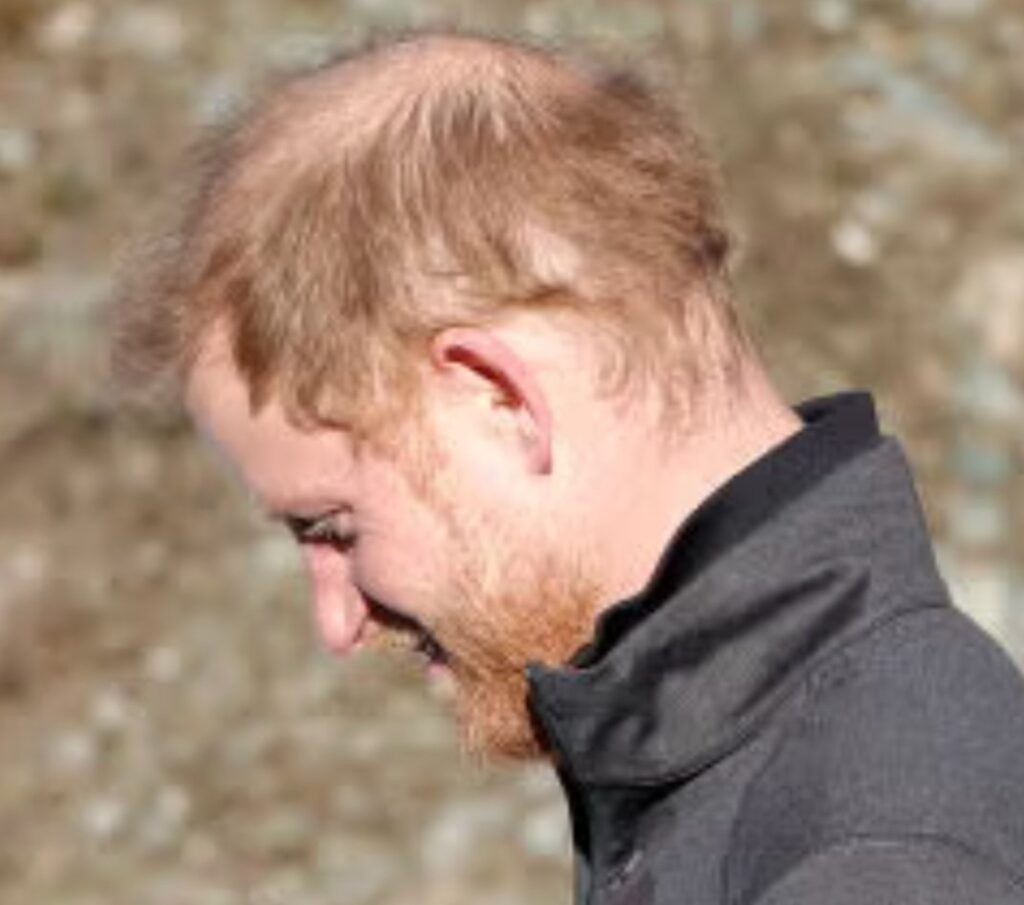
But right next to it, a recent candid photograph tells a very different story.
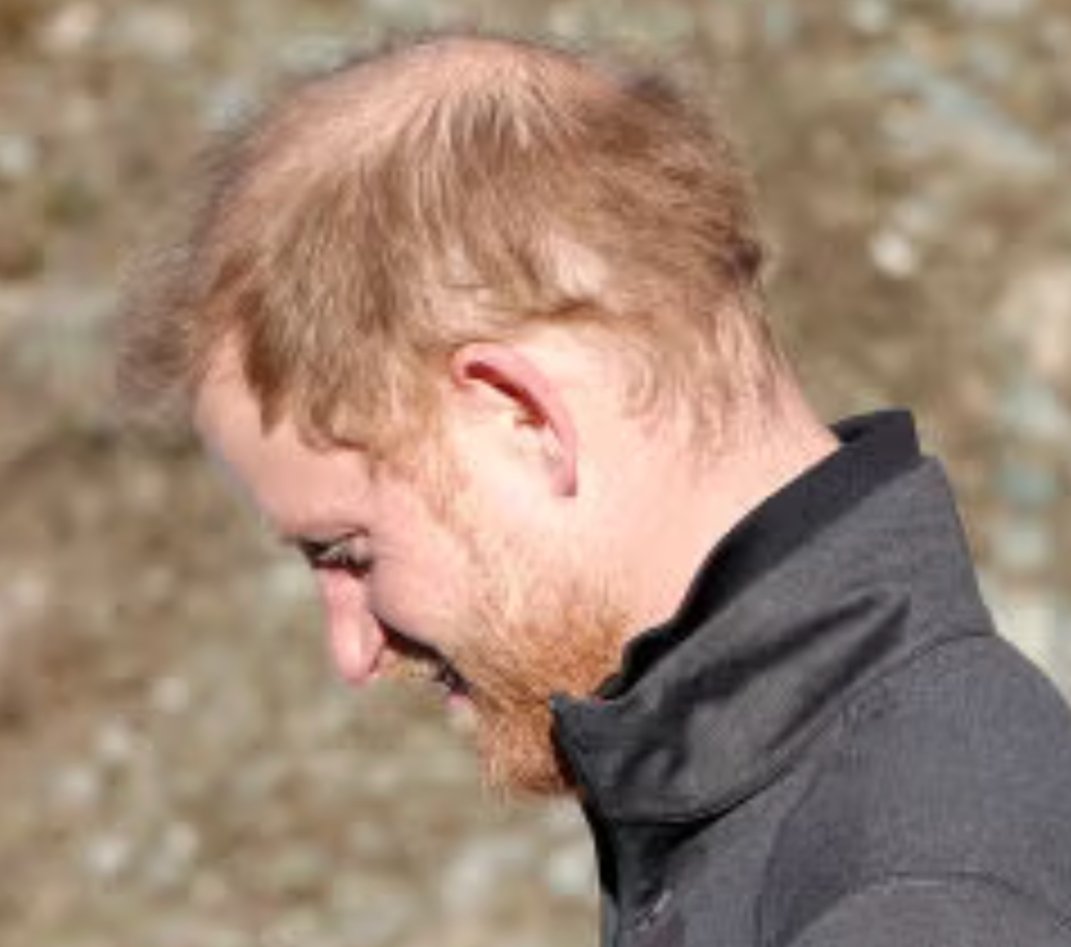
The unedited image captures Harry in profile, head tilted down, mid-smile or laugh. What immediately jumps out is the large, undeniable bald patch dominating the crown of his head. The remaining reddish hair is thin, wispy, and struggling to cover the scalp. It’s the kind of shot that shows a man in his early 40s dealing with the very normal, very public progression of male pattern baldness. No filters. No mercy. No hairline.
The contrast with the magazine mock-up is brutal. On the fake cover, Harry’s hair is suddenly thick, voluminous, and perfectly styled — the kind of restoration that would make any transplant surgeon proud. His skin is smoothed to porcelain, his expression transformed into something far more intense and leader-like, and the overall vibe is pure “I belong on the cover of TIME” energy.
Observers have already identified the source photo as likely dating back to around 2017 or earlier — long before the accelerated thinning became impossible to ignore in recent public appearances. The editing is so heavy-handed that even casual viewers are calling it out.
Social media erupted with brutal but hilarious commentary. One widely shared reaction summed it up perfectly: “I mean there’s photoshopping & then there’s photoshopping.” Another user wrote, “Who do they think they’re fooling?” A third observed bluntly: “He is a shell of his former self! She has sucked the life out of that man.” Others pointed out the obvious age of the photo and the visible signs of previous hair transplant attempts that appear to have been rejected by his scalp in some areas.
The entire episode is made even more absurd by one simple fact: the cover itself is fake.
While Prince Harry was legitimately included in TIME’s 2026 Sports list in the Leaders category for his work with the Invictus Games, he is not on the actual cover. That honor belongs to LeBron James, who received the main cover treatment and a dedicated profile. The glossy, magazine-style treatment featuring Harry front and center with dramatic typography and a studio backdrop is a fan-made or unofficial mock-up that has been circulating as if it were real. The date on the fake version even says May 12, 2026 — weeks before the actual list dropped in June.
This isn’t the first time Sussex-related imagery has invited accusations of heavy curation and selective reality. From carefully controlled photo releases to documentary footage that leans on older, more flattering material, the pattern of image management has become a recurring theme that critics say undermines any genuine message.
What makes this particular fail so delicious for online observers is how unnecessary it was. Harry’s inclusion in the TIME100 Sports list for founding Invictus Games — an event that has genuinely helped wounded veterans find purpose through sport — is a legitimate recognition. The Games have grown into a meaningful international platform. He didn’t need a fake cover or a 10-year-old photo with a full head of hair to validate that work.
Instead, the over-the-top mock-up and the clumsy photoshop job have turned what could have been a positive moment into another viral meme about inauthenticity. The very thing the Sussex camp is often accused of — manufacturing an image of effortless global influence while reality tells a more complicated story — is now playing out in high-resolution side-by-side comparison for everyone to see.
Royal watchers and casual observers alike are pointing out the irony. Harry has spent years positioning himself as a modern, relatable figure who has “stepped back” to do meaningful work on his own terms. Yet the visual evidence of this fake cover suggests an almost panicked need to project an image of peak vitality and relevance that no longer matches recent public sightings.
The bald spot itself has become something of a running commentary in certain corners of social media for years — a visible marker of time passing that no amount of strategic lighting, angles, or post-production can fully erase. The decision to reach back nearly a decade for source material only reinforces the perception that the current reality is something to be hidden rather than embraced.
Critics argue this kind of visual sleight-of-hand fits a broader pattern: the Montecito mansion portrayed as both a sanctuary and a constant backdrop for grievance narratives; the endless stream of “truth-telling” interviews that somehow never seem to land the knockout blow they promise; the selective outrage and photo opportunities that often backfire. Each time the curated version collides with unfiltered reality, the gap becomes harder to ignore.
Supporters will no doubt dismiss the mockery as just more “hate” from royalists or online trolls. But the laughter this time feels different — less angry, more weary and amused. It’s the sound of an audience that has seen this movie too many times. The plot is always the same: big announcement, glossy visuals, then the inevitable side-by-side that reveals the editing.
In the end, the viral images didn’t need any caption to do their work. One photo shows the carefully constructed myth. The other shows the man. And between them lies the photoshop fail that has the internet in absolute stitches.
No amount of airbrushing can change the fact that authenticity photographs better than desperation every single time.
Photos circulating widely online show the shocking side-by-side comparison that sparked the latest wave of online mockery. The contrast between the recent unfiltered image and the heavily edited fake cover has left viewers questioning just how far the image machine will go to maintain a narrative that reality keeps undermining.
The Duke of Sussex may have earned a spot on TIME’s list for his veterans’ work. But this particular cover? It’s one more reminder that in the age of instant scrutiny, even the most ambitious photoshop job eventually meets its match in a single, unforgiving candid shot.