Exclusive photos expose the Duke of Sussex serving BBQ and posing with medal-winning vets in San Antonio as his flagship project faces sponsor exits, budget meltdowns, and host-city chaos
In the latest shameless chapter of his never-ending publicity tour, Prince Harry has been caught attaching himself to America’s prestigious Department of Defense Warrior Games in San Antonio, Texas — just as serious questions swirl about the viability of his own Invictus Games amid mounting financial crises, major sponsor defections, and embarrassing host-city troubles.
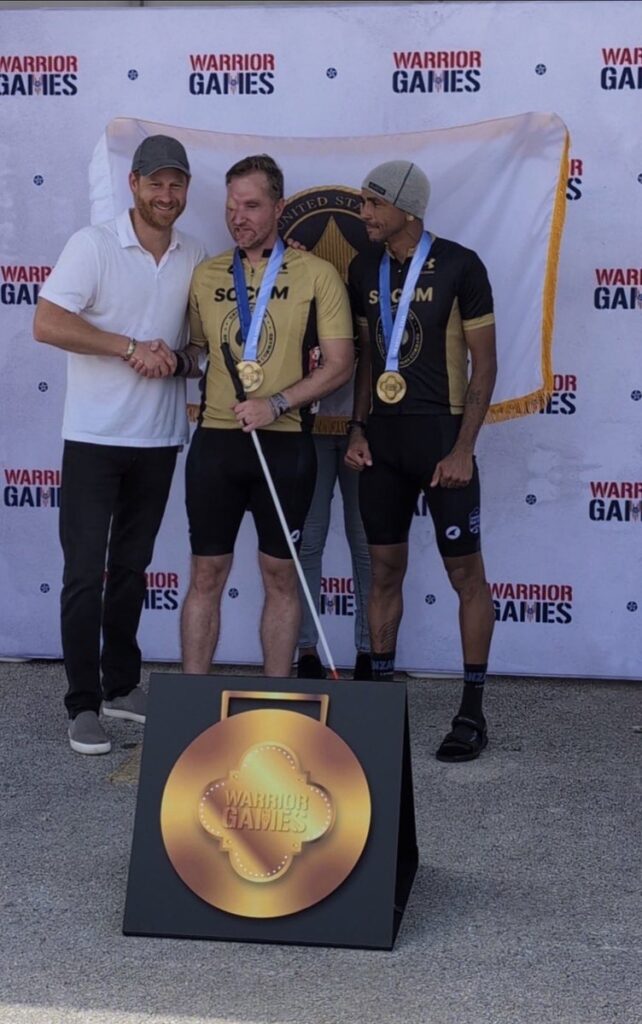
The Duke of Sussex, who has spent years trading on his brief military service and the adaptive sports concept he “borrowed” from the Warrior Games to launch Invictus in 2014, suddenly showed up at the 2026 event. He posed with gold-medal athletes, played the humble barbecue server in an apron, and smiled for every camera in sight. Critics are calling it a transparent pivot: with Invictus looking increasingly shaky, Harry is now trying to glom onto a well-funded, respected American veterans’ initiative to keep the spotlight — and the sponsor money — flowing.
Social media lit up with the same suspicion voiced by one observer: “Am I missing something? Is Invictus going bye-bye so now he’s attaching himself to the warrior games? What is going on?”
The photos tell the story loud and clear.
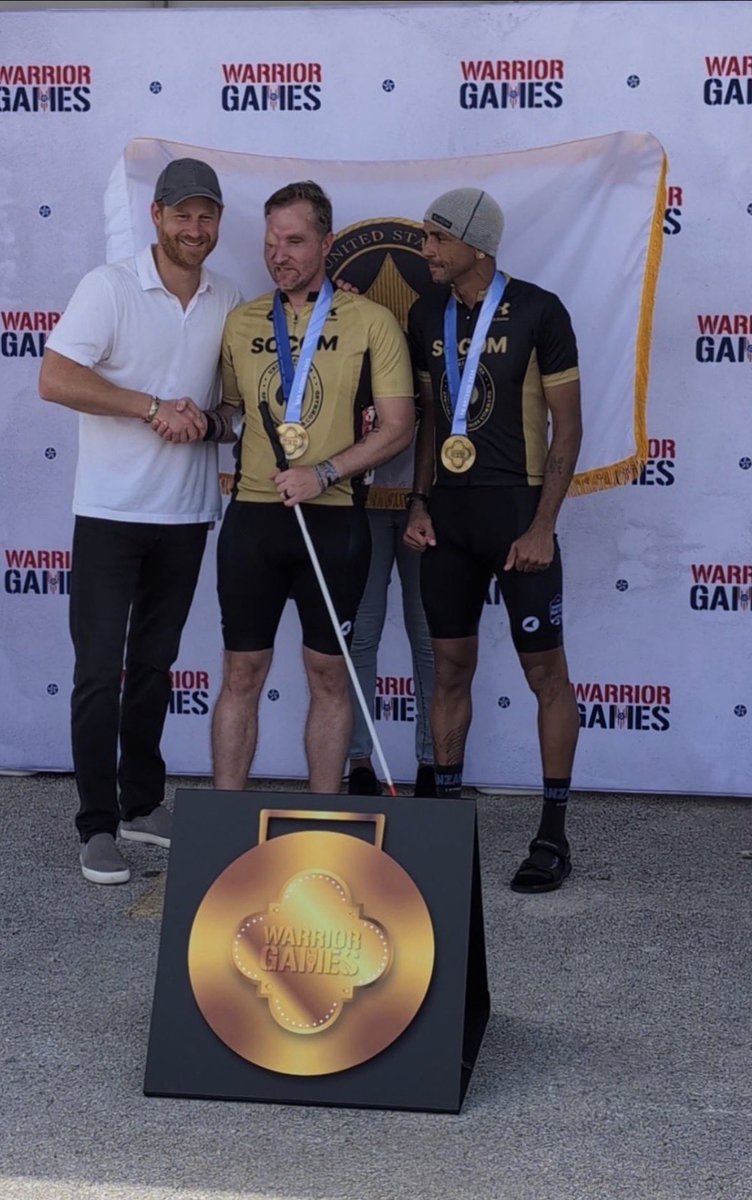
Photo Evidence 1: The Medal-Grabbing Photo Op
Harry stands on the competition grounds in a white polo, grey cap, and dark trousers, grinning as he inserts himself into a victory moment with two American SOCOM athletes wearing gold medals around their necks. One competitor, a visually impaired Special Operations veteran, holds a white cane. A massive Warrior Games backdrop and a giant gold-medal prop dominate the foreground. Harry’s hand is extended in a congratulatory shake — or perhaps a subtle claim-staking grip. The image screams “supportive royal,” but to many it reads as calculated photo-bombing of a successful U.S. event.
Photo Evidence 2: The Apron-Clad Server Routine
In a second shot, Harry has swapped the polo for a blue apron over a white shirt, leaning out of a food truck labeled with “TION HOT” (part of the barbecue station setup). He’s smiling broadly while serving veterans and families during the Family Program. Next to him, a woman in a Warrior Games lanyard and black cap beams for the cameras. Other volunteers in green and blue aprons work in the background. It’s the classic “I’m just one of the guys” grift — the same man who jets between Montecito mansions and private jets suddenly playing short-order cook for photo ops.
Photo Evidence 3: The Family-Friendly Infiltration
A third image shows the same food-truck scene from another angle. Harry leans forward smiling, a young boy in a Warrior Games T-shirt stands proudly with arms crossed in front of him, and an older volunteer in a red polo and blue apron looks on. Someone in the foreground holds up a phone to capture the moment. Harry is once again the center of attention, turning a veterans’ family event into another Sussex-branded photo opportunity.
These are not the actions of a man quietly supporting wounded warriors. This is the well-worn playbook of a professional grifter who senses one revenue stream drying up and immediately latches onto another.
Invictus in Freefall — The Real Reason for the Pivot
Behind the scenes, Prince Harry’s Invictus Games project is facing its most serious headwinds yet. Major corporate sponsors have pulled out, including high-profile exits that left gaping holes in the budget. Reports of tens of millions in funding shortfalls have circulated. The planned 2027 Games in Birmingham are already mired in controversy: the host city is struggling financially, staffing positions remain unfilled a year out, and there are open questions about whether the event is truly about the athletes or simply another vehicle to keep Harry relevant.
Meanwhile, smaller Invictus-branded festivals and spin-offs continue, but the flagship international Games have lost momentum. Harry’s recent video message to one such festival dropped at the exact same time the real royal family was front and center for Trooping the Colour — a coincidence that only highlighted how far removed he now is from the institution that once gave his brand oxygen.
With the Sussexes’ other ventures (Archewell, Netflix deals, constant PR stunts) delivering diminishing returns, the pattern is obvious: when the current grift wobbles, find a new respectable brand to attach to.
Veterans and Insiders Are Not Buying It
The backlash has been swift and brutal. Commenters on social media didn’t mince words:
- “Get this cuck away from our @warriorgames”
- “He’s infiltrating to snag sponsors”
- “Run away! The ‘Prince’ & his wife are grifters! Just speak with Invictus. If you include them you will lose donors & sponsors.”
- “If Harry is allowed to get involved with @warriorgames then no one should donate to it at all. Money raised should benefit the veterans… not the ‘patrons,’ especially grifters like the harkles.”
- “He has a lot of nerve to invade the US games. What a dick!”
Many noted the irony: the Warrior Games helped inspire Invictus. Now the creator of the copycat event is circling back like a vulture when his own project falters. Others warned that any association with the Sussex brand risks the same donor flight and reputational damage they claim has already hit Invictus.
One particularly pointed observation: “It wasn’t enough for Hazhole to steal the concept of the Warrior Games away from our wounded veterans with absolutely ZERO recognition to them. Now he’s trying to steal Wounded Warrior Games sponsors too!”
The Broader Pattern of Attachment
This is not an isolated incident. Harry and Meghan have repeatedly attached themselves to causes, brands, and institutions only to see those entities suffer backlash or donor fatigue. Whether it’s turning veterans’ events into personal photo shoots, leveraging royal titles while attacking the institution, or using “humanitarian” work as content for Netflix specials, the through-line is always the same: maximum personal brand elevation with minimum long-term commitment once the cameras leave.
Now, with Invictus looking vulnerable and the couple’s California-based projects struggling for relevance, the Warrior Games suddenly becomes the new target. Harry didn’t just attend — he inserted himself into medal ceremonies, food service, and family moments, ensuring every frame featured his face.
Organizers of the Warrior Games would be wise to study what has happened elsewhere. Veterans’ groups and donors have already signaled they will walk if the Sussexes become embedded. One post summed it up perfectly: “Please let WG people know he should not come near their donations.”
Will They Learn — Or Get “Markled”?
The question now is whether the U.S. military and Warrior Games leadership will keep a polite distance or allow Harry to turn another veterans’ initiative into his personal PR vehicle. History suggests the latter would be a mistake. The man who once claimed the Warrior Games inspired him is now treating it like a life raft for a sinking brand.
Photos don’t lie. The apron. The medal poses. The wide smiles for the cameras while serious questions hang over his own project. This is not quiet service — it is loud, desperate attachment.
Veterans deserve events that celebrate their resilience without turning into another chapter of the Sussex reality show. If Harry truly cares about wounded warriors, he should step back, stop the photo ops, and let the American event that inspired him thrive on its own terms — without the grift.
The images from San Antonio are now public. The outrage is growing. The pattern is undeniable.
Prince Harry has found his next target. The only question left is whether the Warrior Games will become his next casualty.