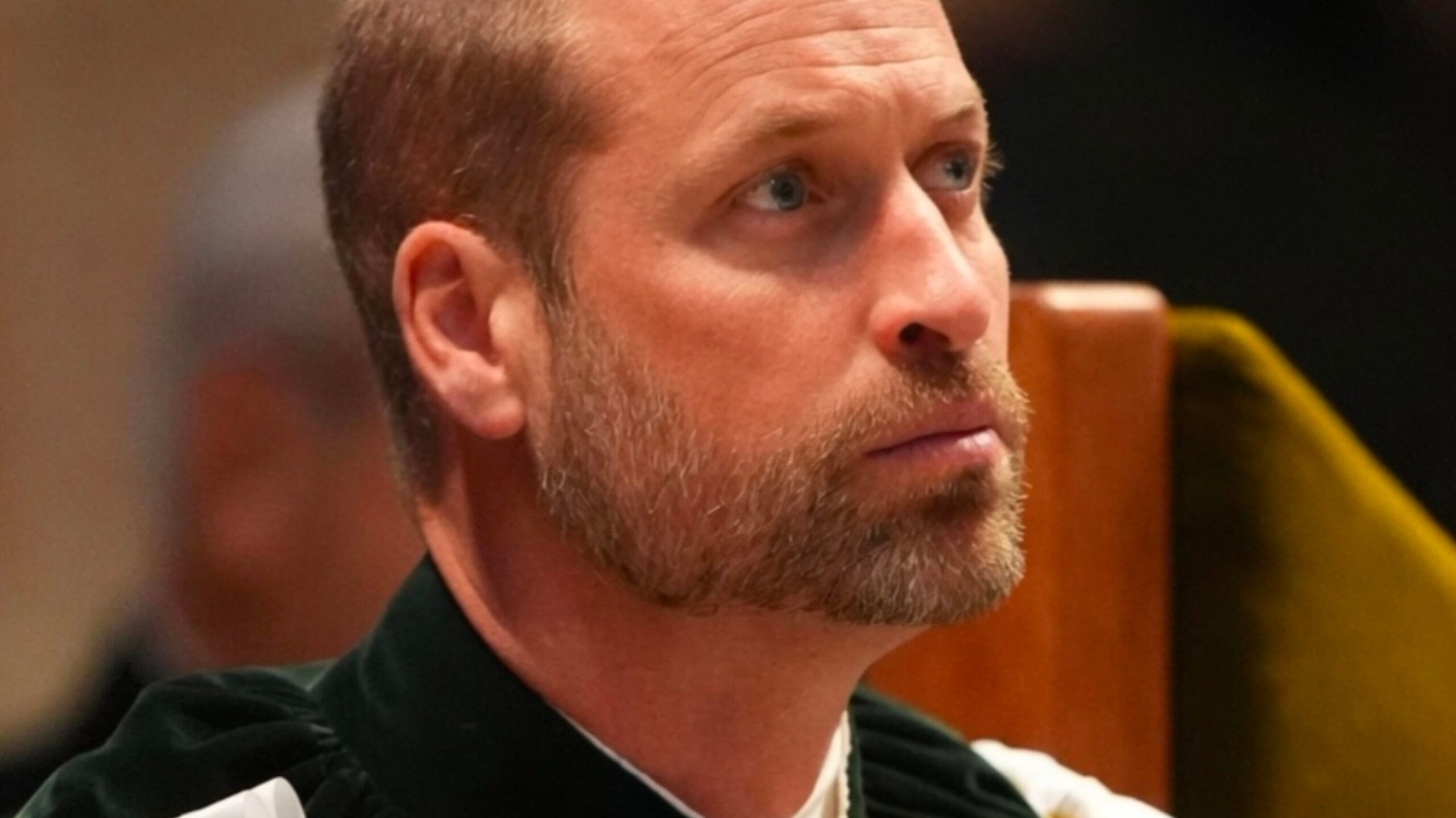
In a moment that perfectly captured quiet dignity and timeless appeal, Prince William, Duke of Rothesay, stole the spotlight at today’s Order of the Thistle service at St Giles’ Cathedral. Dressed in the striking green velvet mantle of Scotland’s highest order of chivalry, the future king exuded the kind of mature, effortless handsomeness that has long made him a favorite across the United Kingdom and beyond.
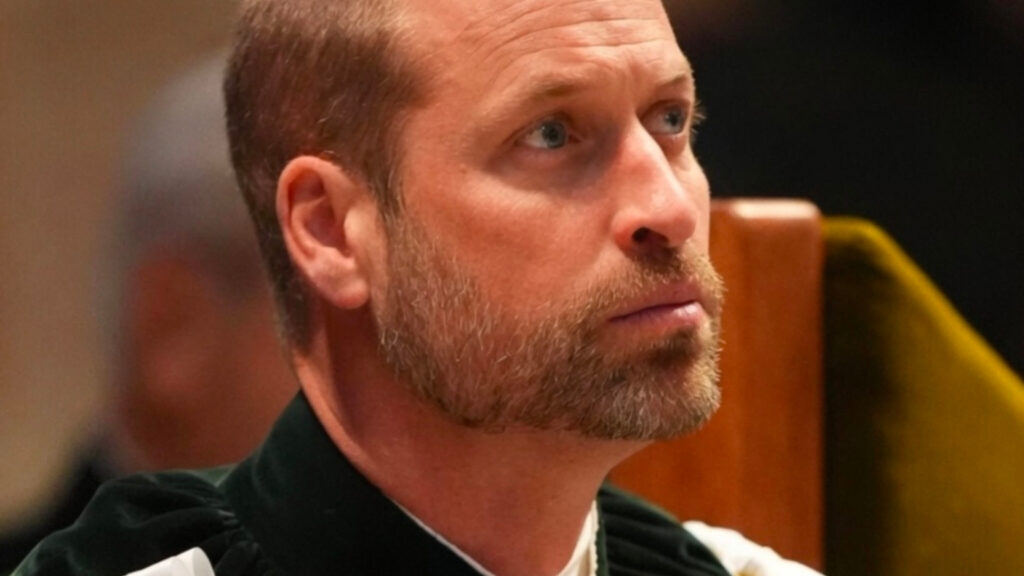
The attached photo, taken during the solemn proceedings, shows Prince William in profile, his thoughtful gaze directed slightly upward, the rich folds of his ceremonial robe catching the light. The dark emerald velvet drapes elegantly across his shoulders, fastened with crisp white satin bows and adorned with intricate gold embroidery, beaded chains, and the distinctive insignia of the Order. His neatly groomed beard and strong features stand out against the historic attire, creating an image of regal poise that feels both ancient and strikingly contemporary.
A Service Steeped in Scottish Tradition
The Order of the Thistle service is one of the most prestigious events in the royal calendar, held during Holyrood Week in Edinburgh. Today’s ceremony brought together King Charles III, Queen Camilla, Prince William (in his Scottish title as Duke of Rothesay), and Prince Edward, Duke of Edinburgh, alongside the Knights and Ladies of the Order.
The day began with a grand procession from the Signet Library through Parliament Square. Members of the Order, resplendent in their green velvet robes and white-plumed hats, were accompanied by the Royal Company of Archers — the King’s Body Guard for Scotland — who provided a Royal Salute. The National Anthem rang out as the procession moved into the historic Thistle Chapel within St Giles’ Cathedral for the service and any installations of new members.
The Most Ancient and Most Noble Order of the Thistle is Scotland’s greatest order of chivalry, second in precedence only to the Order of the Garter. Its motto, Nemo me impune lacessit (“No one harms me with impunity”), reflects the proud, resilient spirit of Scotland itself. Appointments are made personally by the Sovereign in recognition of outstanding contributions to national life.
Prince William’s Deep Scottish Connection
Prince William’s participation carries special weight. He was installed as a Knight of the Thistle in 2012 by Queen Elizabeth II while still Earl of Strathearn — one of his historic Scottish titles. As Duke of Rothesay, Earl of Strathearn, and Baron Carrickfergus, he holds a unique place in Scottish royal tradition.
Today’s appearance reinforced that bond. The green velvet mantle, with its gold thistle motifs and gleaming chains, suited him perfectly, highlighting both his commitment to Scottish heritage and his natural presence. Observers noted how the elaborate historic costume seemed to amplify rather than overshadow his strong jawline, piercing blue eyes, and composed demeanor — a modern royal effortlessly embodying centuries of tradition.
Why This Look Resonates
Royal watchers and members of the public have long admired Prince William’s ability to balance approachability with authority. In the attached image, that balance is on full display. There is no forced smile or staged pose — just quiet concentration and the kind of distinguished handsomeness that comes with maturity, responsibility, and genuine engagement with his duties.
The white satin bows and ornate goldwork on the robe catch the light dramatically, while the rich velvet adds depth and gravitas. It is the kind of image that reminds people why ceremonial occasions like the Thistle service still matter: they connect the present royal family to Scotland’s long history while showcasing individuals who take that heritage seriously.
A Family United in Service
King Charles, as Sovereign of the Order, led the proceedings with Queen Camilla by his side. Prince Edward’s presence as Duke of Edinburgh further underscored the family’s united front in supporting Scottish institutions and culture. For Prince William, these moments in Edinburgh form part of a consistent pattern of engagement with Scotland — from his early years as Earl of Strathearn to his current role supporting the King across the United Kingdom.
The Enduring Appeal of Tradition
In an age of rapid change, the Order of the Thistle service stands as a powerful reminder of continuity. The thistle itself — Scotland’s national flower — symbolizes resilience and protection. Seeing Prince William wear the mantle with such natural grace sends a clear message: the monarchy remains rooted in the nations it serves, adapting while honoring the past.
Social media lit up with admiration for the Duke of Rothesay’s appearance. Comments ranged from appreciation of the historic spectacle to simple, repeated observations that he “gets more handsome and distinguished with every passing year.” The attached photo has already begun circulating widely, with many calling it one of the most striking royal images of the summer.
A Prince for All Seasons
Whether in Highland dress at the Braemar Gathering, in a tailored suit for official duties, or today in the full ceremonial splendor of the Order of the Thistle, Prince William consistently projects the same core qualities: duty, dignity, and quiet confidence. The green velvet robes may belong to an ancient order, but the man wearing them represents a modern monarchy that still inspires genuine affection.
As the service concluded and the royal party returned to the Palace of Holyroodhouse for the traditional reception and lunch, one thing was clear: Scotland’s highest chivalric order had been honored, and its most prominent younger member had once again proven why he remains one of the most admired figures in the royal family.
Pictured (attached): Prince William, Duke of Rothesay, in his green velvet mantle of the Order of the Thistle at St Giles’ Cathedral, Edinburgh — July 1, 2026.
The image captures not just a moment of ceremony, but the enduring, handsome presence of a prince deeply connected to his Scottish roots and the proud traditions that continue to define the United Kingdom.