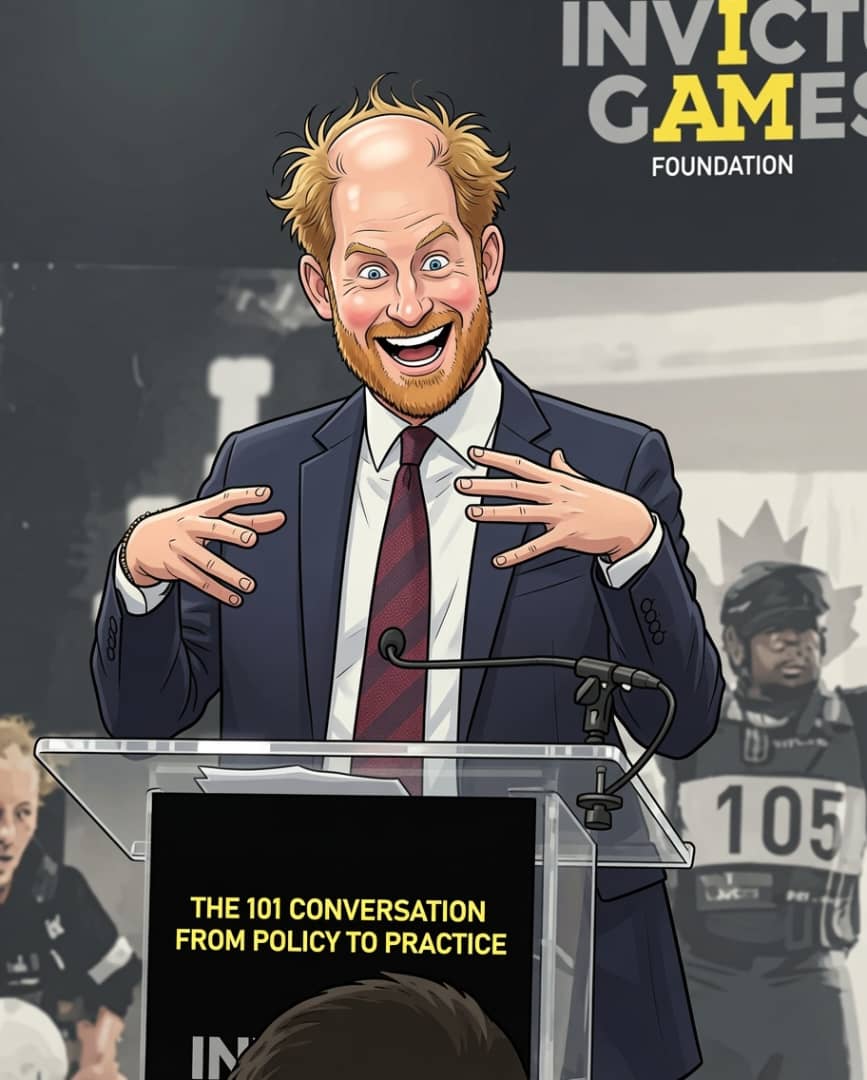
Prince Harry and six other high-profile claimants have suffered a crushing defeat in the High Court, with Mr Justice Nicklin dismissing every single one of their allegations of unlawful information gathering against Associated Newspapers Limited, publisher of the Daily Mail and Mail on Sunday.
The group — which included Sir Elton John, David Furnish, Elizabeth Hurley, Sadie Frost, Baroness Doreen Lawrence, and Sir Simon Hughes — had accused the publisher of using phone hacking, blagging, private investigators, and other illegal methods to source stories published between the late 1990s and mid-2010s. All 97 specific allegations across dozens of articles were thrown out. The judge ruled that the claimants failed to prove, on the balance of probabilities, that any information was obtained unlawfully. Journalists’ explanations of lawful sourcing — from press officers, public records, previous reporting, and social circles — were accepted as honest and credible.
Harry and Baroness Lawrence immediately hit back with a joint statement: “We came to Court seeking justice and accountability. But we have received neither. It is a complete and obvious whitewash, but sadly not altogether unexpected.” They further claimed the court had gone to extraordinary lengths to exonerate the Mail “in a way that is as shocking as it is totally unwarranted.”
But the facts of the case tell a very different story.
This was no quick dismissal or superficial hearing. The trial lasted a full 11 weeks earlier this year. The judge heard live evidence from dozens of witnesses, including Prince Harry himself (who became emotional while claiming the Mail titles had made his wife’s life “an absolute misery”), reviewed thousands of pages of documents, listened to extensive cross-examination, and then produced a detailed, reasoned judgment running to hundreds of pages.
Mr Justice Nicklin was clear: serious allegations of this nature require convincing evidence, not mere suspicion — however understandable that suspicion might be. In one example cited, Harry was genuinely concerned about how journalists knew private details of his relationship with Cressida Bonas in 2013. The judge acknowledged the intrusion felt real to him but ruled that “suspicion, even understandable suspicion, is not proof.”
A key claimant witness was comprehensively undermined when he disowned parts of his own statement. No credible, independent evidence emerged to support lurid claims of widespread phone hacking, bugging of cars and homes, or illicit bank access at the Mail titles — unlike the proven Mirror Group cases from years earlier.
Harry has form for winning when the evidence supports him.
In 2023 he secured substantial damages from Mirror Group Newspapers after the court found phone hacking had occurred in relation to 15 articles. He also reached a settlement with the publisher of The Sun that included an apology for serious intrusion. Those outcomes show the system works when the facts stack up. This case against Associated Newspapers was different defendant, different articles, different evidence — and the evidence simply did not persuade the court.
The suggestion in the joint statement that there is “one rule for newspapers and another for claimants” collapses under scrutiny. The legal system did not suddenly change the rules because Harry lost. The evidence in this specific litigation did not meet the required standard. That is how civil justice operates for everyone — royalty, celebrities, and ordinary citizens alike.
The involvement of Baroness Doreen Lawrence makes the “whitewash” rhetoric particularly disappointing.
Her tireless fight for justice for her murdered son Stephen has rightly commanded respect for decades. The Daily Mail itself played a historic role in that campaign — most famously with its 1997 front page naming five suspects and demanding “MURDERERS” in huge type. That bold move helped force a public inquiry and kept pressure on the authorities when others had given up.
For her name to now be attached to a statement branding a thorough judicial process a “whitewash” — simply because the court found the specific evidence in her claims against this publisher insufficient — risks undermining the very cause of accountability she has championed. When a court concludes after weeks of evidence that claims were not proven, presenting that outcome as systemic corruption does a disservice to genuine victims of injustice.
Harry, meanwhile, has turned his battles with the press into a full-blown content and grievance industry.
Interviews, a bestselling memoir, Netflix documentaries, public campaigns, and speaking engagements have all flowed from his narrative of victimhood at the hands of the media. When he wins, the courts are hailed as proof that justice works. When he loses — as he did today — the same courts suddenly become evidence of a broken, rigged system.
That selective acceptance of the rule of law is not principled accountability. It is the behaviour of someone who demands transparency and consequences from everyone else while refusing to accept an adverse but carefully reasoned judgment when it goes against him.
Associated Newspapers called the ruling “an overwhelming victory for the Daily Mail and its journalists, and for a free press generally.” Former editor Paul Dacre described the case as “trumped-up” and said he could not understand why Baroness Lawrence had turned on a paper that had genuinely supported her family’s fight for justice. The publisher emphasised that every single allegation was dismissed and that its journalists had been fully exonerated after giving honest evidence.
The financial sting is real.
Harry and the other claimants now face the prospect of a combined legal bill running into tens of millions of pounds — with reports suggesting up to £50 million in total costs that the losing side may have to contribute toward. Court time that could have been used for other cases has been consumed by claims that ultimately rested on suspicion rather than proof.
This judgment does not mean no tabloid wrongdoing ever occurred in the past. It means that, on the evidence presented in this particular case against this particular publisher for these particular articles, liability was not established. That distinction matters.
Prince Harry has every right to feel strongly about press intrusion. Many of the stories he and others complained about were deeply personal and painful. But feeling aggrieved is not the same as proving unlawful conduct in a court of law. The High Court gave these claims the most thorough examination possible. The outcome was clear: the evidence did not support the allegations.
When you win, the system works. When you lose, it’s a whitewash. That is not a principled stand — it is selective outrage dressed up as moral clarity.
The court has spoken. The evidence was tested. The claims failed. Harry’s response says far more about his approach to losing than it does about the integrity of the British judicial process.
The rule of law applies to princes as much as it does to anyone else. Today, it applied — and Prince Harry did not like the result. That does not make the result wrong. It makes it justice.