Uganda has just delivered the most humiliating public snub Prince Harry’s Invictus project has ever received — and they did not mince words.
Days after King Charles III made it official that Harry and Meghan Markle are private citizens, not working royals, Uganda’s military chief pulled his country out of the 2027 Invictus Games in Birmingham. General Muhoozi Kainerugaba, Chief of Defence Forces and son of President Yoweri Museveni, said Uganda would not be “construed as being opposed to His Majesty King Charles III… whom we deeply revere.”
Then he went further.
He told The Times he had to stamp out factions inside his own Ministry of Defence that were backing “that Harry-Meghan nonsense.”
“I had to quash it straight away. I support the monarch. Period.”
Uganda had only joined the Invictus family in July — the 26th nation, the first from East Africa — after Harry personally welcomed a Ugandan delegation in London. Two months later, the country walked away rather than be associated with the Sussex brand.
That is not a scheduling conflict. That is a verdict.
The photo that says everything
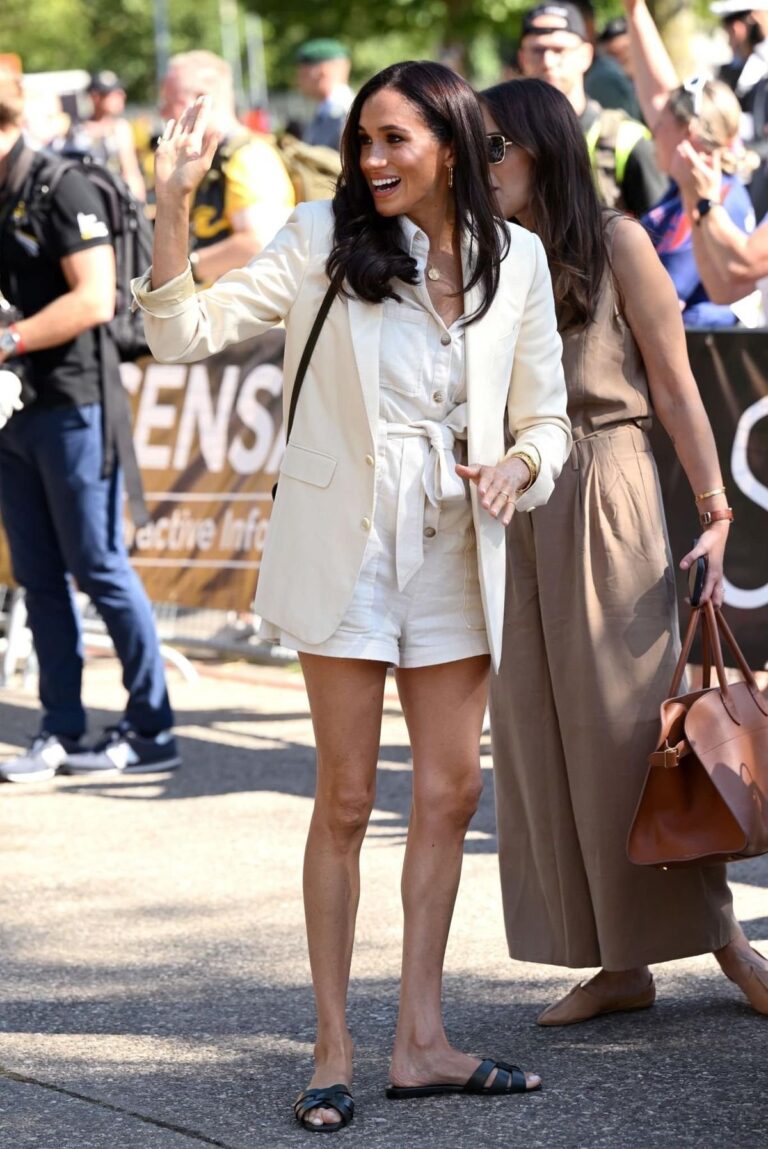
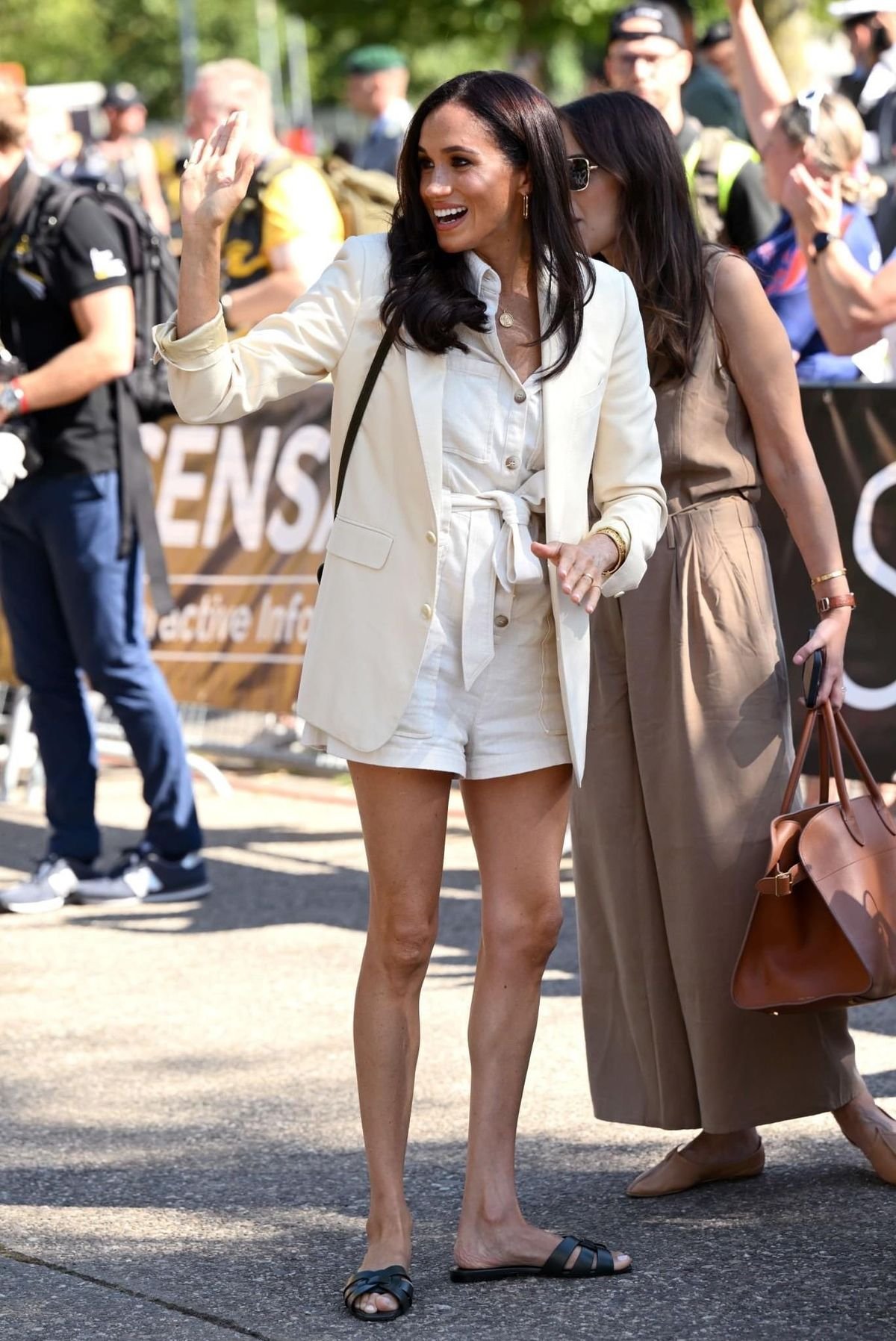
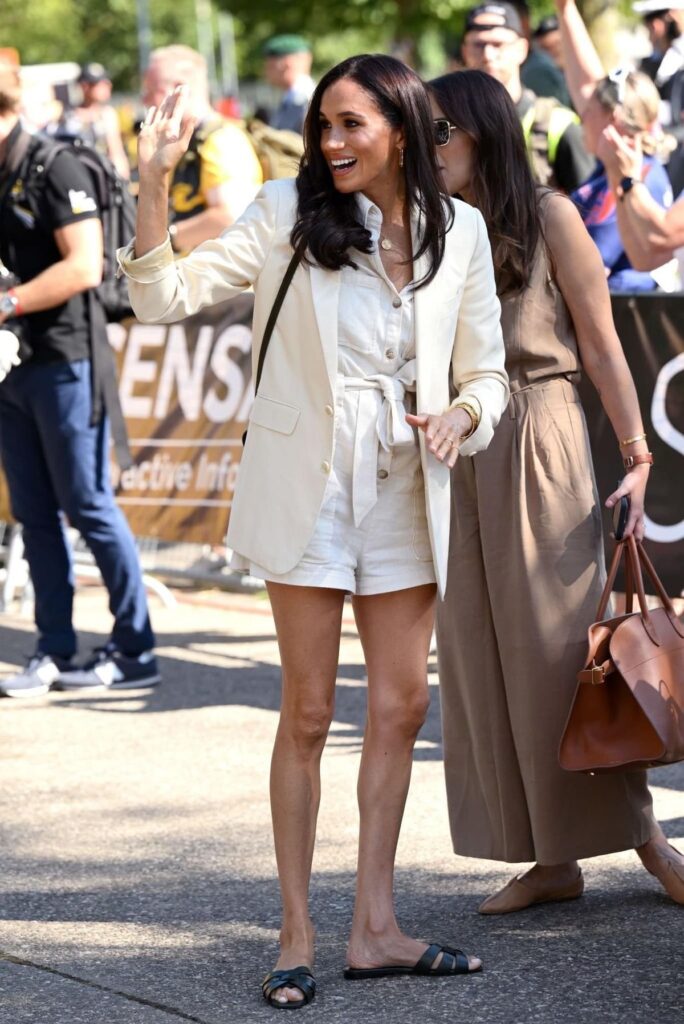
Critics circulating images of Meghan Markle in a cream blazer, tiny white shorts, and black slide sandals at a crowded outdoor event are not being subtle. The look is beach-club casual: legs on display, flip-flop energy, waving like she’s arriving at a festival rather than representing anything connected to the Crown or wounded veterans.
One widely shared reaction put it bluntly: this is what Uganda wanted no part of. Nothing says disrespect quite like treating a high-profile public appearance as a California weekend stroll. Comparisons to Wallis Simpson’s “classless” informality were immediate. Others were crueller still about the optics of the shorts-and-slides combination.
Whether the picture is from an older Invictus appearance or a more recent outing is almost beside the point. The image has become a shorthand for the problem: a couple who walked away from royal duty, cashed in on the titles and trauma, then expected the world — including African militaries — to keep treating them as if they still spoke for the institution they spent years attacking.
Private citizens who still want the perks
Harry and Meghan slipped back into Britain in late August 2026 with Archie and Lilibet after six years in Montecito. Within days, Buckingham Palace circulated a Lord Chamberlain letter making the position crystal clear: they are not working members of the Royal Family. HRH styles remain in abeyance. Their charitable work is a private matter. They are not to be treated as representatives of the King.
The Sussex camp was reportedly furious they didn’t get to “edit” the statement. Their response to Uganda’s withdrawal was classic: blame the Palace. Sources close to the couple told outlets that the pull-out was a “direct result” of the King’s letter and that “the only people who will suffer are the Invictus Games competitors.”
That is rich. Invictus is Harry’s project. If countries now calculate that standing next to him looks like taking sides against the King, that is a consequence of years of Netflix specials, Oprah interviews, spare-prince memoirs, and a relentless campaign to paint the institution as racist and cruel. Uganda’s general did not invent the phrase “Harry-Meghan nonsense.” He simply said out loud what a lot of people in uniform and in Commonwealth capitals have been thinking.
Royal commentator Angela Levin called the withdrawal welcome and hoped more countries would follow. She is not alone.
A brand that keeps costing other people
Harry founded Invictus to honour wounded service personnel. That is the one part of his post-royal life that still commanded respect. Turning it into another battlefield in the family feud — then acting shocked when a Commonwealth military refuses to play along — is the opposite of honouring veterans.
Meghan’s public style since leaving official duty has been consistently California-casual: shorts, slides, linen, the “I don’t do protocol anymore” uniform. Fine for Montecito. Tone-deaf when you are still trading on “Duchess,” still expecting red carpets, still letting Harry’s charity sit in the middle of a war with his father. The shorts-and-sandals look is not a fashion crime. It is a symbol of the attitude: the rules apply to everyone else.
Uganda joining Invictus was a win. Uganda leaving because it would not be seen to endorse the Sussex soap opera is a loss — for the athletes who will not compete, and for whatever credibility Harry had left as a serious figure rather than a content machine.
The King drew a line. An African general drew another. The couple’s first instinct was to point at Buckingham Palace instead of asking why so many people now treat “Harry and Meghan” as a punchline and a liability.
That is the nonsense Uganda refused to underwrite. And the photograph making the rounds this weekend — the wave, the shorts, the slides — is why so many people think Uganda got it exactly right.