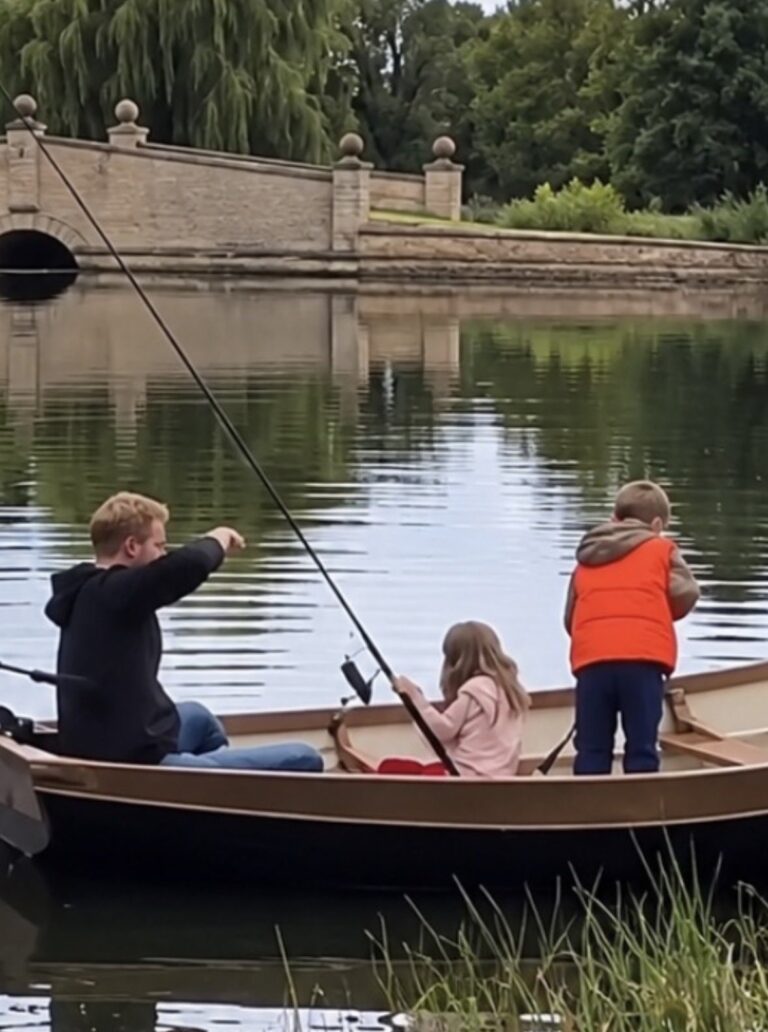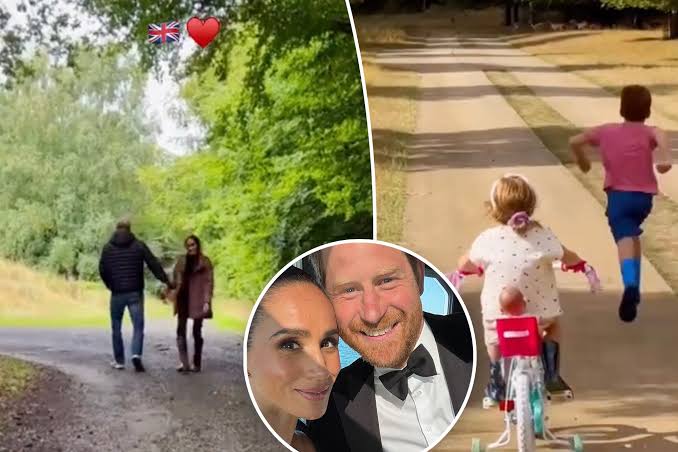
Meghan Markle dropped a 34-second Instagram montage on Sunday, slapping a Union Jack and a heart emoji over footage of wellies, a fireplace, a pink bicycle and Prince Harry fishing from a rowboat. The message was unmistakable: the Sussexes are back in Britain, the children are settling in, and the English countryside is now the family brand.
Look closer, and the production looks less like September in the Cotswolds and more like a leftover reel from last spring.
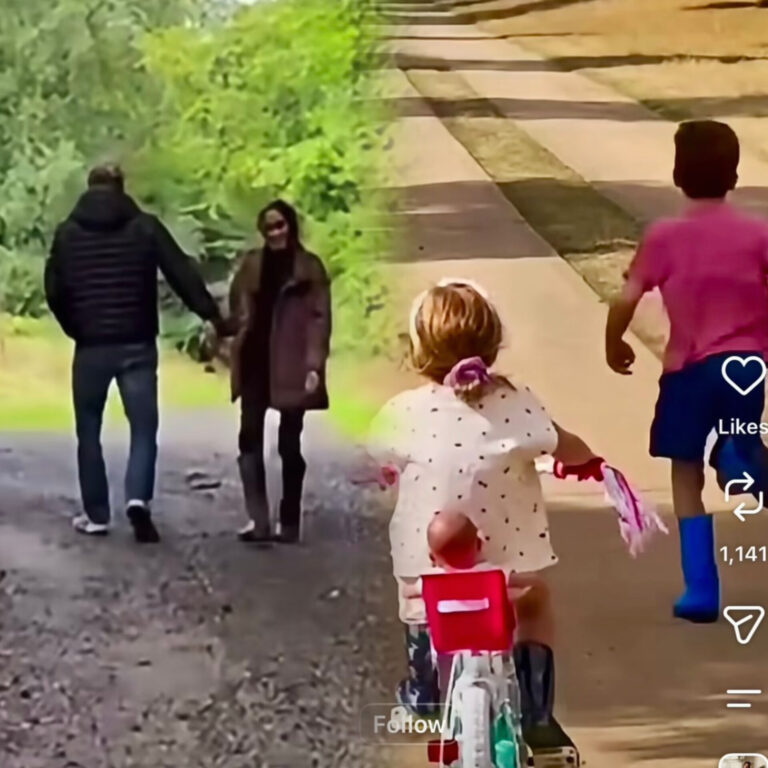
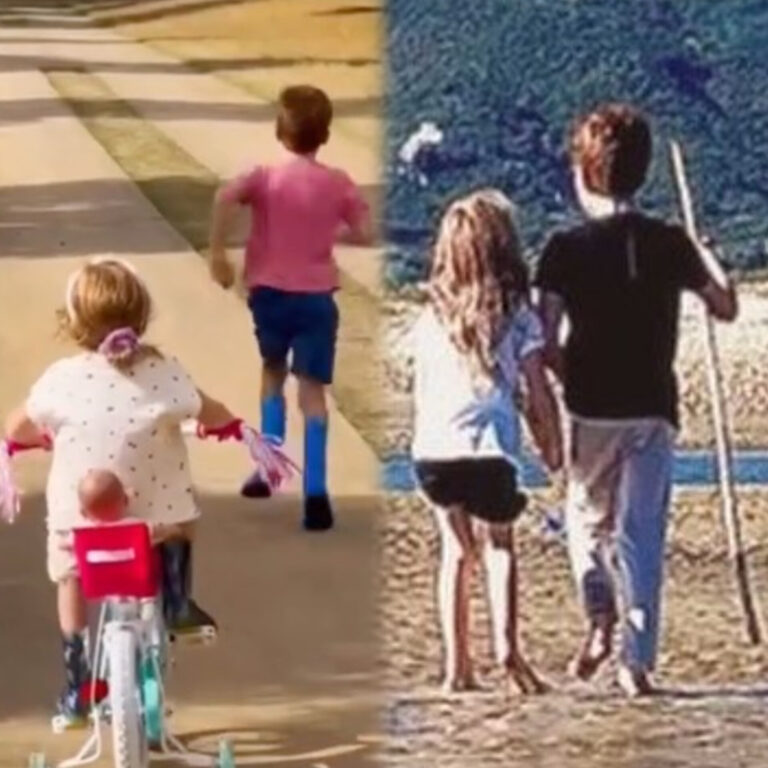
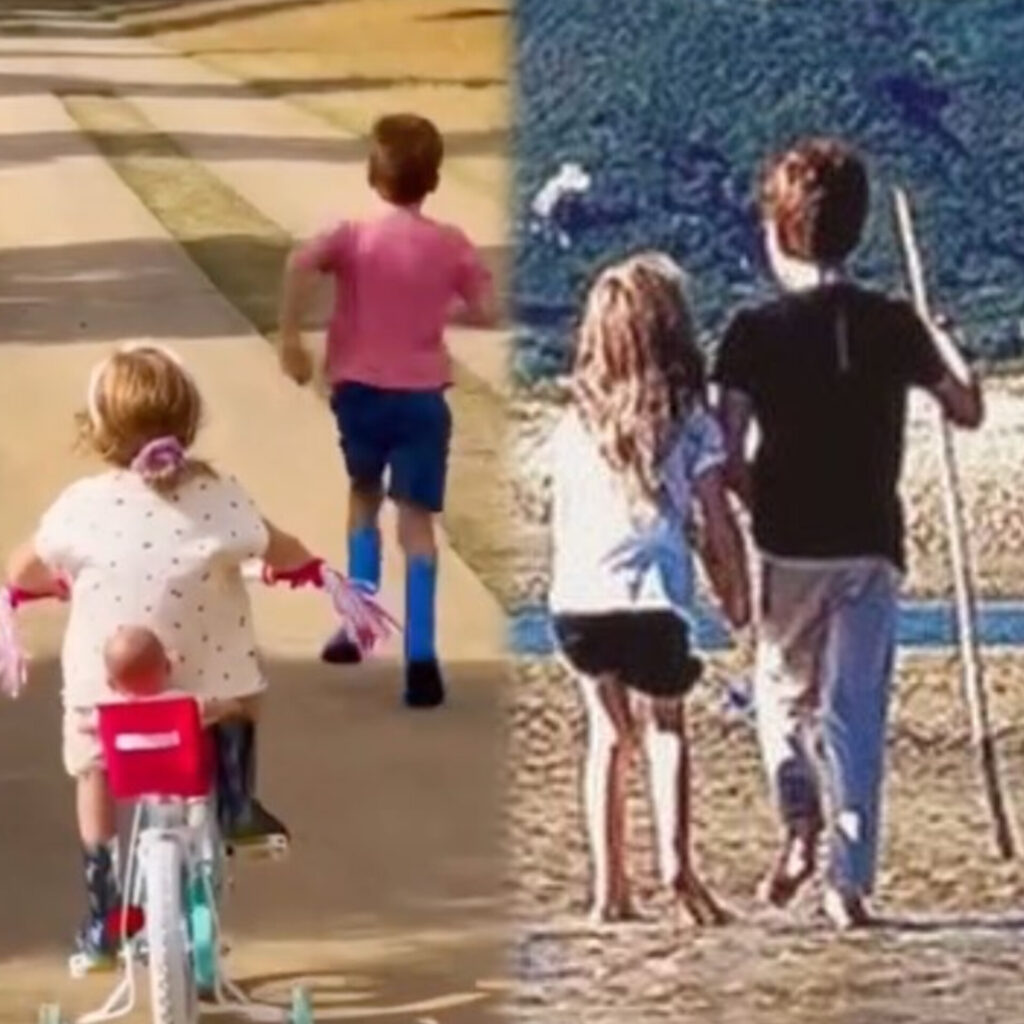
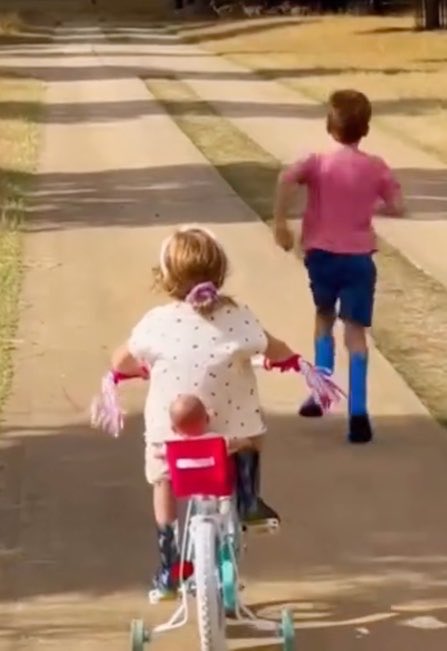
The BBC itself noted that it is unclear when, or where, the footage was taken. Britain has had a wet start to September after its hottest summer on record. Yet one of the most circulated frames shows two red-haired children on a dry, sun-bleached path — Lilibet on a training-wheel bike with pink tassels and a doll on the back, Archie running ahead in a pink shirt and bright blue socks. That is not a grey English Monday. That is California light.
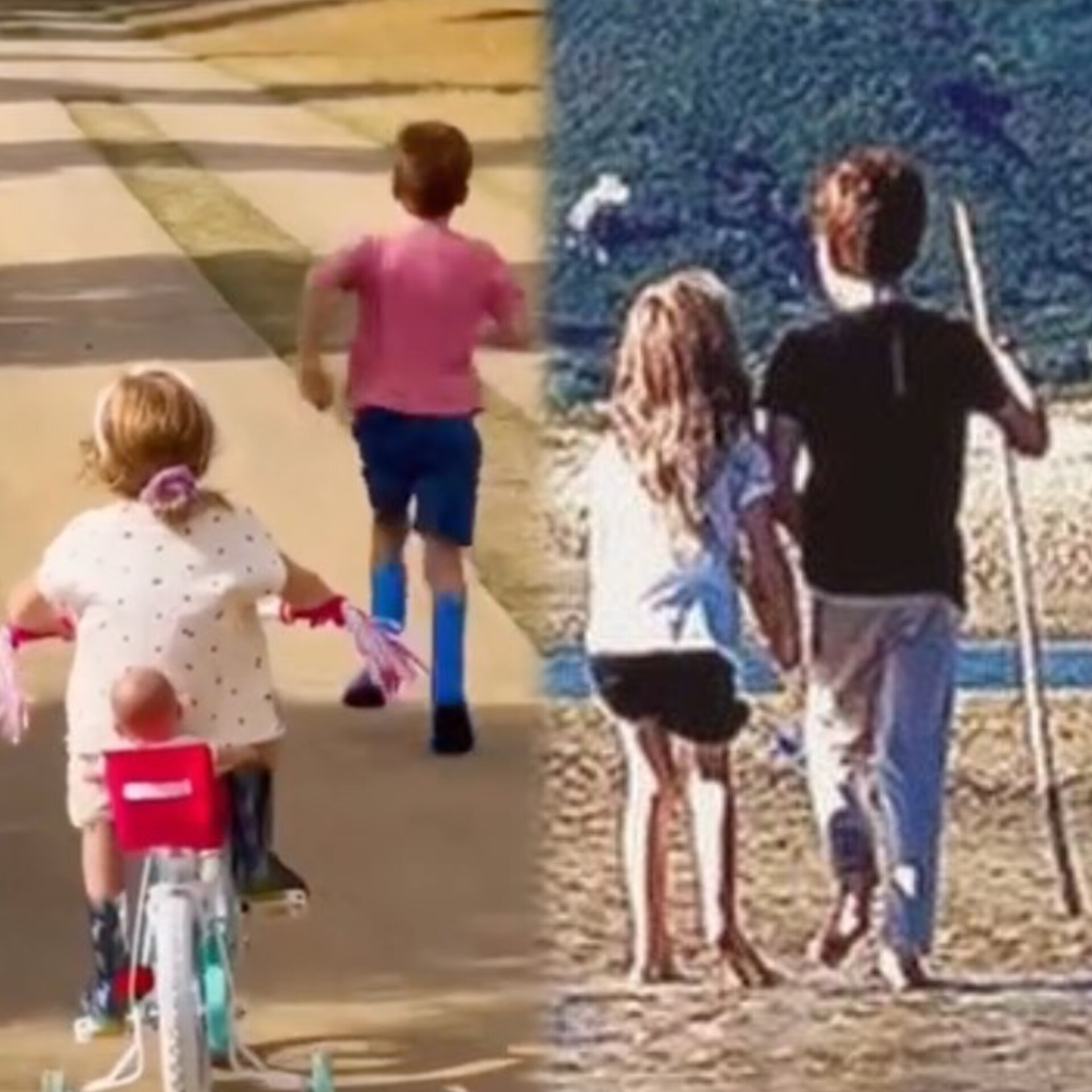
Compare that clip with the photo Meghan released in May for Archie’s seventh birthday: two children from behind, walking barefoot on a beach, Archie carrying a long stick, both with the same compact frames and the same unmistakable red hair.
Children grow in four months. Seven-year-olds shoot up. Five-year-olds lose the toddler proportions. In the “new UK life” clip, Lilibet is still on stabilisers. Archie does not look four months taller. Viewers who stacked the May beach still against Sunday’s bike footage said the same thing: these kids look frozen in last spring.
The May birthday image that first put the siblings, from behind, into wide circulation:

The frame now being sold as proof of life in Britain:
The Portugal and European holiday pictures released in July already showed the children taller and more filled out than the May beach shot. Sunday’s “first look at UK life” appears to rewind them. If the family really landed on 26 August, enrolled Archie and Lilibet in British schools in early September, and then filmed this idyll in the Cotswolds, the growth should be visible. It is not.
There is another tell. In the fishing clip, Archie can be heard saying “I got this” in a distinctly American accent — the voice of a child raised in Montecito, not a boy two weeks into an English prep school.
That is the point. The Sussexes did not need the children to be in Oxfordshire this week. They needed the idea of the children in Oxfordshire. A flag emoji, some wellies, a puddle, a labrador, Wham! on the soundtrack — and the press dutifully writes “first glimpse of family life after the return.” Comments disabled, faces hidden, questions unanswered.
Harry has been seen. He turned up at Invictus-related events in London. Meghan was reported at Soho Farmhouse in the Cotswolds. The children have not been independently photographed at a school gate, in a village, or anywhere that would confirm they are actually living the life the reel advertises. The public is asked to take Meghan’s grid on faith, the same grid that has spent years drip-feeding the same two red heads from behind whenever the brand needed a reset.
King Charles has already drawn the line. A letter issued this month made clear that Harry and Meghan remain non-working royals, private citizens, with the HRH style in abeyance. They do not represent the Crown. They do not get to play working royal on Instagram and private citizen when the bill for security arrives. The “we’re home” montage is not a family album. It is a lobbying document.
The hypocrisy is not subtle. Harry has spent years telling the world that media attention damaged him as a child. Meghan has lectured about the dangers of putting children on social media. Then they package Archie and Lilibet — voices, bikes, fireside toes, fishing rods — for millions of strangers, hide the faces, and call it protection. Royal commentator Kinsey Schofield put it cleanly: if privacy were the priority, they would stop broadcasting the family to the internet. Hiding a face does not hide the stunt.
This is the Sussex method. Leave the institution, monetise the institution, demand the institution’s protections, and when the institution refuses to play along, post a countryside video and wait for the headlines. They kept the Montecito mansion. They kept the Portugal bolt-hole. They kept the titles they were told not to use. Now they want the British backdrop too — without the duties, without the scrutiny, and, if the pictures are any guide, without even having to keep the children on the correct continent for the shoot.
A genuine homecoming would not need a Union Jack sticker and a 1980s pop track. It would not require viewers to squint at last May’s children and accept them as this September’s proof. It would not leave the national broadcaster saying it cannot tell when or where the tape was filmed.
Call it what it is. The video is content. The move is a pitch. The children are the prop. And the couple selling “life back in Britain” still look like what critics have called them for years: two people who will stage whatever scene keeps them in the story.