Meghan Markle marked Prince Harry’s 42nd birthday the way she marks almost everything now: with a carefully staged Instagram montage, a gushing caption, and the two children once again used as living props.
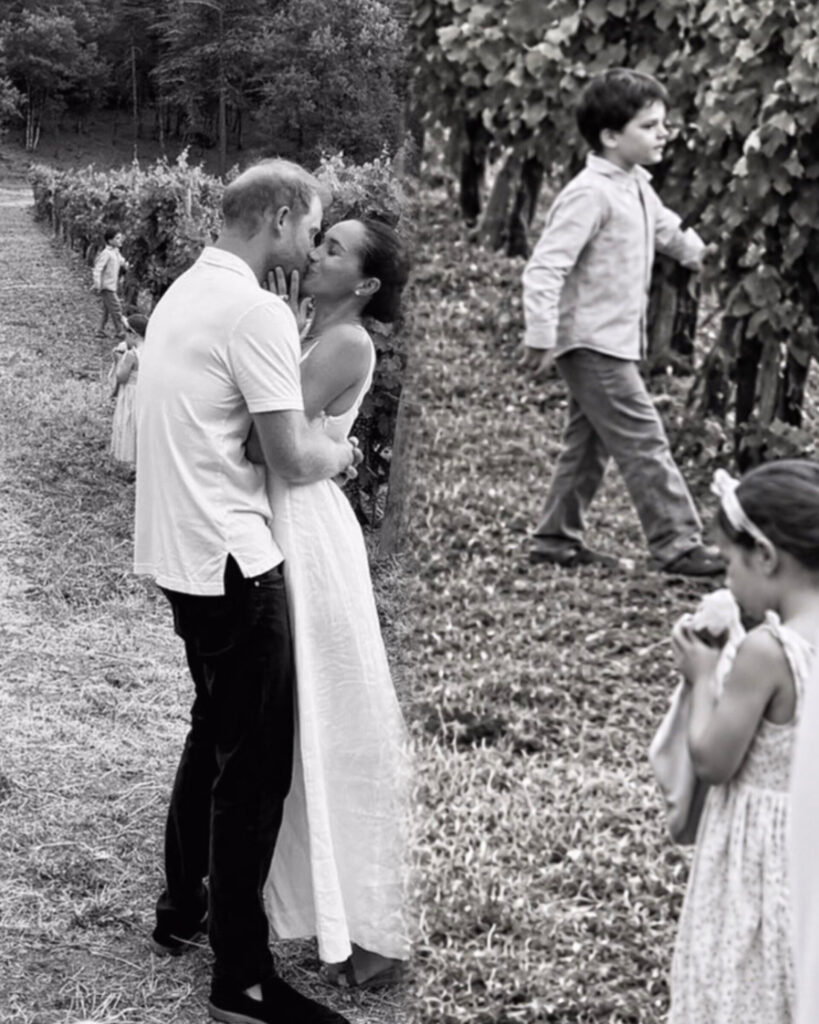
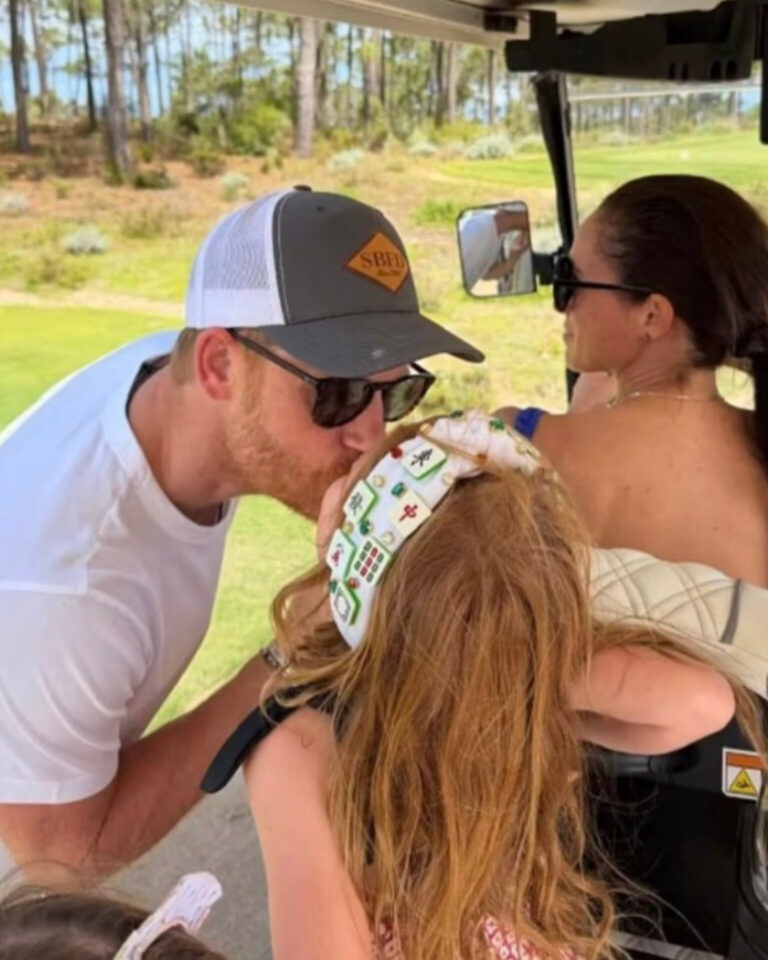
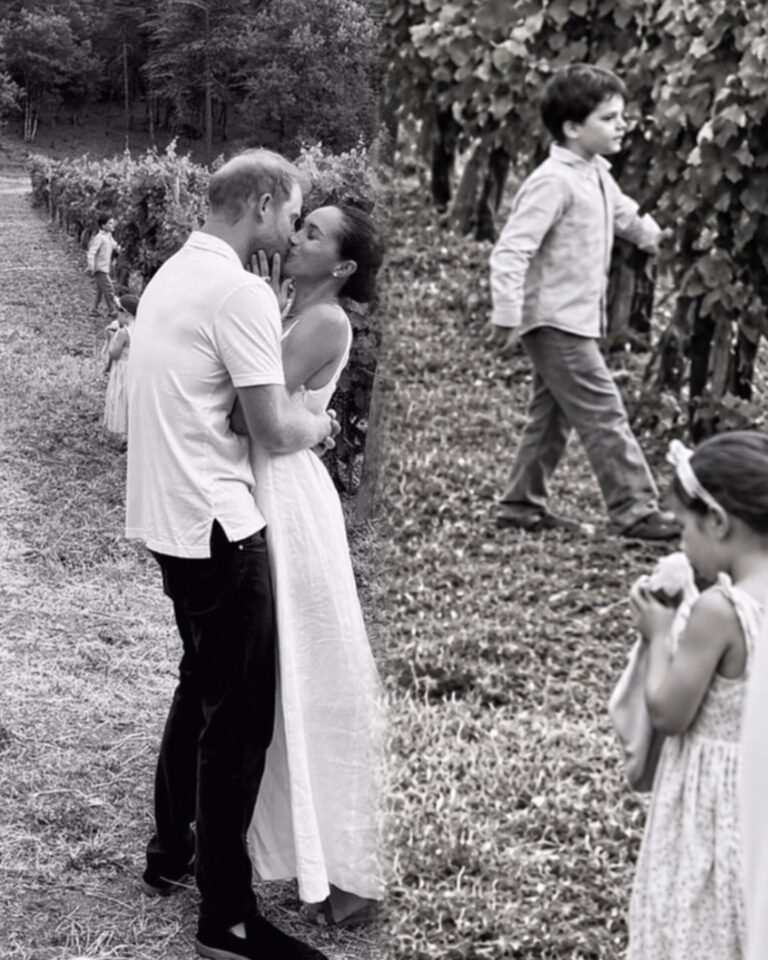
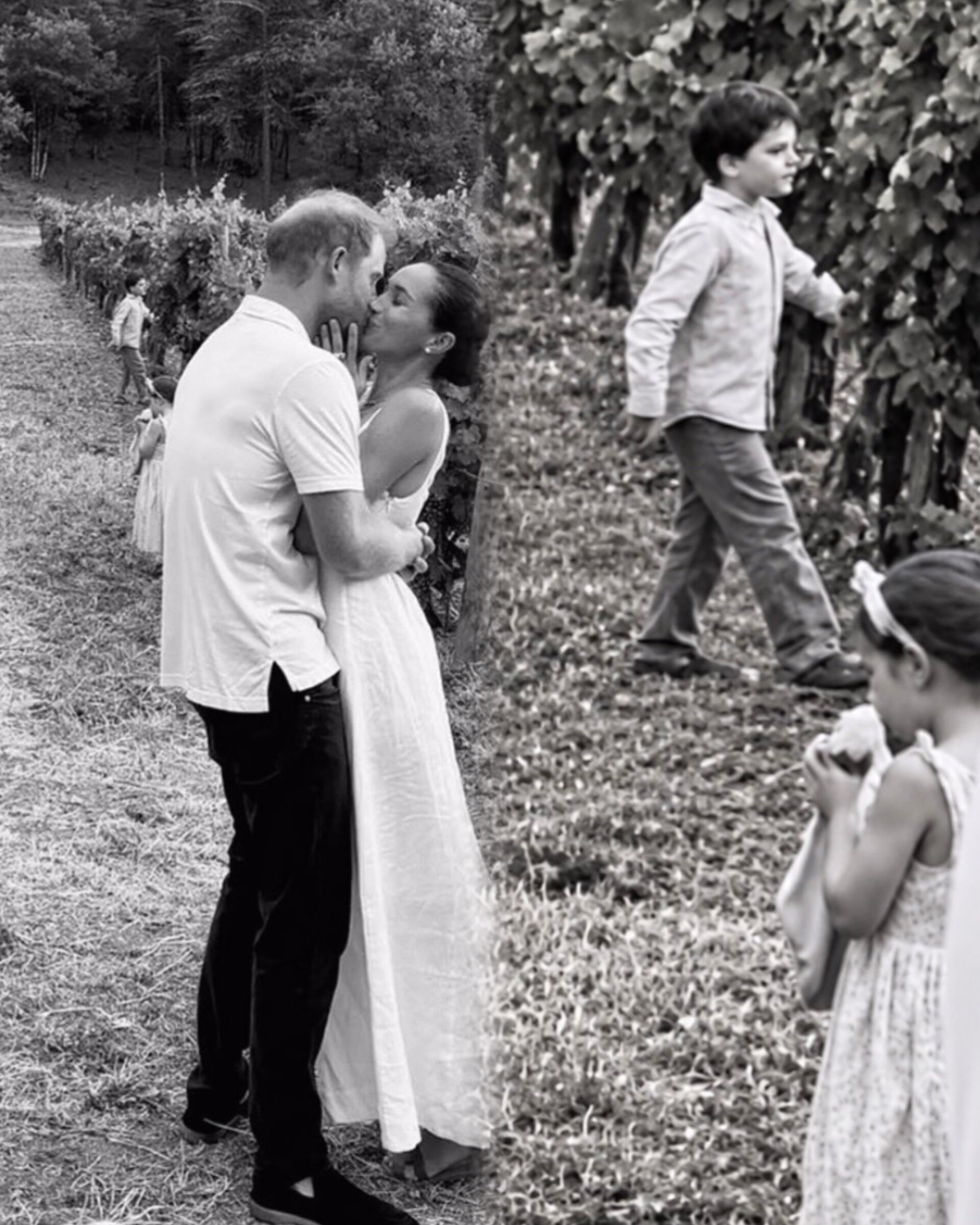
On Tuesday she posted a reel set to a cover of Tina Turner’s “Simply the Best,” captioned: “He’s simply the best. Happy birthday, my love.” The package mixed skiing, quad bikes, archery, countryside drives — and a black-and-white vineyard kiss that royal-watchers immediately clocked as the real tell. Harry and Meghan lock in a posed embrace in the foreground. Behind them, down the rows, seven-year-old Archie and five-year-old Lilibet are visible: the boy walking among the vines, the girl in a patterned dress, eating, looking on. The children are not the subject. They are the set dressing.
That is the image critics are calling out — not because a father should never be photographed with his children, but because this couple has spent years lecturing the world about children’s privacy while repeatedly dangling those same children in front of millions whenever the brand needs a reset.
The “one big happy family” pitch is the product. The kids are the bait.
The timing makes the stunt worse, not better. The same day Meghan’s tribute landed, reports confirmed Archie and Lilibet had already been yanked from the prep school they had barely started after the family’s abrupt return from California. Security staff warned that the school-run left the convoy looking like “sitting ducks” in Cotswolds traffic. A former senior Met officer called the planning a saga that “beggars belief.” Harry, who has spent years demanding taxpayer-funded protection he is not entitled to as a private citizen, has not helped himself.
So the public is asked to believe two things at once: the children are in such danger that they cannot even complete two days at school — and they are safe enough to be dropped into a worldwide photo dump selling marital bliss.
That is not protection. That is choreography.
The pattern is old. After Meghan rejoined Instagram in 2025, roughly a quarter of her posts have mentioned or featured the children, often near commercial or lifestyle content. Royal commentator Kinsey Schofield put it bluntly after the couple’s last “hyper-curated” UK countryside reel: if privacy is the priority, stop broadcasting family life to strangers. Archie and Lilibet are too young to consent to having their voices, movements and private moments packaged for engagement.
Tom Sykes, editor of The Royalist, has called earlier posts “breathtaking” hypocrisy — vain, boastful, tone-deaf. Katie Nicholl has said you cannot campaign against the harms of social media for children and then feature your own children on social media. Harry himself once warned, for Heads Together, that social media’s “perfect life” posts make other people feel inadequate. Then he stands in the vineyard while the camera harvests exactly that image.
Meghan’s spokespeople have a stock answer: there is a “distinction” between sharing her life and exposing the children; faces are often obscured; that is supposed to prove principle. The vineyard frame shreds the excuse. The children are identifiable enough, placed well enough, and useful enough that the picture only works because they are there. Hide the kids and it is just another celebrity kiss. Leave them in and it becomes evidence of a functioning family — the thing the Sussexes most need the public to believe after six years of grievance, lawsuits, Netflix deals and a homecoming that the Palace has already refused to treat as a royal reset.
King Charles’s household made that refusal official. A letter issued on the King’s behalf after the late-August return stated there is “no change” to the couple’s status: they remain non-working members, HRH styles stay in abeyance, and they are “akin to private citizens with commercial and charitable interests.” Their team claimed to be “surprised.” The rest of the country was not. They walked out in 2020. They do not get to walk back in as working royals because California got expensive and the brand needed a British backdrop.
That is the context for today’s soft-focus birthday reel. Not a private celebration. A public argument: look how happy we are, look how normal the children are, look how wrong everyone else must have been.
Harry is not a bystander. He is the man who wrote a memoir that treated family wounds as content, who sued newspapers while living off the attention those papers generated, who demanded security on his own terms and then moved his children into a country whose institutions he spent years attacking. If he is uneasy about the children’s faces circulating — as some commentators suspect — he has still stood in the shot. Gritted teeth do not cancel the upload.
The cruelty is not that the children appear in a family photograph. Parents take those. The cruelty is the double standard. Meghan has spoken at international events about online harm to children. Harry has praised bans and platform crackdowns. Together they have asked courts, regulators and the British state to treat their privacy as a special case. Then, when the narrative slips, they put Archie in the vines and Lilibet in the frame and call it love.
A birthday tribute that needed the kids in the background to prove the marriage is not a tribute. It is a press release. And the people who cannot consent to it are the two smallest people in the picture.