Three years after the death of Queen Elizabeth II on 8 September 2022, one 11-second clip from the Sussexes’ $100 million Netflix “docu-series” Harry & Meghan is still causing outrage across Britain and the Commonwealth.
And now, with the release of Meghan’s new lifestyle series With Love, Meghan in March 2025, royal watchers are asking the same explosive question: why was a scene widely perceived as mocking the late Queen’s memory not only filmed, but deliberately kept in the final cut when it aired a mere 93 days after Her Majesty took her last breath?
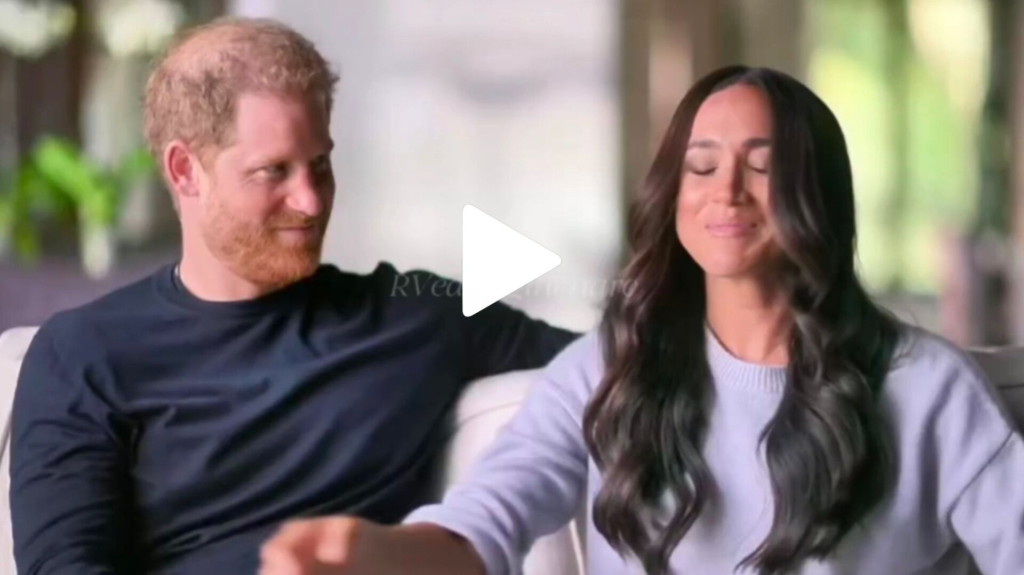
The moment in question comes in Episode 5 of Harry & Meghan (released 15 December 2022). Meghan, giggling, recounts her first private meeting with the Queen in 2016. She demonstrates the deep, theatrical curtsy she claims she was expected to perform, dropping dramatically low while sweeping her arms wide and looking up with an exaggerated wide-eyed expression.
Harry, sitting beside her, visibly winces, covers his face, and mutters “This is ridiculous.” To millions of viewers, it was a light-hearted anecdote about cultural differences.
To millions more – especially in Britain – it was an unforgivable public humiliation of a 96-year-old monarch who had just died, turned into reality-TV comedy fodder before the official mourning period had even ended.
The original headline that went viral this week – “Meghan Markle’s contrast between honor and performance says it all” – is now being weaponized by critics who point to a stark, almost surgical juxtaposition that appears in the very same Netflix oeuvre: – In the 2022 mockumentary: Meghan mocks the curtsy to the woman who, three months earlier, lay in state while 250,000 people queued for up to 24 hours to pay their respects. – In the 2025 With Love, Meghan lifestyle series: Meghan is seen tearfully honoring the late Queen, calling her “a beacon of grace” and dedicating an entire episode’s tablescape to “Her Majesty’s love of simple elegance.” So which is it? Genuine respect, or performance when the cameras demand it?
Royal sources who worked at Buckingham Palace at the time of the Queen’s death are scathing. One former senior courtier, speaking on condition of anonymity, told this publication: “The editing timeline is the smoking gun. They finished principal photography in August 2022 – before the Queen died. But post-production continued right up until early December.
They had three months to remove or re-contextualize that curtsy scene. Instead, they kept it in, added dramatic music, and made it the cold-open teaser for Episode 5.
That wasn’t an oversight. That was a choice.” Netflix insiders confirm that the Sussexes retained final-cut privilege under their Archewell Productions deal. In plain English: nothing aired that Harry and Meghan did not personally sign off on – including the decision to broadcast a skit ridiculing the late Queen’s protocol less than 14 weeks after her funeral. The backlash has been ferocious. The original X post accusing Meghan of “cruelty” has now exceeded 4.7 million views. Comments range from measured disappointment (“She could have honored a grieving grandson’s grandmother”) to outright fury (“Disgraceful. Profiting from mocking a dead woman who can’t defend herself”).
Even some American commentators who once championed the couple are now asking uncomfortable questions: – Why was the curtsy scene not only retained but promoted in every Netflix trailer? – Why did Meghan’s team reportedly threaten legal action against British newspapers that described the reenactment as “mocking,” while simultaneously monetizing it globally? – And most damning of all: if the same footage had been about, say, Meghan’s late mother-in-law being parodied by a reality star 93 days after her death, would the Sussexes have shrugged and called it “storytelling”? The contrast becomes even more jarring when cross-referenced with Harry’s own words in Spare (published just three weeks after the documentary).
In the book he describes the moment he learned of his grandmother’s death as “the worst day of my life,” recounting how he whispered to her coffin, “I hope you’re happy now.” Yet weeks earlier he had sat silently while his wife turned one of the Queen’s most sacred traditions into a punchline for global streaming consumption. Palace aides privately call it “the final straw” – the moment any lingering hope of reconciliation evaporated. One told us: “The late Queen always said ‘recollections may vary.’ What she could never have imagined is that those varying recollections would be sold for profit before her body was even cold.” Meghan has not commented publicly on the renewed controversy.
Her representatives declined to answer specific questions about the editing timeline, instead issuing a blanket statement: “The Duchess has nothing but respect for the late Queen and the series was intended to tell her personal truth.” But the numbers don’t lie. Harry & Meghan remains Netflix’s most-watched documentary debut ever in the UK – meaning tens of millions of British households paid subscription money to watch a scene that many now consider an act of calculated disrespect.
As Britain prepares to mark the third anniversary of Queen Elizabeth II’s passing, one question hangs heavier than any other: When you have final cut, when you know the world is watching a nation in mourning, and when you alone decide what stays on the screen, what does it say about you if you choose to leave the joke in? The late Queen cannot answer. But three years on, the British public finally has.