The Moment Meghan Markle Sealed Her Own Downfall: One Jaw-Dropping Misstep That Buried Her Public Image ForeverIn the relentless churn of royal scandal and self-inflicted wounds, there are pivotal moments that mark the point of no return—when a carefully constructed narrative collapses under the weight of its own contradictions. For Meghan Markle, that moment arrived with unmistakable clarity on March 7, 2021, during her explosive interview with Oprah Winfrey.
It was not merely a miscalculation or a momentary lapse; it was the precise instant in which she dismantled the foundational myth of her victimhood and, in doing so, drove a permanent wedge between herself and any hope of broad public or institutional redemption.The interview, billed as a seismic revelation of the injustices allegedly inflicted upon the Duchess of Sussex by the British monarchy, was intended to cement her status as a courageous truth-teller—a black woman exiled by a racist establishment.
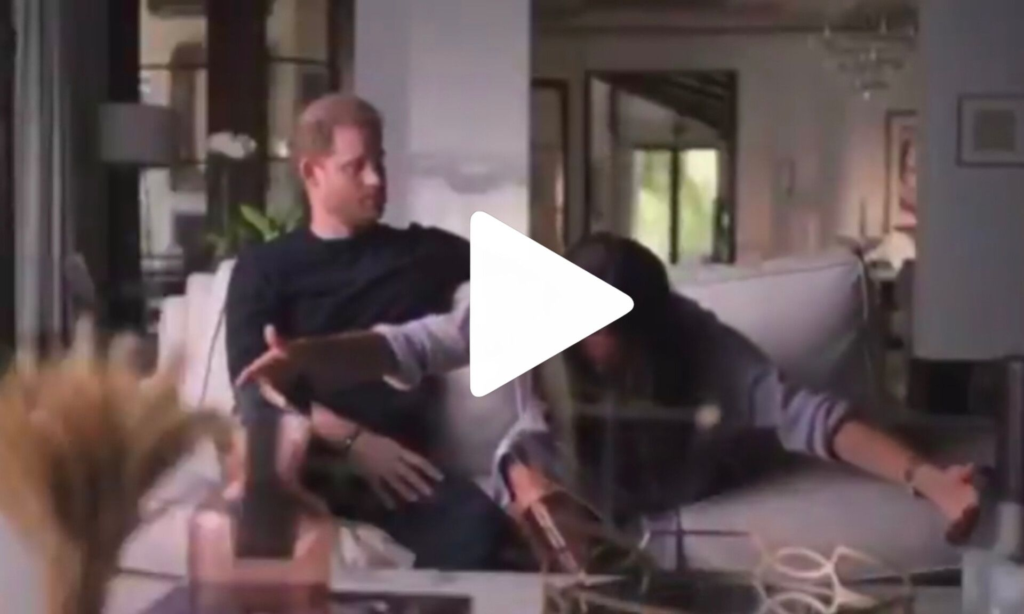
Yet, buried within its carefully orchestrated grievances was a single, devastating admission that exposed the hollowness of her entire narrative: Meghan’s revelation that she had no working knowledge of the British national anthem, despite having spent nearly two years as a fully engaged senior member of the Royal Family.When Oprah asked whether she had been instructed to curtsey to the monarch, Meghan responded with a striking declaration: “I will say, I didn’t know much about the royal family. It wasn’t part of my upbringing. And I didn’t fully understand what the job was.” She elaborated further, recounting her bemusement at learning “the formality on the outside” and admitting that she had been so ignorant of royal protocols that she was unaware of the existence of the royal standard—a flag that denotes the monarch’s physical presence.
Most damningly, she confessed to having to ask an aide to explain the significance of the national anthem, stating, “I asked if I was going to be able to understand the national anthem, because it’s the first time I would be singing it.”This was no minor anecdote. It was a confession of abject unpreparedness for the very role she had willingly embraced.
For a woman who had spent 17 months executing over 300 official engagements—representing the Crown abroad, presiding over patronages, and participating in ceremonial events such as Trooping the Colour—she claimed to have remained functionally illiterate in the most basic tenets of her position. The national anthem, “God Save the Queen,” is the inescapable bedrock of British royal public life. It is performed at every formal event, from investitures to state banquets, and requires no advanced knowledge beyond standing still and refraining from singing the verse that pertains exclusively to the monarch.
Meghan’s admission was not simply an embarrassing footnote; it was the self-inflicted puncture wound that deflated the central pillar of her post-royal persona: the claim of having been systematically unprepared for and sabotaged in her royal duties.
If she was truly bewildered by the requirement to remain silent during the anthem—a practice as fundamental as breathing for any working royal—then the inescapable conclusion is that she either failed to perform the most rudimentary due diligence or deliberately withheld her willingness to adapt to the institution she had married into. Neither explanation is remotely compatible with the image of a dedicated, capable royal consort who was driven out by external malice.This revelation reverberated far beyond the interview itself because it directly contradicted the image Meghan had cultivated during her time in the Firm.
Publicly, she had projected flawless assimilation: impeccable deportment, a command of protocol, and an effortless transition into the role of duchess. Yet her Oprah confession retroactively cast every polished appearance as a performance underpinned by profound ignorance. How could she credibly claim to have been stifled by a hostile palace machine when she had not even acquainted herself with the elemental customs of her office? The response from royal watchers, historians, and commentators was swift and unforgiving: it was impossible to reconcile a narrative of external oppression with one of self-admitted unpreparedness.
The fallout was immediate and enduring. The admission provided an unassailable foundation for the most persistent critique of Meghan’s tenure: that her rapid alienation from the monarchy stemmed not from institutional racism or deliberate exclusion, but from an unwillingness—or inability—to subordinate her own inclinations to the demands of the role.
It transformed what had been a sympathetic portrait of a fish-out-of-water outsider into a portrait of willful incompetence. Royal author Tom Bower encapsulated the damage in his book Revenge, noting that Meghan’s claim of ignorance about the national anthem “destroyed her credibility as a serious member of the royal family.”
Even sympathetic observers found the revelation impossible to defend; as former BBC royal correspondent Nicholas Witchell remarked, “It is not a particularly arcane piece of knowledge. It is something that anyone who was going to be a member of the working royal family would need to know.”In the years since, Meghan has attempted to rebuild her public standing through commercial ventures and selective media appearances, but the shadow of that single admission has proven impossible to dispel.
Every subsequent claim of royal mistreatment—whether regarding lack of support, media intrusion, or institutional indifference—collides with the fundamental question it raises: If she could not be bothered to learn the most basic protocols of her role, how can she convincingly argue that others failed to equip her for success?This moment in the Oprah interview was not merely a stumble; it was the decisive act of self-sabotage that placed the final nail in the coffin of her credibility as a wronged royal insider.
By publicly confessing to a level of ignorance that bordered on negligence, Meghan obliterated the possibility of portraying herself as a dutiful figure undermined by external forces. Instead, she handed her critics—and the broader public—a permanent, irrefutable exhibit of personal responsibility for her own dissatisfaction and departure.
The image of the duchess who was too detached, too ill-prepared, even to comprehend the protocol of standing mute during a national anthem has proven more enduring than any of the grievances she sought to air.In the merciless arena of public perception, where narratives are built on consistency and undermined by contradiction, Meghan Markle’s casual admission of unpreparedness stands as the definitive turning point.
It was the exact moment when the story of an embattled insider became irrevocably supplanted by the reality of an outsider who never truly committed to the demands of the institution she joined—and who, in revealing that truth, ensured that her version of events would forever be viewed with skepticism.
The nail was not hammered by palace courtiers, tabloid editors, or institutional obstructionism. It was driven squarely into the coffin of her own credibility by her own words.

She’s such a big liar! She had a bulletin board with all the prominent royal players on it. She studied it, even Princess Diana! She knew all about the family.