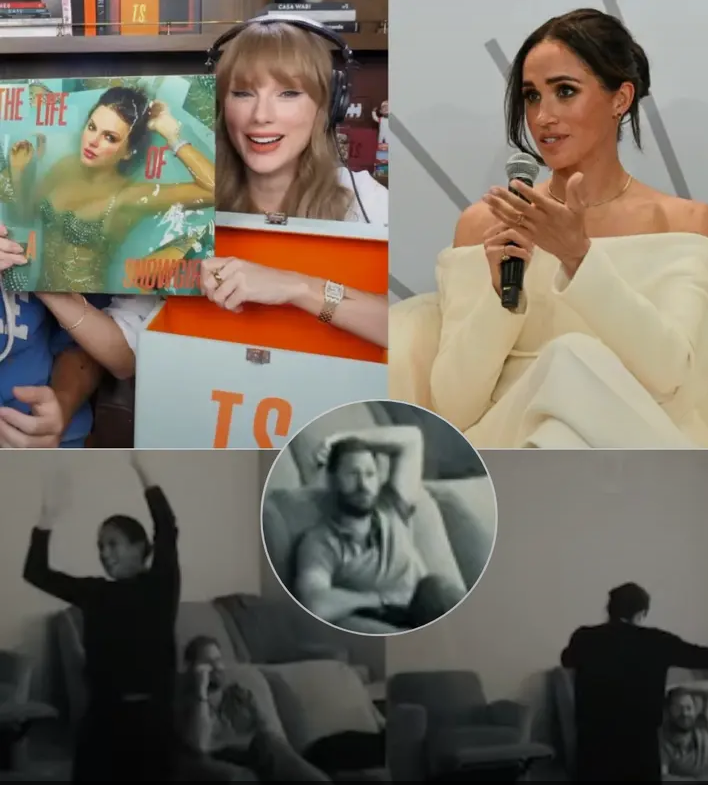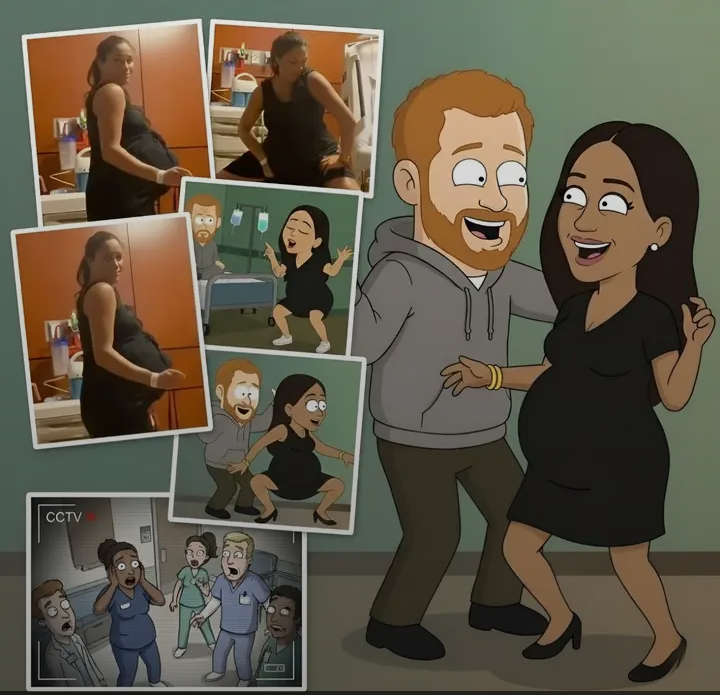
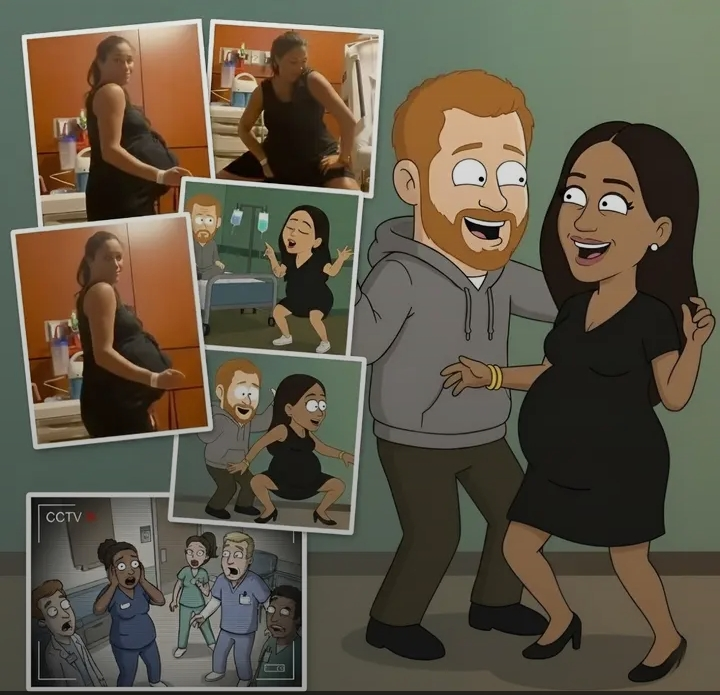
What began as a carefully framed moment of empowerment has now taken on a very different life of its own. When Meghan Markle shared a playful hospital video of herself dancing to induce labor with Princess Lilibet, the intention appeared clear: warmth, humor, and relatability. But once the clip escaped the controlled environment of Instagram and entered the wider pop-culture bloodstream, it was no longer hers to define.
Pregnant Meghan Markle Does ‘Baby Mama Dance’ in Hospital with …
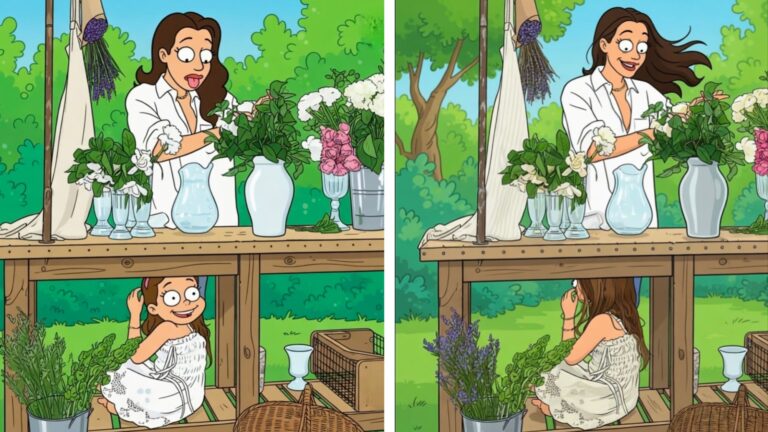
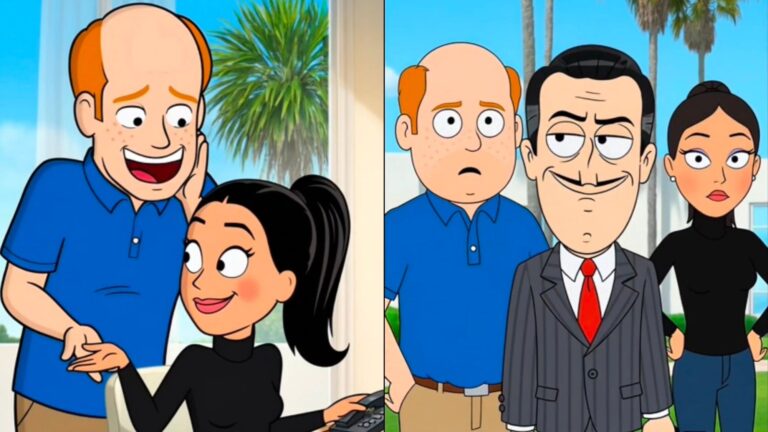
The turning point came when South Park trained its trademark satire on the moment. Known for exaggeration, the show did something arguably more cutting this time — it barely exaggerated at all. To many viewers, the parody felt less like an attack and more like a mirror. As one online commenter dryly observed, “When comedy doesn’t need to invent anything new, you know the original material did half the work.”
Meghan Markle Thinks Americans Loved Pregnancy Dance Video
Meghan’s defenders argue that the backlash says more about a culture eager to ridicule women than about the video itself. They point out that social media is filled with lighthearted pregnancy content, much of it celebrated rather than condemned. Yet critics counter that context matters. Meghan is not an anonymous creator; she is a global figure whose every appearance is scrutinized for intent, authenticity, and message. In that environment, what might feel playful to one audience can look manufactured to another.
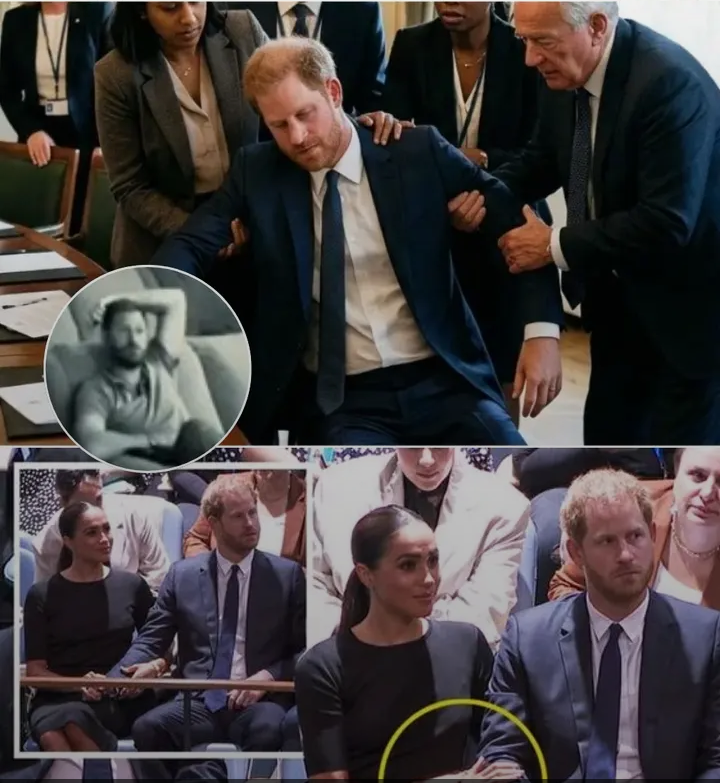
Prince Harry’s verdict on Meghan Markle’s twerking video – Celebrity News – Entertainment – Daily Express US
The hospital dance was presented as candid, but the production cues told a different story to skeptical viewers. The framing, the timing, the music choice — all of it fed into an existing narrative that Meghan struggles to shake: that her most personal moments are often packaged with public reception firmly in mind. A media analyst quoted in online discussions summed it up bluntly: “Spontaneity doesn’t usually look this well-lit.”
That is precisely why the South Park satire struck such a nerve. The show, created by Trey Parker and Matt Stone, has long thrived on puncturing celebrity self-importance. In this case, the episode did not frame Meghan as a villain so much as a symbol of a larger phenomenon — the blurring line between authenticity and performance in modern celebrity culture. One viewer comment captured the mood: “This isn’t about hating her. It’s about laughing at how hard she tried.”SOUTH PARK-Style Breaks Down MEGHAN MARKLE TWERKING in the Delivery Room! SURROGACY RUMORS Busted? – YouTube
The reaction also reflects a broader fatigue with what audiences perceive as overproduced vulnerability. In an era where influencers, actors, and public figures are all competing for emotional resonance, sincerity has become a scarce commodity. When vulnerability appears choreographed, satire rushes in to fill the gap. As another observer noted, “If you announce that a moment is real, people immediately start checking for the script.”
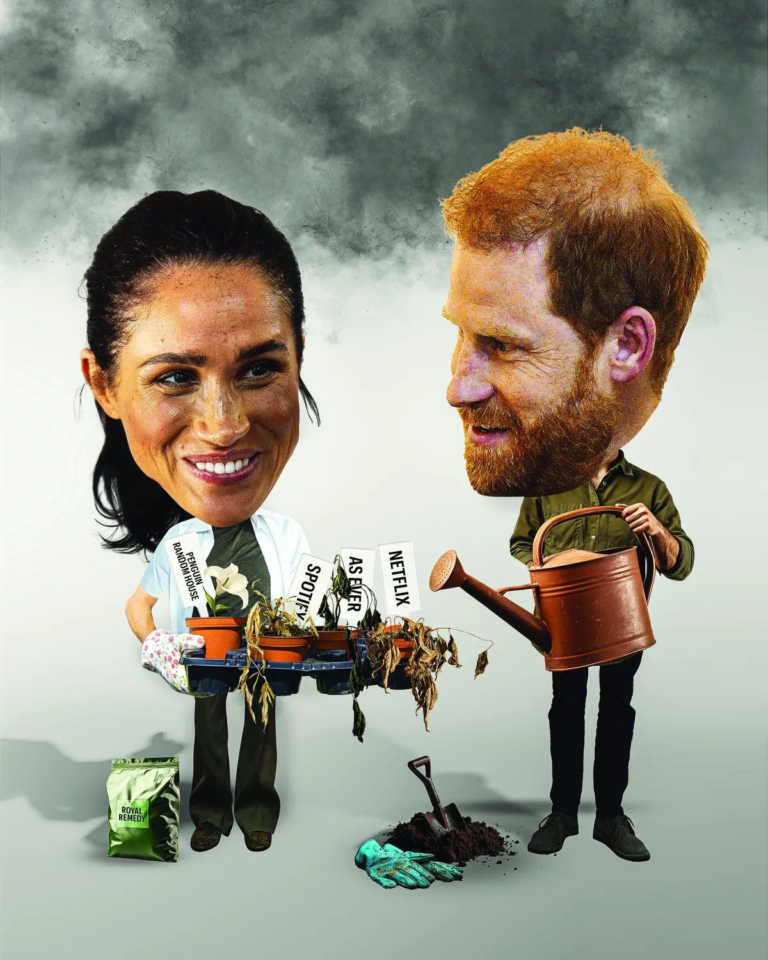
Industry whispers have only amplified the story. Rumors that studios are growing cautious around Meghan — worried about backlash overshadowing content — reinforce the sense that this episode was not an isolated joke but part of a cumulative shift. Whether or not such whispers are accurate, they resonate because they align with what audiences already feel: that the balance of control is slipping.
What makes this moment especially striking is its contrast with Meghan’s original goal. The video was meant to humanize, to soften, to connect. Instead, it has hardened perceptions among critics who now see a pattern rather than a misstep. “At some point,” one reader wrote, “you stop blaming the internet and start asking why the internet keeps reacting the same way.”
Still, it would be simplistic to view the episode solely as humiliation. Satire, after all, is a sign of cultural relevance. The fact that South Park found the moment worth parodying suggests Meghan remains firmly in the public consciousness. The problem is that relevance achieved through ridicule rarely strengthens a personal brand built on gravitas and moral authority.
Ultimately, what is unfolding is less about one dance or one episode than about narrative ownership. Meghan attempted to frame a private memory as empowerment. Pop culture reframed it as spectacle. Somewhere between those two versions lies the discomfort audiences are responding to. And as one particularly sharp comment put it, “You can’t choreograph authenticity — but you can always choreograph the fall.”
In that sense, the caption tells the story better than any commentary could. Applause was indeed the plan. But once satire stepped in, the result was inevitable.