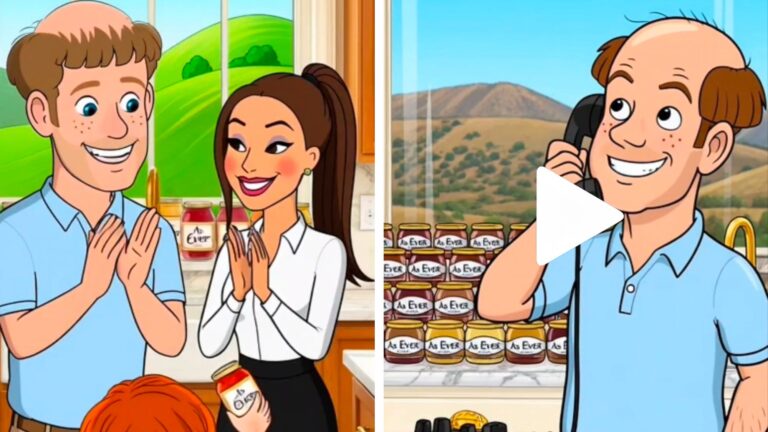
In a jaw-dropping display of royal-level hypocrisy that has parents everywhere shaking their heads in disbelief, Prince Harry and Meghan Markle are once again caught in the ultimate parental contradiction. The couple who has spent years sounding the alarm about the “evils and dangers” of social media—begging the world to keep children completely off the internet for their own safety—is happily using their 4-year-old daughter Princess Lilibet as a marketing prop for Meghan’s struggling lifestyle brand, As Ever.
Just days ago, on March 17, 2026, the Duchess of Sussex took to Instagram to promote As Ever’s flashy new collaboration with luxury flower purveyor High Camp Supply. The limited-edition “Garden Tea Bloom Box”—a $255 extravagance packed with herbal peppermint tea, sage honey with honeycomb, and fresh peonies, jasmine, and gardenias—features a promotional photo and video where little Lilibet makes an “easy-to-miss cameo.” There she is: tiny hands cupping a pristine white flower alongside her mother’s, her signature red Spencer hair tumbling into frame, dressed in a matching white Cult Gaia frock. No full face, of course. Just enough. A back view here, a side profile there, hands intertwined like some calculated game of peek-a-boo with the public.
This isn’t protection. This is a tease. And it’s exactly the kind of half-measure the Sussexes have been playing for years.
The only way to truly keep your children safe from the internet is to keep them OFF the internet entirely. Harry and Meghan know this better than anyone—they’ve preached it from every stage, summit, and statement. Yet here they are, dangling bits and pieces of Lilibet to drive sales for As Ever’s latest venture. It’s baffling. It makes zero sense. And it’s leaving critics screaming one word: hypocrites.
Let’s rewind to the Sussexes’ very public crusade against digital dangers. In December 2025, when Australia became the first country to ban social media for kids under 16, Harry and Meghan rushed out a rare joint statement through their Archewell Foundation praising the “bold action” while admitting it “shouldn’t have come to this.” They warned that platforms prey on children with addictive algorithms designed to “maximize data collection at any cost.” Harry has repeatedly confessed his fears for Archie and Lilibet, saying in one webinar: “My two little ones are still at their age of innocence. Sometimes I feel like I can keep them away from the online harm that they could face in the future forever, but I’m learning to know better… I hope they never have to experience it as it exists now. No kid should have to.”
Meghan has echoed the sentiment at mental health summits, complaining that the burden can’t fall solely on parents because “not all parents are tech savvy.” The couple has hosted panels, unveiled memorials for children lost to online bullying, and demanded tech giants create better safeguards. Harry himself declared, “The easiest thing to say is to keep your kids away from social media.” They’ve positioned themselves as the ultimate defenders of childhood innocence, fighting the very platforms that now host their own brand promotions.
Yet the second As Ever needs a sales boost—especially after reports of its rocky Netflix partnership ending and the brand “standing on its own”—suddenly Lilibet is “mama’s little helper.” Videos from the shoot show the children racing around the flower arrangements. The official As Ever Instagram post teases the Bloom Box with that mother-daughter hand shot, Lilibet’s hair and partial profile clearly visible. The world already knows enough from these cumulative snippets—previous holiday cards, beach glimpses, and now this floral flex—to piece together exactly what the young princess looks like. The “only half their faces or only the backs of their heads” routine isn’t fooling anyone anymore. It’s a game. A calculated marketing ploy dressed up as privacy.
Either go all out and show them fully, accepting the celebrity glare that comes with it, or leave them out of it altogether. Walking this fine line of “almost but not quite” isn’t the noble privacy stand the Sussexes claim it is. It’s cynical brand-building at its worst. And it directly contradicts every lecture they’ve given the world about keeping kids offline.
This isn’t just tone-deaf parenting—it’s bordering on the very exploitation they rail against. Involving a 4-year-old in commercial promotions, even if it’s just hands and hair in a high-end tea-and-flower box campaign, raises serious ethical red flags. Child labor isn’t cool, and while this may not be factory work, using your toddler’s image to sell luxury lifestyle products for profit is commercializing childhood in the most public way possible. Lilibet isn’t old enough to consent. She’s not choosing to be a brand ambassador. Her parents are making bank off her cuteness while simultaneously telling other families to shield their kids from the exact internet ecosystem they’re feeding her into.
The backlash has been swift and brutal. Royal watchers and parenting experts are calling it out loud and clear: “It’s baffling and makes zero sense,” as one prominent commentator put it. Past incidents—like Valentine’s Day posts and earlier As Ever teases—have already drawn accusations of hypocrisy. One outlet even labeled Harry a “hypocrite” for slamming parents who post kids online just days after Meghan’s latest drops. The Sussexes have fought tooth and nail for privacy rights, citing Harry’s own traumatic childhood in the spotlight and their battles against paparazzi. Through Archewell’s Parents’ Network, they’ve grieved with families destroyed by online harms. Yet voluntarily posting these “safe” glimpses of Lilibet to Instagram—the very platform they criticize—undermines everything.
What’s the endgame here? As Ever’s Bloom Box is flying off virtual shelves thanks to the adorable (partial) family touch. The brand, which launched with jams, wines, and homeware amid massive hype, has faced setbacks but keeps leaning on these family cameos for relevance. Meanwhile, Harry and Meghan continue their global tours warning about “tech’s broken design and exploitive business incentives.” They say social media can become “the very thing that kills” vulnerable kids, yet they’re happy to hook their own daughter into the promotional machine.
This double standard isn’t just confusing—it’s damaging. It tells struggling parents everywhere: “Do as I say, not as I do.” While everyday moms and dads agonize over screen time, privacy settings, and keeping kids safe, the Sussexes cherry-pick when to expose their children for profit. The fine line they’re walking isn’t protecting Lilibet; it’s exploiting her under the guise of “cute family moments.” By now, the public has seen enough bits and pieces—the hair, the hands, the white dress, the flower-holding pose—to form a complete picture anyway. The mystery is gone. The protection was never real.
Harry and Meghan have built their post-royal brand on authenticity, mental health advocacy, and fierce privacy. But this latest As Ever stunt rips the mask off. They’re not practicing what they preach. They’re profiting from the very dangers they decry. The world is watching, and the verdict is in: this game has to stop.
Either commit to real privacy—keep Lilibet (and Archie) completely off the internet and out of brand campaigns—or drop the holier-than-thou act about social media evils. The current charade isn’t fooling parents, critics, or the court of public opinion. It’s not protecting their children. It’s using them. And in 2026, with their words on record and their Instagram posts as evidence, the hypocrisy has never been clearer—or more baffling.
Parents deserve better. Kids deserve better. And Harry and Meghan? They need to pick a side—once and for all.