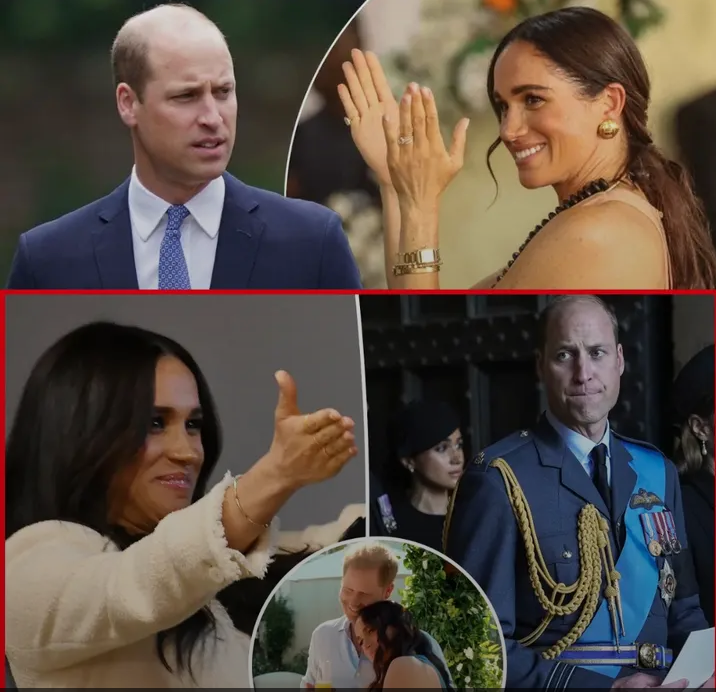
As diplomatic calculations quietly intensify behind palace gates and government offices, plans are now taking shape for a high-profile royal re-engagement with the United States in 2026 — one that appears deliberately designed to reassert authority, reset relationships, and draw unmistakable boundaries. According to sources familiar with ongoing discussions, King Charles III and Prince William are each expected to make separate visits to the US next year as part of what diplomats have described as a carefully coordinated “charm offensive” aimed at Donald Trump.
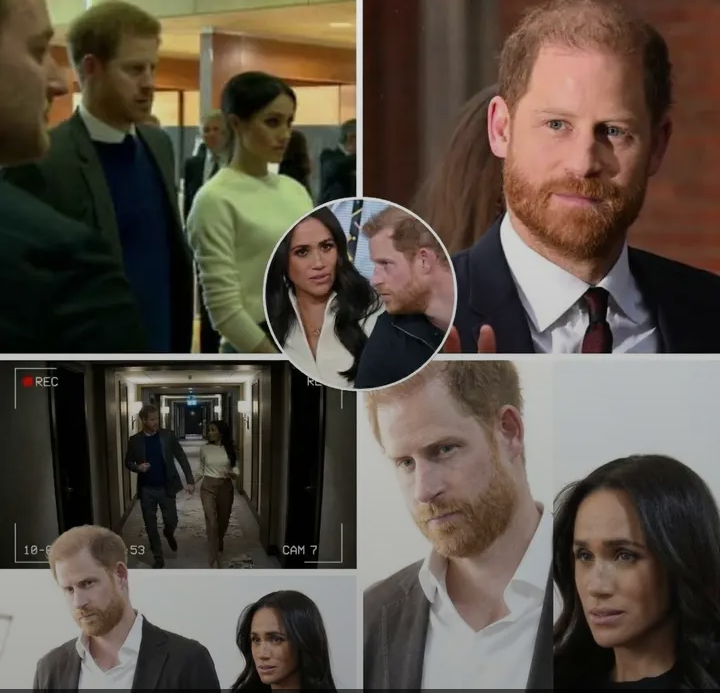
Prince Harry, Meghan Markle in trouble after latest blow: What went wrong?
The timing is far from accidental. The visits are expected to coincide with the 250th anniversary of American independence, a symbolic milestone loaded with historical resonance, while also aligning with delicate UK–US trade negotiations that have recently stalled. British officials believe that direct royal engagement could help revive momentum on a proposed £31 billion technology-focused trade agreement that has become bogged down by disputes over digital taxes and agricultural market access.
King Charles is ‘highly likely’ to visit the US in April as part of a ‘charm offensive’ aimed at Donald Trump
For King Charles, the expected April visit would mark his first trip to the United States as a reigning monarch, and his first visit since Prince Harry formally stepped back from royal duties and relocated to California with Meghan Markle. For Prince William, a separate journey later in the year — likely tied to the World Cup hosted across the US, Canada, and Mexico — would reinforce his role as a senior working royal on the global stage.
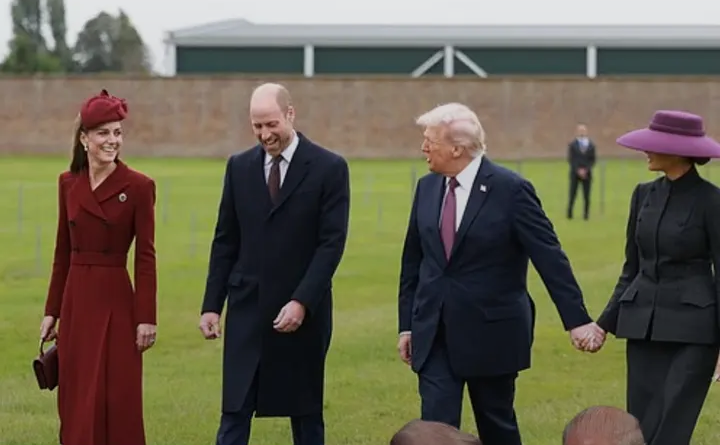
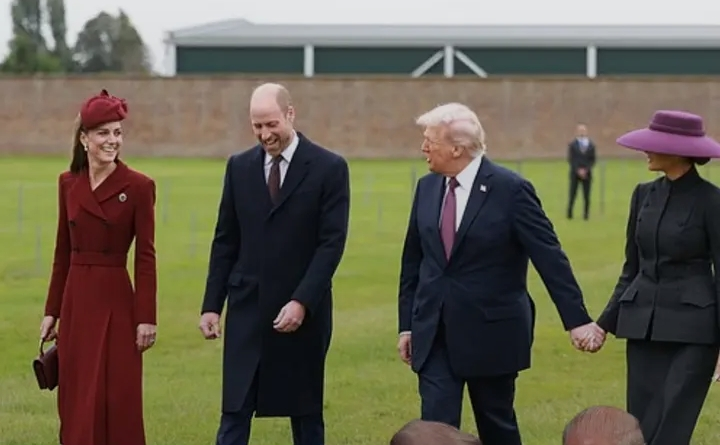
The visit will come just months after Donald Trump’s ‘unprecedented’ second state visit to the UK in September
What has not gone unnoticed, however, is who will not be part of these engagements. Insiders say Prince Harry will be “iced out” of both visits, despite living in the United States and despite previous speculation that he and Meghan might attempt to insert themselves into official or semi-official events surrounding the celebrations. One former diplomatic adviser observed dryly, “This is about clarity. Representation follows duty, not geography.”
Prince William is also likely to embark on a separate trip to the US during the World Cup next summer
Trump’s personal enthusiasm for the British monarchy has long been well documented. During his recent state visit to the UK, he referred to King Charles as “my friend” and was treated to an unusually lavish reception at Windsor Castle. His affection is often traced back to his late mother, Mary, who grew up in Scotland and admired the Royal Family. British officials hope this rapport can be leveraged at a moment when political goodwill may prove decisive.
Trump has often spoken fondly about the royal family and described King Charles as ‘my friend’
Yet the emerging structure of the 2026 visits appears to send a message that extends beyond trade. By dispatching the King and the Prince of Wales on distinct, clearly defined missions, the Palace is reinforcing a hierarchy that leaves little room for ambiguity. “These trips aren’t just diplomatic,” said a royal historian. “They are constitutional statements about who speaks for the Crown.”
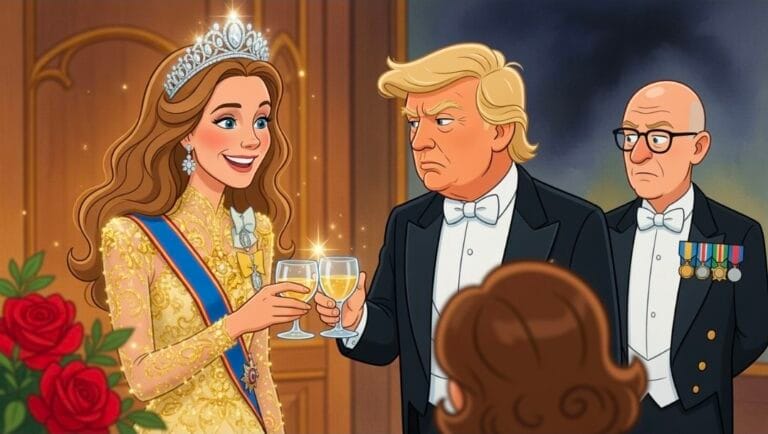
The £31billion ‘tech prosperity’ deal, which was seen as a major victory when it was announced during Trump’s state visit in September (pictured at the royal banquet), has stalled
Public reaction has been telling. Supporters of the Sussexes argue that Harry and Meghan remain globally influential figures who could have contributed informally to US–UK relations. Critics, however, see the situation differently. “You don’t quit the institution and then expect to represent it,” one commentator wrote online. “That’s not how diplomacy works.”
Even as reports suggest Harry and Meghan have explored appearing under “soft” or symbolic roles, the Palace’s approach seems intentionally precise. Guest lists, schedules, and messaging are being tightly controlled, and officials have stressed that only working royals will participate in events connected to state-level engagements. As one palace source put it, “This is about avoiding confusion — both abroad and at home.”
For Meghan in particular, the implications are increasingly stark. The vision once floated of blending independent advocacy with royal proximity appears to have collided with institutional reality. Indirect palace statements emphasizing constitutional roles have been interpreted by many observers as confirmation that her future relationship with the monarchy is effectively settled.
History looms large over the moment. Queen Elizabeth II made five state visits to the United States, including during the bicentennial celebrations in 1976, famously noting how far relations had come since independence. Those visits underscored reconciliation, continuity, and institutional endurance — themes that Buckingham Palace appears eager to revive in 2026.
Ultimately, the planned visits by King Charles and Prince William suggest a deliberate re-centering of royal authority at a time of geopolitical and internal uncertainty. As one former courtier remarked, “The monarchy doesn’t argue. It demonstrates.” And in doing so, it may have delivered its clearest answer yet — not through confrontation, but through absence.
What remains is a quiet but firm recalibration of roles. The Crown is moving forward, the diplomatic stage is being set, and the lines of representation are no longer blurred. For Harry and Meghan, the future appears less about negotiation and more about acceptance of a reality that has already been decided.