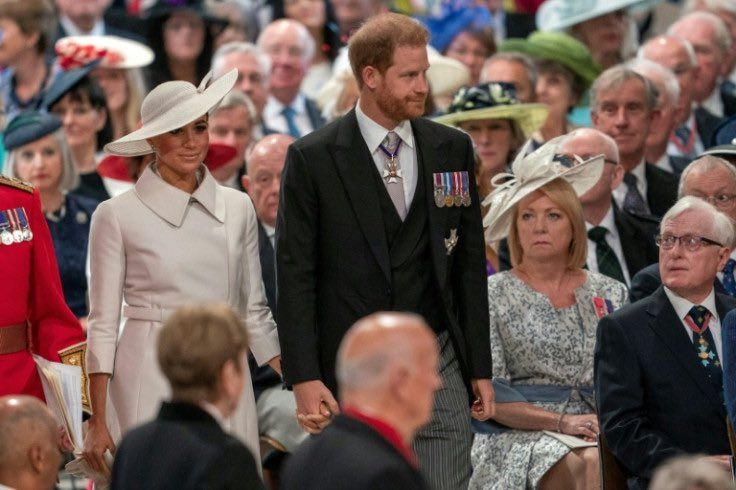
In yet another glaring chapter of the Sussex saga that continues to expose the consequences of defiance and entitlement, Prince Harry and Meghan Markle endured one of the most publicly humiliating moments of their post-royal lives during the Queen’s Platinum Jubilee Thanksgiving Service at St. Paul’s Cathedral in June 2022. What was intended as a rare, carefully choreographed return to the fold for the couple who had dramatically exited royal duties in 2020 turned into a stark display of demotion, protocol enforcement, and quiet royal retribution. Insiders and observers alike describe it as nothing short of a calculated “walk of shame” – a deliberate, slow procession down the aisle under the watchful eyes of the congregation, only to be relegated to second-row seats behind cousins and friends, with a senior aide positioned directly behind them to ensure they stayed in line.
The drama began the moment the Duke and Duchess of Sussex arrived at the historic cathedral. Unlike the working royals who entered with the pomp and procession befitting their status, Harry and Meghan were forced to make their entrance separately, almost as an afterthought. Reports from royal watchers and commentators highlight how the couple deliberately missed their assigned transport, opting instead for a solo walk down the center aisle – a move some labeled an attempt to command attention. But any illusion of grandeur evaporated quickly. As they approached their designated seats, the reality hit hard.
Eyewitness accounts, amplified across royal forums and media analyses, recount Prince Harry’s visible confusion and dismay upon seeing the arrangement. “Here? Why are we sitting here?” he reportedly muttered in disbelief, gesturing toward the second-row pews positioned behind more senior family members and cousins like Princess Beatrice and her husband Edoardo Mapelli Mozzi. The usher or aide guiding them – unflinching in the face of royal rank – delivered the crushing response: “Who said we are sitting here?” followed swiftly by the ultimate authority: “The Queen, sir.” These words, allegedly spoken with polite but unmistakable firmness, underscored that this was no oversight or logistical error – it was a direct order from Her Majesty herself.
The seating plan was no accident. Royal biographer Tom Bower, in his explosive book *Revenge: Meghan, Harry and the War Between the Windsors*, revealed that Queen Elizabeth II personally authorized the Sussexes’ placement far from the front-row spotlight occupied by then-Prince Charles (now King Charles III), Camilla, Prince William, and Kate Middleton. The decision stemmed from a desire to prevent the couple from “diverting attention” from the occasion’s true purpose: honoring the Queen’s unprecedented 70 years on the throne. After years of public grievances aired in interviews, a Netflix series, and a tell-all memoir, the palace – with the Queen’s blessing – ensured the event remained focused on celebration, not controversy.
Adding to the sting, a senior royal aide – widely identified in reports as Major Johnny Thompson, a trusted equerry known for his no-nonsense demeanor – was strategically seated directly behind Harry and Meghan. Far from a coincidental placement, this was viewed by many as intentional surveillance. The aide’s position allowed for immediate intervention if any misbehavior or attempt to upstage the proceedings occurred. It was a silent but powerful reminder: the Sussexes were no longer trusted insiders but guests on probation, watched closely to maintain decorum.
The couple’s slow walk to their seats – captured in photographs and videos that went viral – has since been dubbed the infamous “walk of shame.” Harry appeared subdued, his usual confident stride replaced by visible discomfort. Meghan, ever the performer, maintained a composed facade, but the body language spoke volumes: the forced smiles, the sidelong glances, the realization that their former privileges had been stripped away. Social media erupted with commentary, with hashtags like #WalkOfShame and #RoyalComeuppance trending as royal enthusiasts celebrated what they saw as poetic justice for the couple’s repeated breaches of protocol and loyalty.
This wasn’t an isolated snub. It echoed patterns seen elsewhere – from the Prince Philip funeral arrangements that separated Harry from his brother in the procession to the Queen’s funeral where the Sussexes were again placed in the second row at Westminster Abbey. Each time, the message was clear: actions have consequences. By choosing to air private family matters publicly, by stepping back from royal service while retaining titles and commercializing their connections, Harry and Meghan forfeited the automatic deference once afforded them.
Critics argue this Jubilee moment crystallized the depth of the rift. The Queen, in her final years, had endured enough disruption from the Sussexes’ narrative of victimhood and institutional blame. Placing them behind cousins – family members who had remained loyal and dutiful – was a subtle yet devastating statement of hierarchy and trust. The senior aide’s watchful presence behind them added insult to injury, transforming what should have been a celebratory reunion into a monitored probation.
Years later, as the couple continues their life in California with podcasts, deals, and selective royal engagements, this “walk of shame” remains a defining humiliation. It serves as a cautionary tale of what happens when ambition overrides duty, when personal branding trumps familial obligation. The Queen’s quiet authority prevailed even in her absence from the spotlight – ensuring her Jubilee was remembered for her legacy, not for the drama of those who once stood closer to the throne.
In the end, the Sussexes’ second-row seats, the stunned question, the aide’s firm reply, and the lingering gaze from behind tell a story far more powerful than any interview or documentary ever could: in the royal world, respect is earned, not demanded – and once lost, the path back is a long, humbling walk indeed.