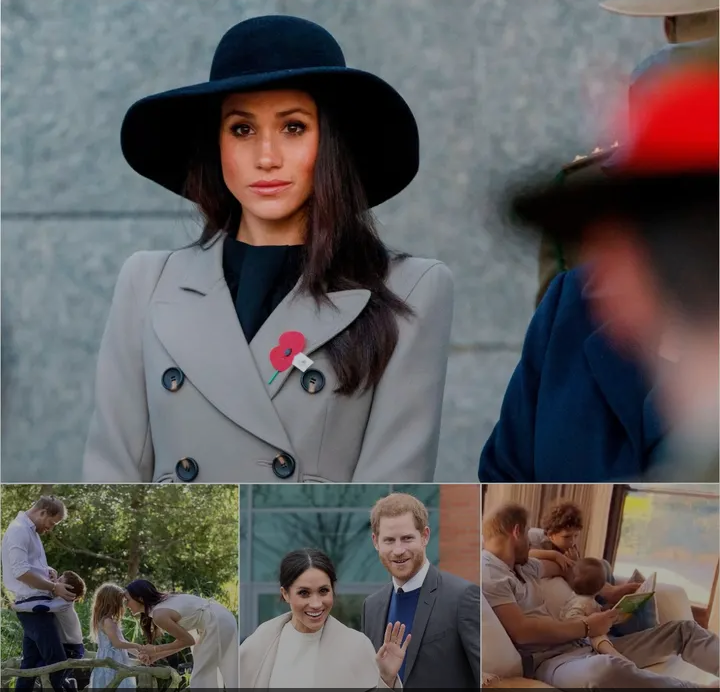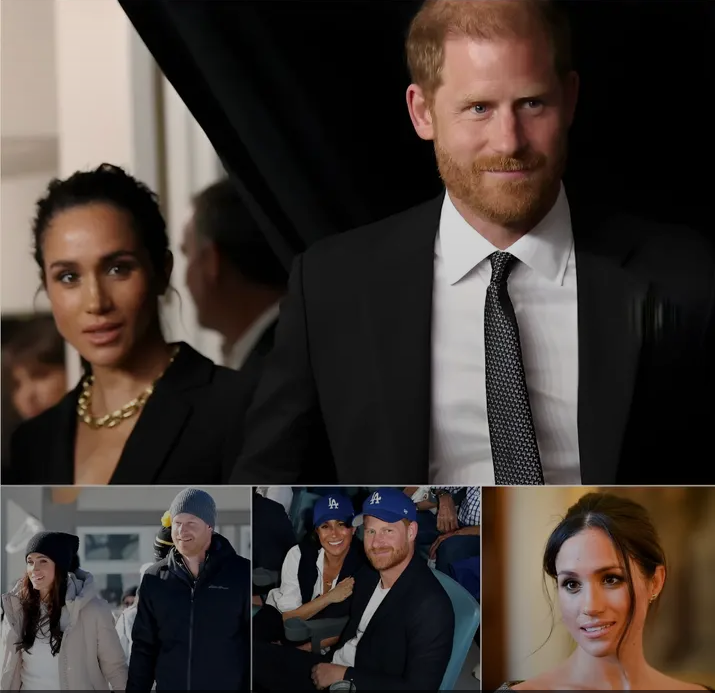
Prince Harry has delivered one of his most emotionally restrained and revealing statements to date, insisting that he has forgiven the British Royal Family and still holds out hope for reconciliation. The words themselves were calm, almost disarmingly so. There was no trace of the anger that once dominated headlines, no familiar accusations or explosive language. And yet, it is precisely this measured tone that has unsettled royal watchers the most.
8 Times Meghan Markle Channeled Princess Diana’s Style
According to those familiar with the interview, Prince Harry spoke of forgiveness not as a dramatic gesture, but as something already done. In his framing, the emotional work is behind him. What remains unresolved is not his anger, but the silence that continues to come from across the Atlantic. Communication with King Charles III, sources suggest, remains minimal to nonexistent, reinforcing the sense that forgiveness does not automatically open doors.
Prince Harry, Meghan Say Archewell Job Cuts Were ‘Inevitable’ – Parade
For some observers, this marks a turning point. Harry’s earlier interviews were often received as confrontational, even punitive. This time, the absence of blame has shifted the burden of interpretation. One reader remarked that “he’s stopped shouting, which makes the silence from the Palace feel louder than ever.” Without accusations to rebut, the lack of response now reads less like dignity and more like distance.
Meghan Markle Talks Suits, Catholic Childhood and Growing Up On Set of Married With Children
Supporters interpret Harry’s words as evidence of growth. They argue that forgiveness does not require reciprocity, and that his willingness to articulate it publicly reflects a man trying to move forward for the sake of his children. From this perspective, the calmness is not weakness but resolution. “He sounds like someone who’s done fighting,” one commenter noted, “and that’s exactly why it’s uncomfortable.”
Prince Harry and Meghan Markle Restructure Archewell Charity
Critics, however, are far less charitable. They question whether public forgiveness is still a form of pressure, subtly reframing the Royal Family as the party now failing to act. By declaring himself healed, Harry implicitly casts the Palace as emotionally stalled. “It’s forgiveness with an audience,” another reader wrote, “and that makes it strategic whether he intends it or not.”
The Palace’s silence has only intensified speculation. Traditionally, non-response has been the monarchy’s preferred shield, allowing controversies to burn out on their own. But in this case, some royal analysts argue that silence risks being interpreted as indifference. “When the accusation is gone,” one observer said, “what’s left to answer is humanity.” The lack of acknowledgment, even symbolic, has become part of the story.
The broader context complicates matters further. With ongoing discussions around security arrangements and the King’s health remaining delicate subjects, any engagement carries risk. Palace insiders suggest that restraint is deliberate, designed to prevent further escalation or misinterpretation. Yet that calculation does little to quiet public curiosity. As one reader put it, “If forgiveness is offered and ignored, people start asking why.”
Outside voices woven into the conversation reveal a sharply divided audience. Some see Harry’s remarks as an olive branch that deserves at least a private response. Others believe the Royal Family owes nothing after years of public criticism. “Forgiveness doesn’t erase damage,” a commenter argued. “It just changes the tone.”
There is also the question of timing. Harry’s comments arrive at a moment when interest in royal reconciliation has resurfaced, fueled by illness, anniversaries, and the passage of time. Skeptics wonder whether the softer language is part of a gradual repositioning, an attempt to reset public perception after years of confrontation. Supporters counter that growth rarely happens on a schedule convenient to critics.
What is undeniable is the emotional recalibration on display. Harry did not demand reconciliation. He did not outline conditions. He simply stated a hope: that they might understand him. That phrasing, understated yet loaded, has resonated widely. One reader observed that “understanding is a higher bar than forgiveness — and harder to give.”
For the Palace, the challenge lies in navigating this shift without reopening wounds it believes are better left closed. For Harry, the risk is that silence may harden into finality. Each side appears to be waiting, interpreting restraint as principle rather than avoidance.
Ultimately, the question raised by Harry’s words lingers unanswered. If he has truly moved on, why does the absence of response still matter? And if forgiveness has been given, what responsibility, if any, does the other side bear to acknowledge it?
In the end, the calmness of Harry’s statement may prove more disruptive than his anger ever was. It leaves no easy villain, no obvious rebuttal, and no clear resolution. Just a quiet declaration hanging in the space between a son and an institution — and a silence that continues to define the distance between them.