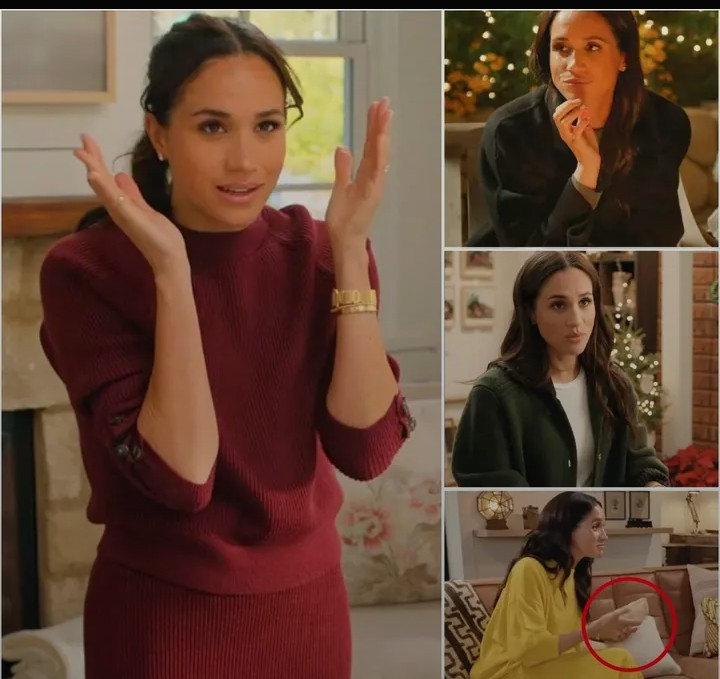
Meghan Markle has once again found herself at the center of controversy after reportedly insisting that her lack of popularity in the United Kingdom is not the result of her own behavior or public image, but rather the fault of the British media. According to royal commentators, this belief is shared and reinforced by Prince Harry, who has long argued that hostile press coverage poisoned public opinion against his wife from the very beginning. To many observers, however, this argument feels increasingly detached from reality, particularly as Harry continues to pursue what critics describe as an almost desperate strategy to reassert the Sussexes’ relevance on British soil.
Harry is said to genuinely believe that the Sussex brand still holds enormous power and that it merely needs the right moment to be reactivated. In his mind, persuading Meghan to return to the UK, even briefly, would send a clear message to the Royal Family—especially to his brother, Prince William, and his father, King Charles—that he and Meghan remain a force to be reckoned with. Supporters of this view argue that public opinion can be fickle and that a carefully staged return could spark renewed curiosity, headlines, and debate. Yet many readers watching from the sidelines see something far less strategic and far more misguided.

One recurring theme among commentators is Harry’s apparent refusal to accept that bridges have been burned. Insiders close to the Prince of Wales suggest that William has moved on emotionally and practically. He is focused on his role as heir, on his wife Catherine, and on raising their three children, and has little appetite for reopening old wounds. To William, according to those familiar with his thinking, Harry is no longer a partner to be managed or protected, but a source of unnecessary distraction. This sentiment resonates with a large section of the public, some of whom openly remark that William has already “carried enough for one lifetime.”

The Invictus Games, once widely praised as Harry’s most meaningful and authentic achievement, have also become entangled in this narrative. Critics argue that what should be a platform celebrating wounded veterans has gradually been overshadowed by the Sussexes themselves. Plans for high-profile appearances, heavy security demands, and intense media focus have led some to question whether the event is being used to serve a personal agenda. One long-time supporter of Invictus commented that the athletes “deserve the spotlight, not a celebrity circus,” a remark that echoes growing unease among donors and observers alike.
Meghan’s insistence that the British media alone is responsible for her poor standing in the UK has particularly struck a nerve. While few deny that the tabloids can be harsh, many readers feel this explanation ignores a pattern of actions that alienated the public long before relations collapsed entirely. As one royal watcher put it, “At some point, you have to ask why the reaction is so different in different countries. It can’t always be everyone else’s fault.” Such comments reflect a broader fatigue with what is seen as a refusal to engage in self-reflection.
Harry’s strategy hinges on the idea that a short visit—24 or 48 hours—could dramatically shift perceptions. He reportedly believes that images of Meghan back in Britain, framed as confident and commanding, would reignite debate and force the Royal Family to acknowledge the Sussexes’ continued influence. Yet others see this as wishful thinking, noting that public sentiment has evolved. Where controversy once generated excitement, it now often produces indifference or irritation. As one reader dryly observed, “You can’t relaunch a brand if people have stopped caring.”
Meanwhile, comparisons with Catherine, Princess of Wales, have only sharpened the contrast. Catherine’s understated approach, quiet consistency, and visible dedication to her duties have earned widespread goodwill. For many, this highlights what they perceive as the Sussexes’ fundamental miscalculation: confusing attention with affection. Attention can be manufactured, critics argue, but respect must be earned over time.
Ultimately, the article paints a picture of a Prince convinced he is fighting for relevance, while the institution he left behind has chosen to move forward without him. The Royal Family, by most accounts, has little desire to absorb more turmoil or revisit old grievances. To them, Harry’s plans may look less like a bold comeback and more like yet another chapter in a story they are determined to close.