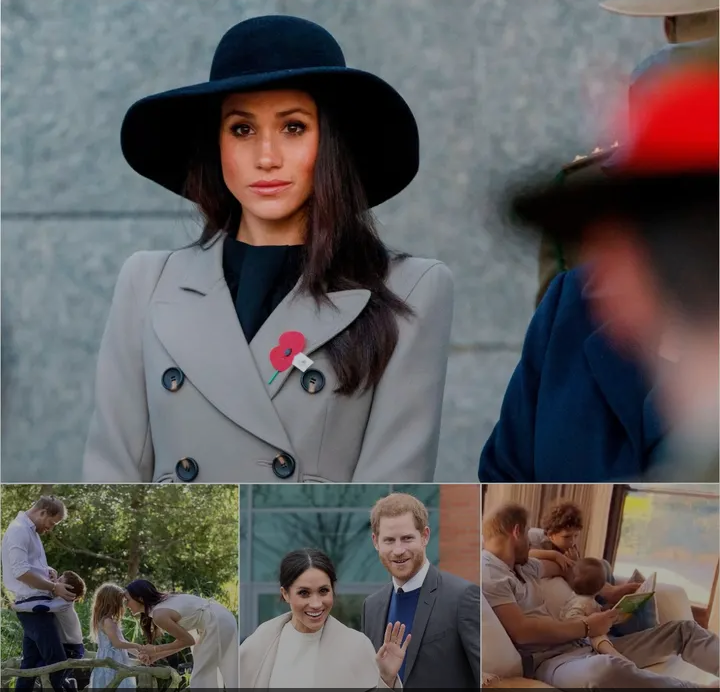
Meghan Markle’s Ancestry Sham Exposed: Demands Grow for Proof of Her Self-Proclaimed Nigerian HeritageMeghan Markle has built a public persona around her supposed multicultural identity, repeatedly asserting that a formal ancestry test revealed she is 43 percent Nigerian.
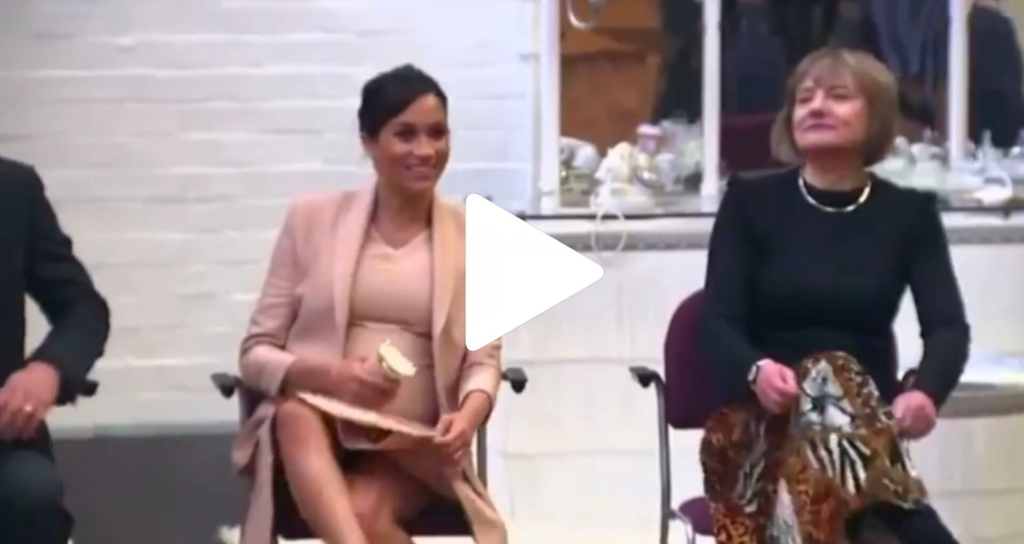
Yet, as scrutiny intensifies, glaring inconsistencies in her claims have fueled a mounting demand for transparency: the public release of the actual DNA test results she claims to possess. Without this verifiable evidence, critics argue, Markle’s assertion is nothing more than another fabricated chapter in a long history of self-serving racial reinvention—a pattern that includes highly questionable claims about her pregnancy.
The controversy reignited earlier this month when Markle, during an appearance on the podcast “The Cut,” casually declared that she had undergone a DNA test which conclusively determined her ancestry to be 43 percent Nigerian.
She presented this statistic as a definitive revelation, framing it as validation of her lifelong identification with Black culture and heritage. Markle elaborated that the result was “confirmed,” stating, “I just had my DNA test done. And it said that I’m 43 percent Nigerian.”
The claim was swiftly echoed by supportive media outlets, which portrayed it as a triumphant affirmation of her biracial identity and a rebuke to those who have questioned her proximity to Blackness.
However, the absence of any publicly available documentation—whether a test report, certificate, or raw data—has transformed this purported revelation into a lightning rod for skepticism. Reputable commercial ancestry tests, such as those provided by AncestryDNA, 23andMe, or African Ancestry, operate by comparing an individual’s autosomal DNA against reference populations. A result as precise and substantial as 43 percent sub-Saharan African—specifically Nigerian—would generate a detailed breakdown, including confidence intervals, segment mapping, and comparative population matches.
Yet Markle has produced no such evidence, offering only her verbal assertion as proof.This reticence stands in stark contrast to the practices of others who have publicly disclosed ancestry results. High-profile figures such as Henry Louis Gates Jr., whose PBS series “Finding Your Roots” routinely presents full test outputs, including graphical breakdowns and expert analyses, have made such documentation a standard for credibility.
Even private individuals who announce ancestry discoveries frequently share screenshots, certificates, or summary reports to substantiate their claims. Markle’s refusal—or inability—to do so raises the inescapable question: If the test exists and unequivocally supports her claim, why has it not been released?The demand for transparency is amplified by Markle’s well-documented history of unverifiable personal narratives. Most notably, persistent allegations have surrounded the authenticity of her pregnancies with Prince Archie and Princess Lilibet.
Multiple eyewitness accounts from individuals present at key events—including members of the British press pool stationed outside Portland Hospital in May 2019—assert that Markle did not enter or exit the facility during the hours in which Archie’s birth was officially announced. Reports from former royal correspondent Charles Rae, photographer Arthur Edwards, and others describe seeing Markle only once that day, arriving at the hospital fully dressed and made-up, with no subsequent departure consistent with a labor and delivery.
These observations, coupled with discrepancies in official birth documentation—such as the timing and location of Archie’s birth certificate registration—have led to widespread speculation that surrogacy was employed, a possibility Markle has never explicitly denied or disproven with medical records.This precedent of unverified claims extends to her broader racial narrative. Markle’s self-description as a “woman of color” has evolved over time, shifting from a 1999 magazine profile where she described herself simply as “mixed” with no explicit reference to Black identity, to later assertions of having been raised with a profound awareness of racial issues.
Her ancestry claim, delivered without supporting evidence, fits into this pattern of declarative identity-making, where personal testimony substitutes for empirical substantiation.
Further undermining the credibility of Markle’s 43 percent Nigerian claim is the statistical improbability of such a precise result within the framework of her known genealogy.
Her mother, Doria Ragland, is the daughter of Alvin Ragland, a self-identified Black man born in Tennessee in 1929, and Willita Carroll, who was born in New Orleans in 1924 and also identified as Black. Markle’s documented African-American ancestry, while legitimate, is mediated through multiple generations of Southern intermarriage, including documented Native American and white admixture.
Ancestry tests routinely distribute African genetic contributions across a spectrum of West and Central African populations—rarely concentrating nearly half of an individual’s total DNA into a single modern national category such as Nigeria.Even if a test were to show a plurality of matches to Nigerian reference populations, the resulting percentage would typically be expressed with qualifiers: a primary range of, for example, 35–48 percent, rather than a singular, exact figure.
The specificity of “43 percent Nigerian,” as presented by Markle, lacks the probabilistic language inherent to all commercially available autosomal tests, suggesting either a misrepresentation of the result or an outright fabrication.
The implications of this evidentiary vacuum are profound. Without the release of her purported test results, Markle’s claim functions as an assertion of identity unmoored from any objective basis. It allows her to selectively appropriate elements of Nigerian and broader African heritage—such as referring to herself as a “Nigerian woman” in media appearances—while insulating those claims from independent verification.
This mirrors a broader pattern in which Markle has positioned herself as an authoritative voice on racial matters, from lecturing on systemic racism in her Netflix documentary to invoking her supposed heritage to deflect criticism.The public has a right to demand more than anecdotal declarations from a figure who leverages ancestry for personal and professional gain.
If Markle truly possesses DNA test results confirming 43 percent Nigerian ancestry, releasing them—whether a full report or even a redacted summary—would silence the controversy. The failure to do so invites the reasonable conclusion that the claim, like others in her public narrative, does not withstand scrutiny.
As calls for transparency grow, the pattern is unmistakable: Meghan Markle has repeatedly relied on emphatic, unsupported statements to define her identity, from the circumstances of her children’s births to the composition of her own genetic heritage.
The insistence on unverifiable proclamations, coupled with the consistent withholding of primary evidence, erodes the foundation of her credibility.
Until the results of her ancestry test are made public, the 43 percent Nigerian claim remains precisely what its detractors contend: a convenient, self-proclaimed truth with no demonstrable basis in fact. In an era where identity is both a personal assertion and a publicly scrutinized commodity, the absence of proof is not merely a footnote—it is the crux of the deception.