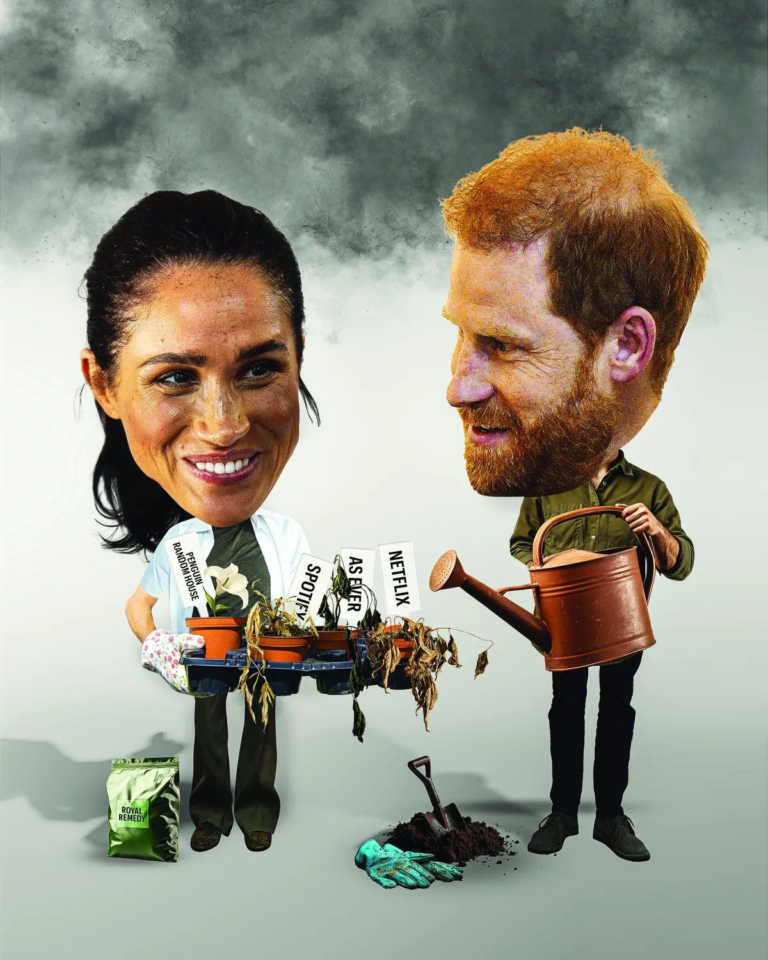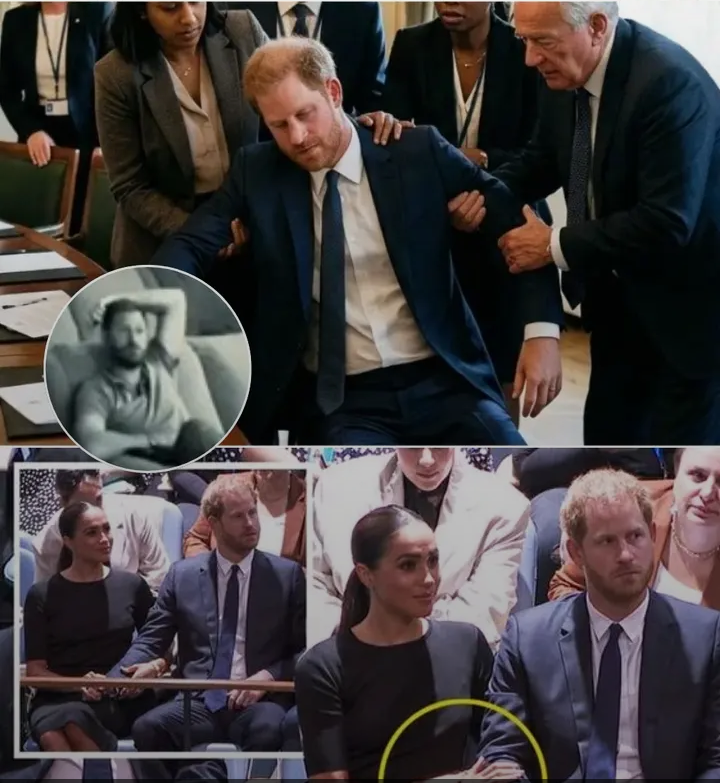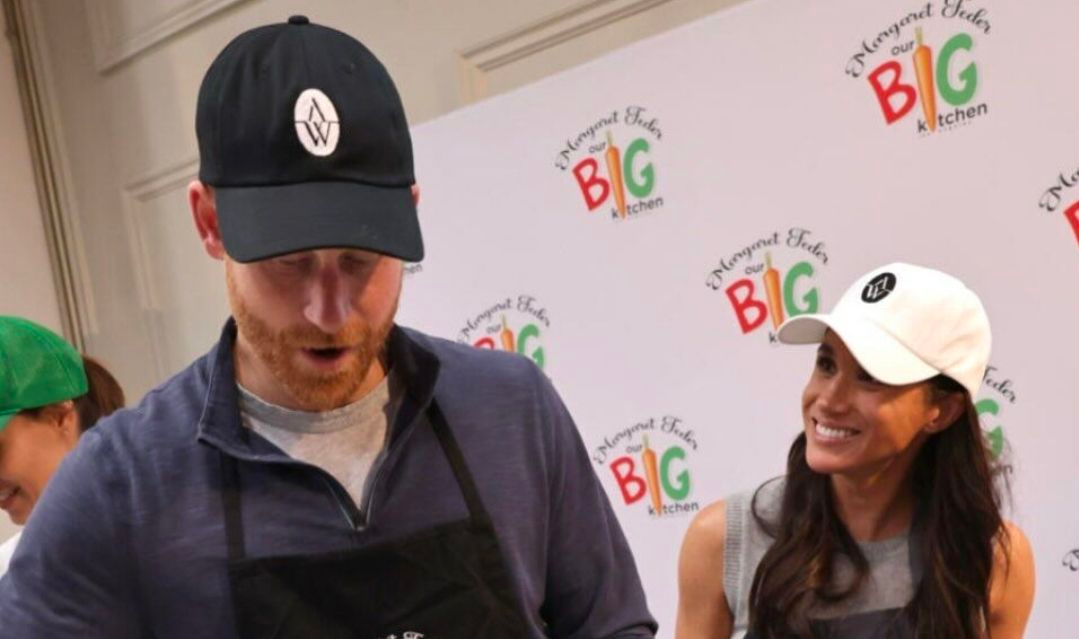
Meghan Markle’s Perfectly Timed Charity Spectacle: Kids, Food Boxes, and a Convenient Distraction from Sticky FingersIn a move as predictable as the changing of the seasons, Meghan Markle has once again deployed her most reliable public relations weapon: her children. Just as allegations of financial impropriety—widely dubbed the “sticky fingers” scandal—began gaining significant traction online, the Duchess of Sussex emerged in a carefully choreographed display of familial benevolence.
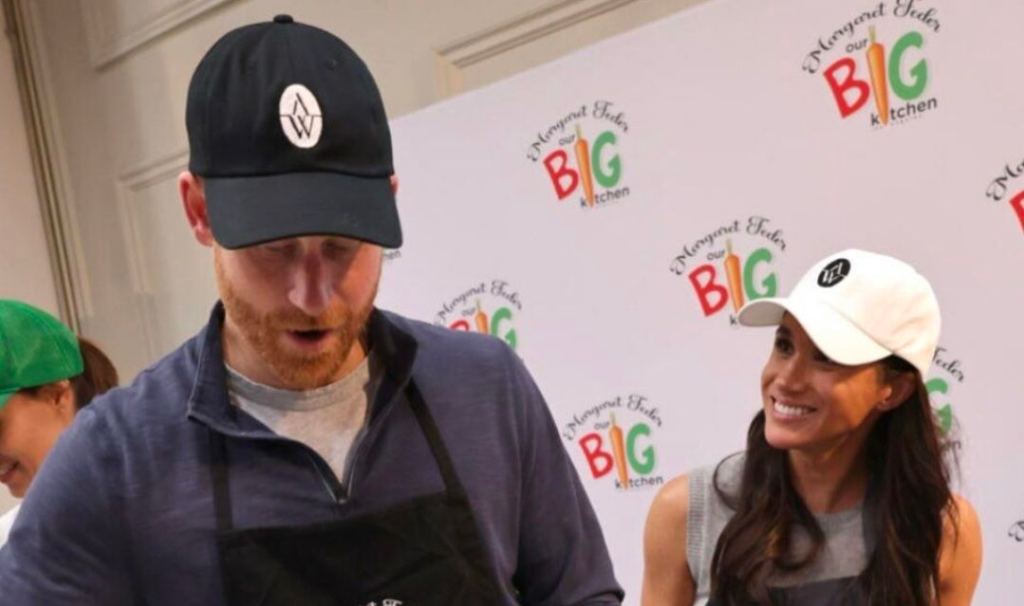
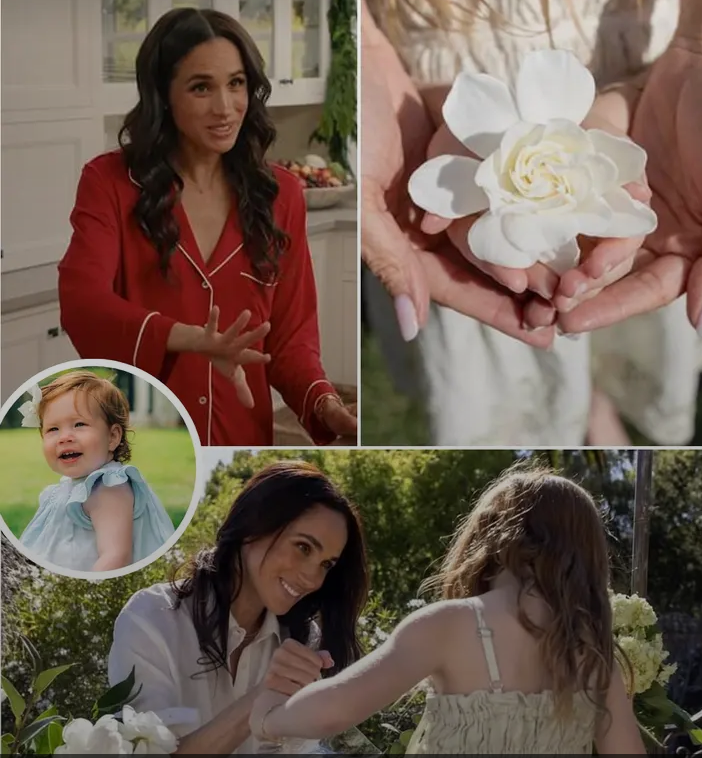
Flanked by her two young children, Prince Archie and Princess Lilibet, Markle was photographed on November 26 packing food boxes for a holiday meal distribution program in Montecito, California.The timing could not have been more precise. Over the preceding week, a series of damaging reports and social media campaigns had amplified accusations that Markle and her husband, Prince Harry, had misappropriated donor funds from their Archewell Foundation.
Critics, including high-profile commentators and former associates, alleged that the organization had failed to distribute the entirety of its promised charitable contributions—specifically, a $5.5 million pledge to the charity Mind that was reportedly never fully honored. Internal Archewell documents, partially leaked in a Wall Street Journal investigation earlier this year, revealed that the foundation held onto substantial funds while reporting minimal disbursements, prompting accusations of using charitable entities as personal piggy banks.Enter the photo opportunity: Markle, dressed in a casual yet impeccably groomed ensemble—wide-legged trousers, a fitted sweater, loose waves of hair, and an assortment of earrings and bracelets—personally filled reusable grocery bags with canned goods, fresh produce, and holiday meal kits.
Her children, partially visible in the images, appeared alongside her, lending an air of earnest, hands-on motherhood to the event. The photographs, swiftly disseminated through Markle’s preferred channels including her Instagram account and sympathetic media outlets, presented a tableau of unpretentious philanthropy.But beneath the wholesome veneer lies a pattern that has become all too familiar. This is not an isolated act of charity, nor a spontaneous display of community service. It is a meticulously staged spectacle, executed with the precision of a counteroffensive in a public relations war.
The deployment of her children as visual anchors—rare, carefully controlled public sightings of Archie and Lilibet—is a tactic Markle has employed repeatedly to reset narratives and deflect criticism. Previous instances include a 2021 Time magazine cover shoot featuring the family in a contrived “candid” tableau, and a 2023 Netflix promotional clip where the children’s brief appearances were leveraged to underscore domestic normalcy amid professional setbacks.
What renders this particular photo op particularly suspect is not merely its timing, but its blatant disregard for the most basic protocols of food handling. In any legitimate food distribution effort—particularly one involving unpackaged produce—standard hygiene practices are non-negotiable. Hairnets, protective gloves, and secured hair coverings are mandated by organizations such as ServSafe and the Conference for Food Protection to prevent contamination from loose hair, skin particles, and jewelry.
Yet Markle, with her unbound hair swinging freely over bags of apples, carrots, and leafy greens, flouts these very standards. Her wrists, adorned with multiple bracelets and a watch, further contravene guidelines that explicitly prohibit dangling accessories in food preparation zones.This is not the behavior of someone genuinely concerned with feeding the needy. It is the behavior of someone prioritizing visual impact over operational integrity. The absence of sanitary precautions—glaringly evident in the widely circulated photographs—transforms what should be a practical act of service into an elaborate set piece.
The children, too, serve a symbolic purpose: their presence evokes the protective instincts of an audience predisposed to view attacks on Markle as assaults on her family, thereby discouraging substantive critique.The broader context of Archewell’s financial record only sharpens the perception of cynicism. Despite receiving millions in donations—including a $100 million Spotify deal and substantial corporate contributions—the foundation has consistently underperformed in actual grant-making.
Tax filings show that Archewell disbursed just $1.8 million in grants in 2022, despite holding nearly $20 million in assets, leading to widespread claims that the organization functions more as a fundraising vehicle for its founders than a conduit for philanthropy. The recent food-packing event, ostensibly organized through a local partner, does little to address this structural shortfall.
No evidence has emerged of a corresponding multimillion-dollar disbursement to combat hunger; instead, the initiative appears confined to a single afternoon of bagging and distribution.Markle’s history of narrative management provides further evidence of a deliberate strategy. High-profile criticism—whether from royal insiders, media exposés, or financial watchdogs—has repeatedly been met with a swift pivot to imagery emphasizing motherhood and altruism.
The 2019 release of private correspondence following accusations of bullying; the carefully timed pregnancy announcements amid palace disputes; the strategic unveiling of Archie’s face in a 2021 Oprah interview—all follow a similar blueprint. By introducing her children into the public eye at moments of maximum vulnerability, Markle creates a firewall of sentimentality, making it socially and emotionally fraught for detractors to sustain their attacks.
The result is a predictable dominance of search engine results. Within days of the food-packing images circulating, Google queries for “Meghan Markle sticky fingers” or “Archewell donor fraud” become cluttered with articles and photo spreads highlighting the Montecito event. The optics of a mother and her toddlers dutifully assembling holiday meals drown out the drier, more persistent questions of fiduciary responsibility. It is a form of digital alchemy: transforming a deficit of financial transparency into a surplus of emotive imagery.
Defenders of Markle may argue that personal involvement in charity, however imperfectly executed, is inherently valuable and that scrutiny of her appearance—hair and jewelry included—represents petty, sexist gatekeeping. Yet this defense collapses under the weight of the event’s contrived nature. Genuine food insecurity relief does not hinge on the presence of a celebrity’s unbound tresses; it requires systemic, accountable resource allocation.
The spectacle of Meghan Markle packing a few dozen grocery bags—sans sanitary precautions—while her foundation sits on millions in unspent funds does not constitute redemption. It constitutes deflection.In the end, this latest photo opportunity exemplifies a broader truth about the Sussexes’ post-royal enterprise: charity as theater.
The children, the food boxes, the meticulously unmanaged hair—all are props in a production designed not to alleviate suffering, but to obscure inconvenient truths. As the sticky fingers allegations continue to percolate, the message is unmistakable: when the accusations grow too loud, bring out the kids.
The resulting tableau ensures that the narrative, however briefly, tilts firmly in her favor. Whether this strategy can indefinitely suppress the mounting questions of financial stewardship remains to be seen. But for now, the spectacle has served its purpose: the optics of benevolence have once again provided cover for a story that refuses to resolve.