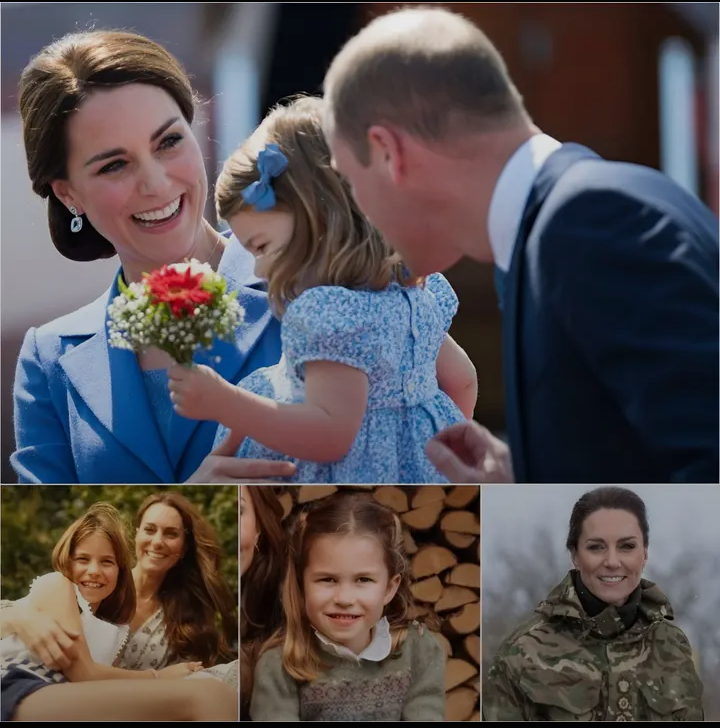
In an age where everything is loud — breaking news banners, endless commentary, perfectly curated lives — it was a quiet photograph that stopped millions of people in their tracks.
No tiara.
No palace balcony.
No formal pose meant for history books.
Just a mother and her daughter.
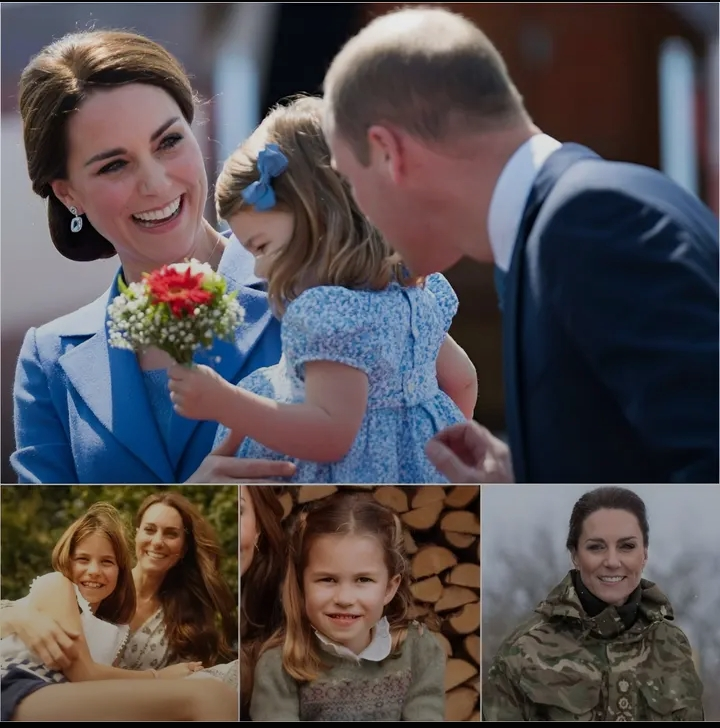
To mark Princess Charlotte’s 10th birthday, Princess Catherine released a never-before-seen image with her daughter — and almost instantly, something shifted. The reaction wasn’t political. It wasn’t about monarchy versus modernity. It was deeply human.
Because for a brief moment, the world didn’t see royalty.
It saw motherhood.
And that is why this photograph resonated so powerfully with American audiences — especially those who have lived long enough to understand how fleeting childhood truly is.
Not a Royal Image — a Personal One
Royal photographs are usually intentional, symbolic, and carefully balanced between tradition and message. But this image felt… different.
Charlotte is not “on display.”
She is not being introduced as a future figure of state.
She is simply present.
Relaxed. At ease. Safe.
Catherine, leaning toward her daughter, isn’t performing warmth — she is inhabiting it. Her posture is protective, instinctive, unmistakably maternal. This isn’t the Princess of Wales fulfilling a public role. This is a woman savoring a moment with her child before time carries it away.
For many American parents and grandparents, this detail hit hardest: the photograph doesn’t try to freeze time — it acknowledges that time is already moving.
And that honesty is rare.
Why This Image Feels Familiar to Americans
The British monarchy can often feel distant to U.S. audiences — steeped in ritual, history, and inherited privilege. But this image cut through all of that because it reflected something universal.
Every mother who has ever leaned in during a quiet moment.
Every parent who has watched their child grow faster than they were ready for.
Every grandparent who knows that the most precious memories are the unplanned ones.
This photograph doesn’t ask Americans to admire royalty.
It invites them to recognize themselves.
In Catherine’s expression, many saw their own daughters.
In Charlotte’s ease, many remembered their own childhoods — before expectations hardened, before identity became complicated.
That is why the image traveled so fast across U.S. social media. It didn’t feel like news.
It felt like memory.
Charlotte at Ten: A Threshold Age
Ten is an unassuming number — but it carries weight.
It is the age where childhood innocence begins to soften, where self-awareness creeps in quietly. It is often the last year before the world starts asking children who they are, who they will become, and what they should be.
For Princess Charlotte, those questions will come earlier and louder than for most children. She is not just growing up — she is growing up watched.
And yet, this photograph refuses to frame her that way.
There is no symbolism about duty.
No suggestion of hierarchy.
No hint of expectation.
Instead, Catherine seems to be saying something radical in its simplicity:
Before she is anything else, she is my child.
Kate’s Quiet Philosophy of Motherhood
Over the years, Catherine has spoken carefully — almost sparingly — about parenting. But her actions have told a much richer story.
She photographs her children herself.
She releases images that feel natural, not polished.
She protects their privacy fiercely while still honoring public responsibility.
This birthday photograph fits perfectly into that philosophy.
It suggests a woman who understands something deeply: childhood does not need spectacle to be meaningful. It needs safety, presence, and love.
For American readers — especially those who raised children before smartphones, before constant documentation — this approach feels refreshingly familiar.
It echoes a time when photos were kept in albums, not algorithms.
The Absence That Speaks Loudest
Perhaps the most striking part of the image is what isn’t there.
No palace setting.
No regalia.
No visual reminder of rank.
This absence feels intentional.
It subtly reassures the public — and perhaps Charlotte herself — that identity is not confined to title. That even within the world’s most famous monarchy, there is space to be simply human.
For a generation of Americans wary of institutions and power, this matters.
The photograph doesn’t glorify authority.
It humanizes it.
A Mother’s Message — Not Just to the World, But to Her Daughter
While millions interpreted the image publicly, its most important audience may be just one person.
Charlotte.
Imagine growing up one day and realizing that your mother chose this moment to share with the world — not a moment of performance, but one of closeness.
The message is unmistakable:
You are loved not for who you will be, but for who you are.
That reassurance is priceless — especially for a child born into expectations she did not choose.
The American Emotional Response: Why It Went Viral Here
In the U.S., reactions were deeply emotional — and deeply personal.
Comments weren’t about monarchy. They were about daughters. Mothers. Time. Loss. Gratitude.
Many readers spoke of children now grown.
Others spoke of mothers no longer here.
Some admitted the image made them cry — unexpectedly.
This response reveals something important about American culture: beneath the noise and division, there remains a powerful longing for authenticity.
And authenticity, when it appears, is immediately recognized.
Kate’s Legacy Is Being Written in Moments Like This
Catherine’s public role will always be analyzed through the lens of future queenship. But her deeper legacy may be something quieter.
She is redefining royal motherhood not through speeches, but through restraint. Through protection. Through intentional privacy.
This photograph is not about branding.
It is about boundary.
And in a world that constantly demands access, boundaries are an act of love.
Charlotte’s Future — Seen Through a Different Lens
Speculation about Charlotte’s future will inevitably grow louder with time. But this image gently resists that narrative.
It does not frame her as “the spare” or “the exception.”
It frames her as a child worthy of stillness.
That framing matters.
Because how a child is seen shapes how they see themselves.
Why This Photograph Will Endure
Years from now, this image will not be remembered for its composition or timing.
It will be remembered because it felt honest.
It captured something that cannot be staged:
The quiet trust between a mther and her child.
For American audiences — especially those who understand how rare such moments become — that honesty is what made it unforgettable.
In the End, This Was Never About Royalty
It was about love without performance.
Protection without explanation.
Presence without agenda.
In a world obsessed with visibility, Catherine chose intimacy.
And in doing so, she reminded millions of Americans of something profoundly simple:
Behind every title…
Behind every role…
Behind every public life…
There is still a mother.
And still a child.
And sometimes, that is the most powerful story of all.