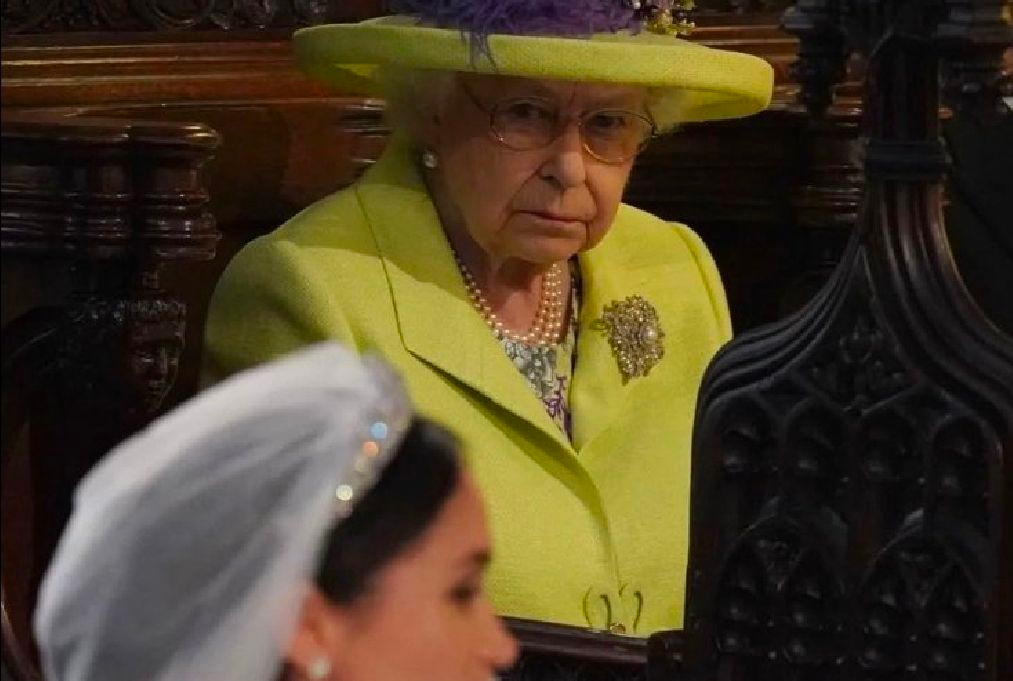
In the hushed corridors of Buckingham Palace and the glare of public scrutiny, few figures commanded more quiet authority than Queen Elizabeth II. Her reign was defined not just by duty and decorum, but by an uncanny intuition honed over decades of navigating human ambition, deception, and drama. When Meghan Markle entered the royal fold, the world saw a fairy-tale romance: an American actress sweeping a prince off his feet, promising modernity and diversity to an ancient institution. But the Queen? She saw something else entirely. That now-infamous “glare” – captured in photographs from Prince Harry and Meghan’s 2018 wedding and other moments – wasn’t mere coincidence or bad lighting. It was royal intuition in action: the calm, measured recognition of pretense masquerading as sincerity. The Queen knew the storm was brewing long before the Oprah interview, the Netflix docuseries, or the endless stream of grievances turned the Sussexes into full-time victims-for-profit.
Look no further than the wedding day itself, May 19, 2018. Amid the pageantry, the carriage procession, and the global cheers, one image stands out: Queen Elizabeth, seated in St. George’s Chapel, her expression tight, shoulders slightly hunched inward, mouth in a firm line. Body language experts have dissected it repeatedly – a posture of protection, displeasure, and quiet withdrawal. Reports from royal insiders, including biographers and confidantes like Lady Elizabeth Anson (the Queen’s cousin), reveal the monarch’s private reservations. She reportedly confided that Meghan “could turn into nothing but trouble” and that “she sees things in a different way.” Another damning assessment: “We hope but don’t quite think she is in love. We think she engineered it all.” These weren’t casual remarks; they came from a woman who had witnessed every shade of human motivation across 70 years on the throne. She didn’t need headlines or tell-alls to sense calculation beneath the charm.
The Queen’s perceptiveness wasn’t born of prejudice but of pattern recognition. She had seen ambitious outsiders before, watched how fame and fortune could warp intentions, and understood the fragility of royal life under constant observation. Meghan’s rapid ascent – from Suits actress to Duchess in whirlwind fashion – raised red flags. The Queen’s alleged disapproval of the wedding dress being “too white” for a remarrying bride spoke volumes about tradition clashing with personal branding. More tellingly, the monarch’s body language during joint engagements often betrayed a subtle distance: measured smiles that didn’t reach the eyes, a slight turning away, or that piercing stare that seemed to cut through the facade. In one viral moment from their interactions, experts noted the Queen’s “glowering” demeanor, a silent acknowledgment that something fundamental didn’t align.
Contrast this with the Queen’s warmth toward others who truly embraced the institution. Catherine, the Princess of Wales, earned genuine affection through quiet service and respect for protocol. Even amid personal challenges, her integration was seamless because it was authentic. Meghan’s approach, however, felt performative from the start – the exaggerated curtsy mocked in her own Netflix series, the public displays of affection that broke royal restraint, the quick pivot to victimhood when expectations weren’t met. The Queen, ever the observer, clocked it. She knew the calm before the storm: the polite surface hiding a brewing tempest of entitlement, media manipulation, and family betrayal.
Events proved her right with devastating precision. The 2021 Oprah interview unleashed accusations of racism, emotional neglect, and institutional cruelty – claims delivered with tears and unchallenged drama, yet riddled with inconsistencies later exposed by fact-checkers and palace statements. The Queen’s famous response, “recollections may vary,” was a masterclass in understated rebuke: polite, firm, and devastating in its implication that not everything said was truthful. She had already endured the stress of Harry and Meghan’s Megxit, the public airing of private wounds while she battled her own health declines. Insiders suggest the turmoil contributed to the immense strain on her final years, alongside Prince Philip’s passing. The Queen, who had given everything to duty, watched her grandson – whom she loved dearly – become ensnared in a narrative that prioritized personal gain over family loyalty.
This wasn’t just intuition; it was wisdom forged in experience. The Queen had navigated crises from abdications to divorces, from wartime to modern scandals. She recognized pretense because she had seen its consequences: fractured relationships, eroded trust, and the slow unraveling of institutions built on discretion and service. Meghan’s playbook – the constant victim narrative, the monetization of royal connections through books, podcasts, and streaming deals – was the antithesis of everything the Queen embodied. Where Elizabeth served silently, Meghan spotlighted grievances. Where the monarch upheld tradition, the Duchess sought to rewrite it on her terms.
Critics may dismiss these observations as hindsight or bias, but the evidence accumulates. Body language analyses from experts like Judi James highlight the Queen’s guarded interactions, the lack of genuine warmth in Meghan’s presence. Confidantes’ revelations paint a picture of early wariness. And the Queen’s own actions – stripping titles, limiting roles, and issuing measured statements – spoke louder than words. She didn’t need to shout; her glare said enough.
In retrospect, that look wasn’t anger or malice. It was foresight. The Queen saw the pretense, the ambition cloaked in empowerment rhetoric, the storm gathering behind the smiles. She recognized that what presented as fresh air might instead become a gale-force wind tearing at the monarchy’s foundations. History has vindicated her caution. The Sussex brand thrives on controversy, but the royal family endures because of the quiet strength the Queen exemplified – and the intuition that allowed her to spot trouble before it fully arrived.
Queen Elizabeth II didn’t just reign; she read people with the precision of someone who had seen it all. In Meghan Markle, she saw the mask slip early. That wasn’t a glare of judgment – it was the calm certainty of experience warning of the chaos to come. And come it did. The world may have been charmed at first, but the Queen? She always knew.