At first glance, the language surrounding Archewell still sounds grand: a global mission, a bold vision, and a sweeping rebrand meant to signal growth and evolution. But behind the polished announcements and carefully chosen words, a far less flattering reality has begun to emerge — one that has left critics openly questioning whether the Sussex operation has been more performance than substance all along.
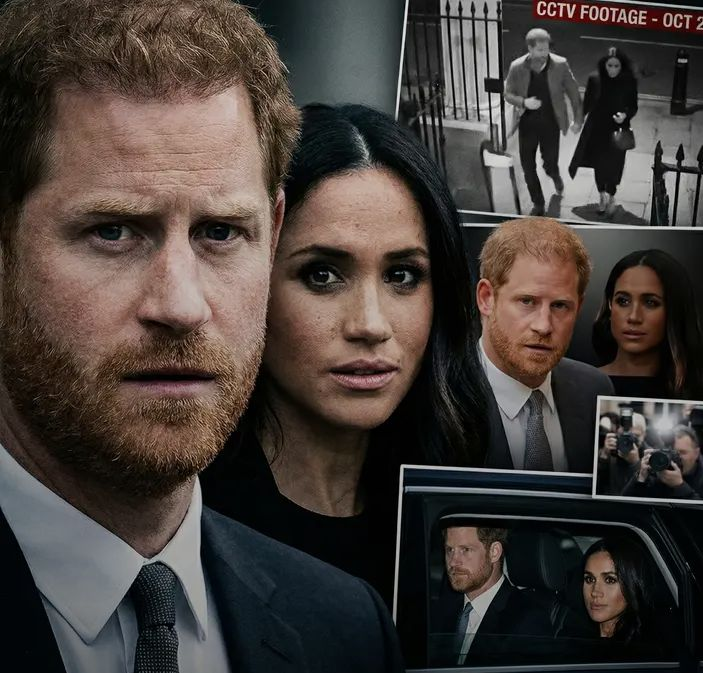
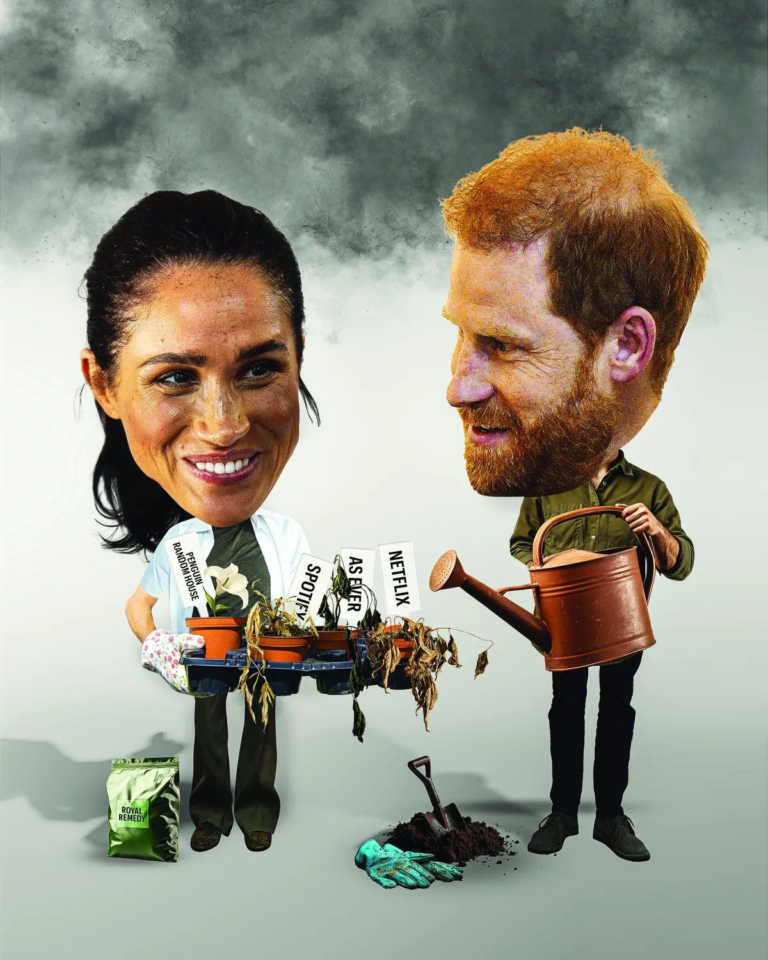
According to recent insider reports, Archewell has quietly downsized to its bare minimum, cutting roughly 60 percent of its workforce and leaving just two senior figures in place. For an organization repeatedly framed as a major philanthropic force, the contrast is stark. One observer dryly noted that the structure now resembles “a startup in survival mode,” not the world-changing charity its founders once promised.
The timing of this revelation has only intensified scrutiny. The staff cuts reportedly followed closely on the heels of Archewell’s high-profile rebrand, a move publicly justified as a way to reduce administrative burden and unlock future growth. To skeptics, the sequence tells a different story. “You don’t usually talk about expansion while shrinking this aggressively,” one reader commented. “Unless the expansion is just in the press releases.”
Financial pressures appear to be at the heart of the issue. Insiders describe a charity grappling with falling donations and rising expenses, a combination that quickly becomes unsustainable. While Archewell’s outward messaging has focused on impact and values, tax filings and leaked figures suggest a harsher reality: more money going out than coming in. Salaries, grants, and operational costs have reportedly ballooned, even as donor enthusiasm wanes.
For Prince Harry and Meghan Markle, Archewell was meant to be more than a charity. It was positioned as the moral centerpiece of their post-royal life, proof that they could thrive independently while doing good on a global scale. That ambition resonated initially, buoyed by massive media attention and lucrative commercial deals. But as those deals falter and scrutiny deepens, Archewell’s fragility has become harder to disguise.
Outside voices woven into the debate reveal growing fatigue. Some supporters argue that headcount is a poor measure of impact and that many effective charities operate lean teams. Critics counter that Archewell’s problem is not efficiency but credibility. “If you sell yourself as a global operation,” one commentator wrote, “people expect more than a skeleton crew and glossy statements.”
The phrase now circulating among insiders — “smoke and mirrors” — captures that skepticism succinctly. It suggests that branding and optics have been doing the heavy lifting while the underlying structure struggled to keep pace. Each new announcement promised evolution, yet each financial disclosure seemed to tell the opposite story. Over time, that gap has eroded trust.
The situation also feeds into broader questions about the Sussexes’ financial footing. Archewell does not exist in isolation. It sits alongside an expensive California lifestyle, substantial security costs, and media ventures that have lost momentum. With Spotify gone and Netflix reportedly reassessing its commitment, the margin for error has narrowed. One reader remarked that “royal-style spending without royal-style backing was always going to catch up with them.”
To some observers, the Archewell downsizing represents a turning point — the moment when image can no longer outrun arithmetic. The Sussex brand has long relied on the power of narrative: resilience, reinvention, independence. But narratives eventually collide with numbers. When donations drop sharply and costs continue to rise, even the most compelling story struggles to hold.
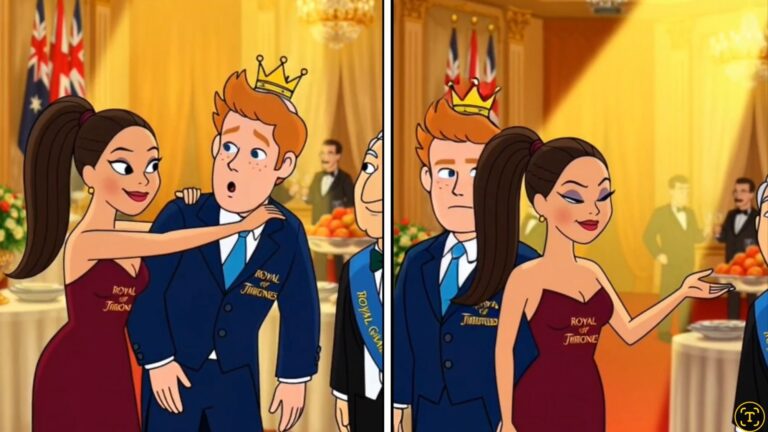
There is also an irony that has not gone unnoticed. Harry and Meghan stepped away from the Royal Family in part to escape hierarchy and institutional constraint, only to recreate a highly centralized model around themselves. With so few staff remaining, decision-making power appears more concentrated than ever. “Two CEOs, two employees,” one commenter joked. “That’s not a movement — it’s a mirror.”
null
None of this means the end is inevitable. Archewell could stabilize, attract new funding, or pivot into a leaner, more focused operation. Harry and Meghan still command attention, and attention can be converted into opportunity. But the margin for reinvention is shrinking. Each setback makes the next rebrand harder to sell.
What feels different this time is the clarity of the picture emerging. The downsizing has stripped away much of the illusion, leaving a simpler, harsher truth behind. Big words, big ambitions — but a very small machine trying to sustain them. As one observer put it, “You can’t keep calling it an empire when the walls are gone.”
In that sense, the Archewell story may be less about a single charity and more about the broader Sussex experiment. Independence promised freedom, but it also demanded discipline and restraint. The financial realities now coming into view suggest that lesson is arriving faster than expected.
For now, the question lingers unanswered: is this a temporary contraction on the way to reinvention, or the clearest sign yet that the Sussex model was never built to last? What is certain is that the causes of their unraveling are no longer hidden behind glossy language. The smoke is clearing — and the mirrors are beginning to crack.