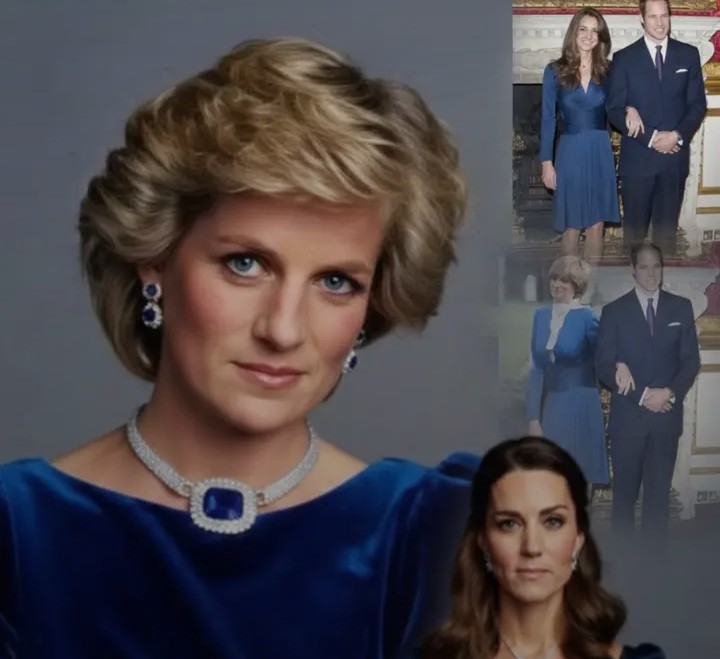
The late Princess would have loved her.”
It’s a sentence whispered softly across social media, repeated in headlines, and felt deeply by millions who never met Princess Diana but somehow grew up with her. And in one quiet, luminous moment, Princess Catherine made that sentiment feel undeniably true.
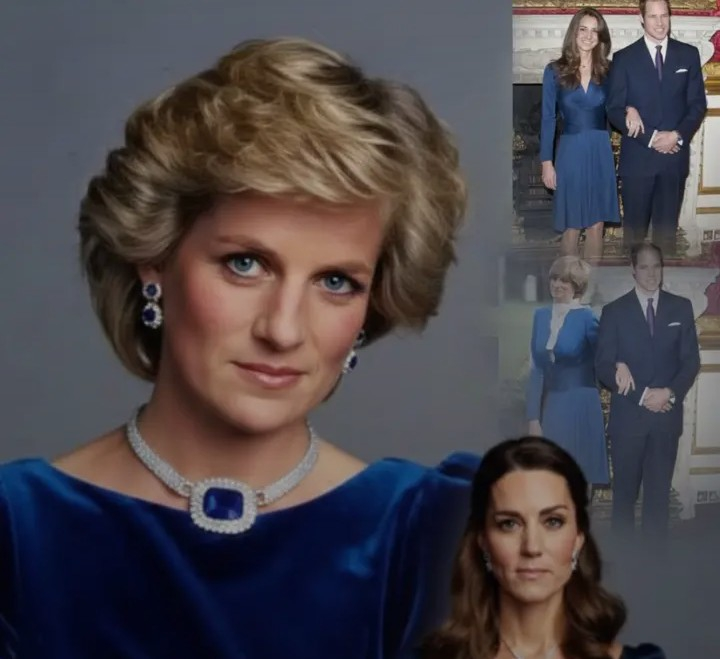
When Catherine, Princess of Wales, stepped into the spotlight wearing the jewels once cherished by Diana, the world didn’t just look — it remembered. The sapphires and diamonds glimmered with more than light. They carried emotion. They carried history. They carried the weight of a woman whose life reshaped how the world understood royalty, compassion, and vulnerability.
For an American audience, the moment landed with particular force. Diana was never simply a British royal figure in the United States. She was a global icon — human, flawed, empathetic, and heartbreakingly real. She hugged AIDS patients when fear ruled headlines. She walked through minefields when silence was safer. She cried in public when stoicism was expected. To Americans, she represented courage with a human face.
So when Catherine appeared wearing those jewels, it wasn’t nostalgia. It was continuity.
What made the moment so powerful was what didn’t happen. Catherine didn’t announce the tribute. She didn’t explain it. She didn’t frame it as a statement. She simply wore the pieces with restraint, respect, and a quiet confidence that allowed their meaning to speak on its own. In a world saturated with overexposure and performance, that restraint felt almost radical.
Standing beside Prince William, Catherine embodied something Americans deeply admire: emotional intelligence. William’s gaze told a story words could never fully capture — a son honoring his mother, and a husband witnessing the woman who now carries her legacy forward. It was not performative grief. It was lived memory, transformed into grace.
For years, comparisons between Diana and Catherine have followed Catherine like a shadow. At first, they were unfair. Diana was electric, spontaneous, emotionally raw. Catherine, by contrast, has always been measured, calm, deeply private. But over time, it has become clear that Catherine’s strength lies precisely there. She does not mirror Diana — she complements her.
Where Diana changed the monarchy by challenging it openly, Catherine is reshaping it quietly from within. She builds trust slowly. She listens more than she speaks. She understands that modern leadership isn’t about commanding attention — it’s about earning belief.
This is why the moment resonated so deeply with American audiences. The United States understands reinvention. It understands legacy. It understands the power of choosing who you become — even when history looms large behind you.
Catherine’s appearance wasn’t about replacing Diana. It was about honoring her without being consumed by her. That balance is rare. And it’s powerful.
The jewels themselves tell their own story. They have witnessed love, heartbreak, global adoration, and unimaginable pressure. On Diana, they symbolized rebellion against cold formality. On Catherine, they symbolize stability, intention, and emotional maturity. Same jewels. Different era. Same impact.
And then there’s the broader context: motherhood, marriage, and modern womanhood under constant scrutiny. Catherine navigates public life while raising three children, supporting a future king, and redefining what it means to be a royal woman in the 21st century. Americans recognize that juggling act. They respect it. They feel it.