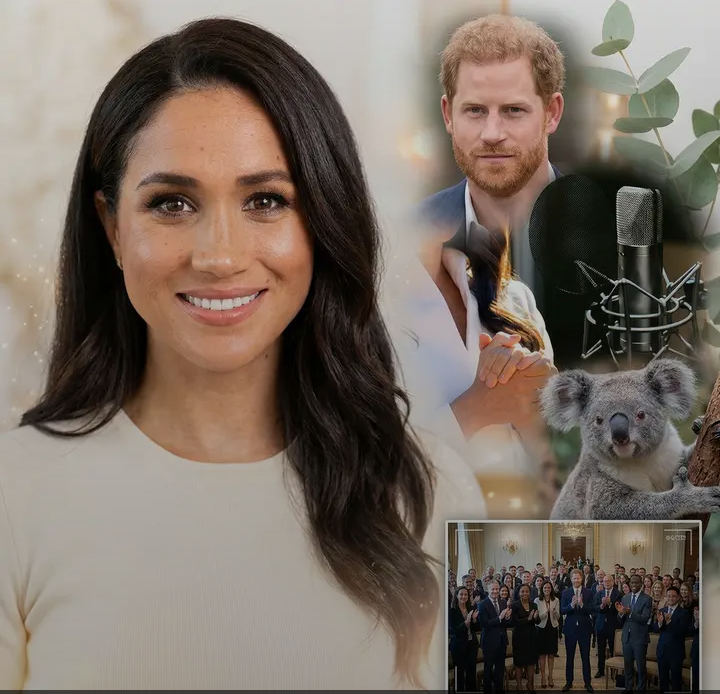
In an industry where celebrity podcasts are often treated like golden tickets, Spotify made what many are now calling one of the shrewdest business decisions in recent streaming history. When Prince Harry and Meghan Markle signed their high-profile, multimillion-dollar deal with the audio giant back in 2020, the expectations were sky-high. Here were two globally recognized figures, fresh from their dramatic exit from royal duties, promising to deliver groundbreaking content through their production company, Archewell Audio. The deal, reportedly worth around $20 million, was positioned as a major coup for Spotify’s podcasting ambitions.
Fast-forward to June 2023, and the partnership came to an abrupt — yet entirely predictable — end. After producing just one season of Meghan’s podcast *Archetypes*, a series exploring stereotypes faced by women featuring high-profile interviews with guests like Serena Williams, Mariah Carey, Paris Hilton, and Trevor Noah, Spotify and Archewell “mutually agreed” to part ways. No second season. No renewal. No more blank checks for content that barely materialized.
And here’s the truth many royal watchers and industry insiders have been saying quietly for years: **Spotify did the smart thing**. They spotted the grift early, refused to keep bankrolling it, and drew a firm line in the sand — not on their watch would they continue throwing good money after questionable output.
The numbers tell a stark story. Signed in December 2020, the deal stretched over multiple years with the expectation of substantial, ongoing production — multiple series, regular episodes, real audience engagement. Instead, what did Spotify get? A holiday special and a single 12-episode season of *Archetypes* that took nearly two years to roll out. That’s it. Insiders close to the matter revealed that the couple failed to meet key productivity benchmarks required to unlock the full payout. In other words, the deal wasn’t structured as a simple celebrity payday; it came with performance expectations, and those expectations weren’t met.
Spotify’s decision wasn’t about politics or royal drama — it was cold, hard business. The company was already undergoing a major overhaul of its podcast division, cutting staff and shifting away from expensive, low-output celebrity deals toward more sustainable models favoring independent creators and consistent performers. Pouring millions into a project that delivered minimal content while generating endless press releases and photo ops simply didn’t add up.
Even Spotify insiders weren’t shy about their frustrations. Bill Simmons, the prominent podcaster and head of podcast innovation at the company (following Spotify’s acquisition of The Ringer), didn’t mince words. In a blistering on-air rant shortly after the split, he labeled the couple “f—— grifters,” recounting a frustrating Zoom call where he tried to help brainstorm ideas, only to see little follow-through. His comments resonated widely, capturing a growing sentiment that the Sussexes’ media ventures often prioritized personal branding over actual substance.
Critics have long pointed out the pattern: high-profile announcements, massive upfront deals, followed by underwhelming delivery and a pivot to the next big opportunity. From the initial Netflix partnership to the Spotify audio venture, the focus has seemed more on maintaining relevance through controversy and PR than on consistently producing work that audiences crave. *Archetypes* itself, while earning some awards like a People’s Choice nod, didn’t translate into the kind of sustained listener loyalty or output that justifies a eight-figure investment.
Spotify’s move sends a clear message to the entertainment world: fame alone isn’t enough anymore. In an era where platforms are tightening belts and demanding real value, companies are no longer willing to subsidize vanity projects disguised as cultural contributions. By walking away, Spotify protected its bottom line and set a precedent — if you’re cashing seven- or eight-figure checks, you need to show up with more than headlines.
Meanwhile, the Sussexes have moved on, shopping *Archetypes* to other distributors like Lemonada Media for broader release. But the damage to their Hollywood credibility is real. Industry voices have called Meghan “untalented” in the fallout, and the narrative of “grifters” has stuck in public discourse.
In the end, Spotify deserves credit for doing what too many others hesitate to do: recognizing a bad bet and cutting losses before it became a bigger drain. They refused to keep funding a cycle of endless promotion with little production to back it up. In business terms, that’s not just smart — it’s essential. And in an age of overhyped celebrity deals, it’s a refreshing dose of reality.