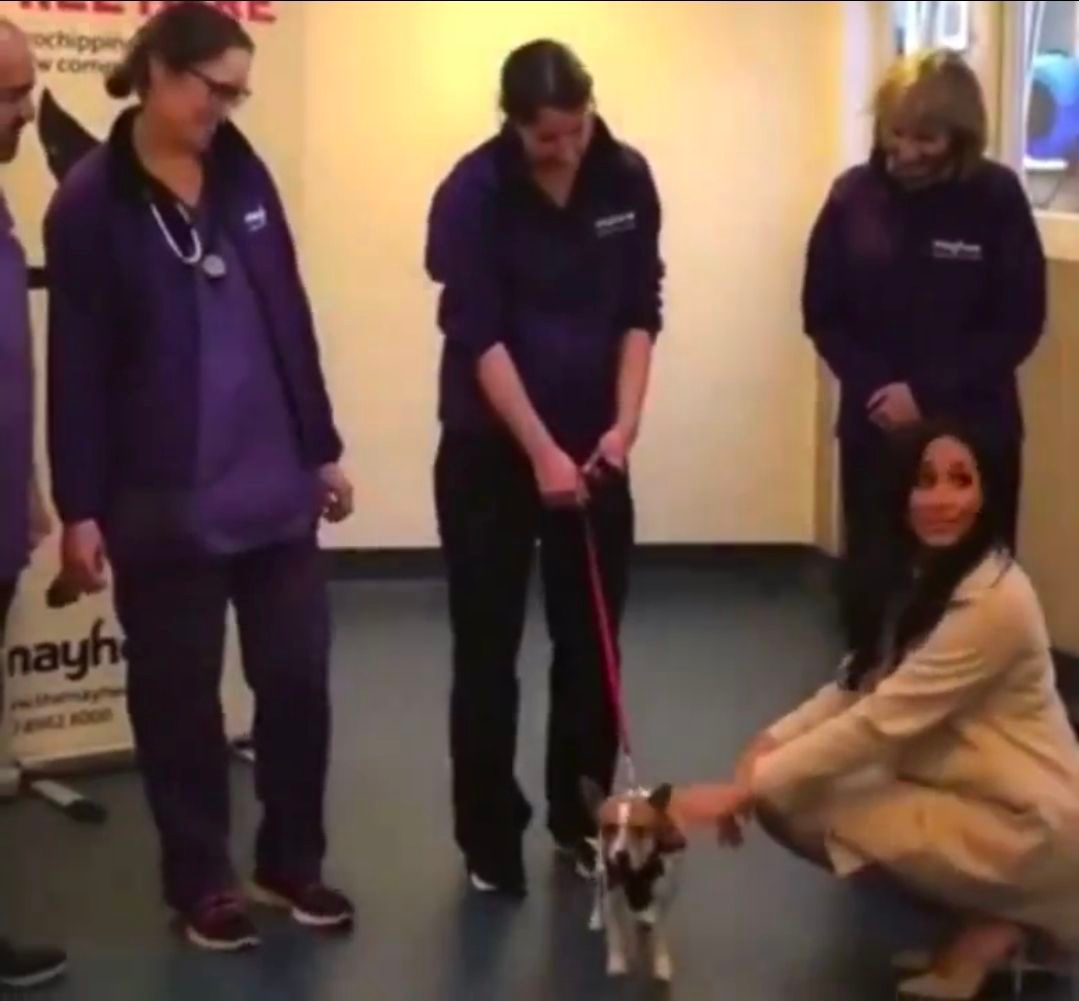
In the annals of royal scandals, few moments have sparked as much outrage and disbelief as the bizarre events of January 16, 2019. On that single day, Meghan Markle, then the Duchess of Sussex and six months pregnant with Archie, managed to pack in what critics now call a masterclass in manipulation: a highly publicized visit to the Mayhew animal charity where her alleged prosthetic “moonbump” audibly “popped” back into place, followed mere hours later by her dramatic confession of suicidal ideation just before attending a glitzy event at the Royal Albert Hall with Prince Harry. The juxtaposition is staggering—and for those who have long questioned Meghan’s credibility, it’s damning proof of a pattern: using personal tragedy and victimhood to deflect scrutiny and garner endless sympathy.
Let’s dissect the day step by step, because the timeline alone raises red flags that refuse to be ignored.
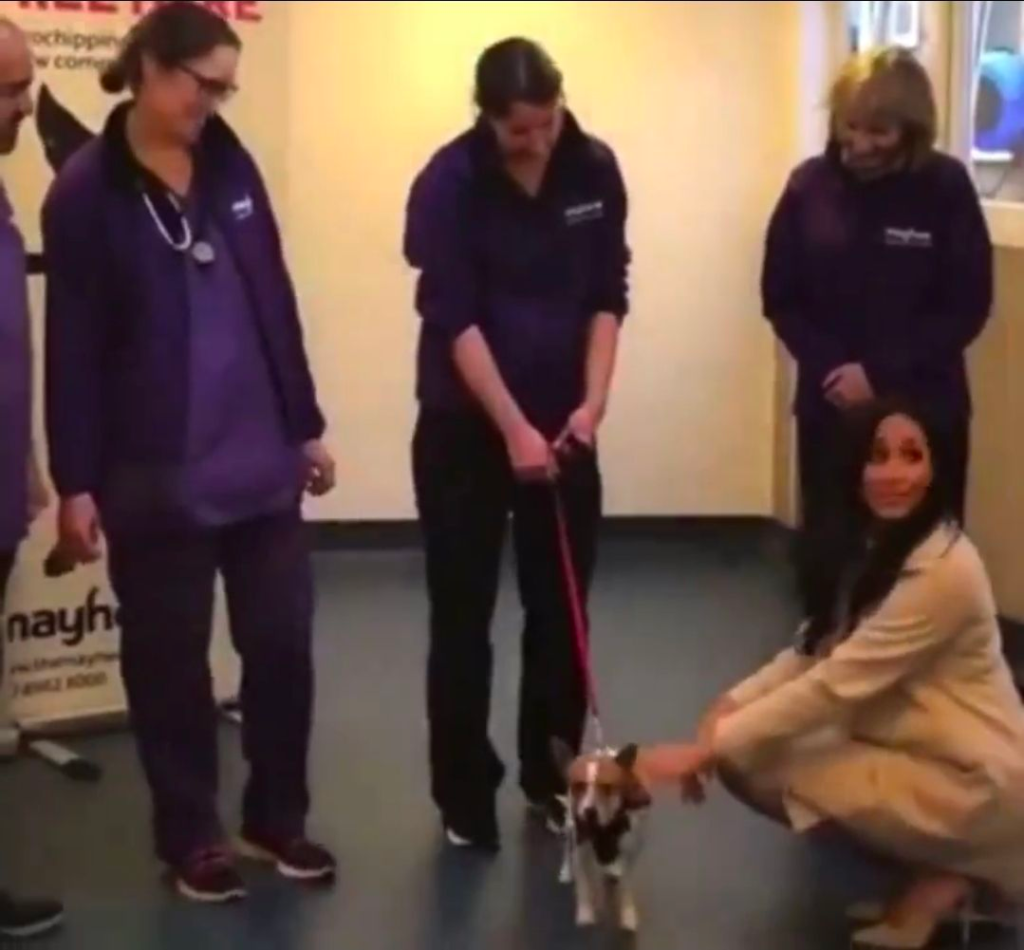
The morning began innocently enough—or so it seemed. Meghan, as the newly appointed patron of Mayhew, an animal welfare charity, arrived for a meet-and-greet with staff, volunteers, and beneficiaries. Cameras captured her interacting warmly with dogs and elderly residents receiving therapy pet visits. One sweet moment involved an elderly woman affectionately calling the pregnant duchess a “fat lady,” to which Meghan laughed it off graciously. But buried in the footage from that visit is something far more explosive: what conspiracy theorists—and increasingly, mainstream skeptics—describe as the unmistakable sound and sight of a fake pregnancy prosthetic malfunctioning.
In resurfaced videos that have gone viral multiple times over the years, Meghan is seen squatting down to engage with a dog. As she moves, there’s an audible “pop” or snap—loud enough that even the animal nearby flinches. Her coat flies open momentarily, and she quickly adjusts her midsection with what looks like practiced precision, as if realigning something that had shifted out of place. Critics point out the unnatural rigidity and positioning of her bump throughout the pregnancy, but this incident stands out as the smoking gun. Social media erupted then and continues to do so: “Even the dog heard it!” one viral post declared. Accounts dedicated to royal analysis, including those with thousands of followers, have labeled it the “Mayhew Moonbump Pop”—a moment where the facade allegedly cracked, literally and figuratively.
Meghan handled the supposed bump like it came with instructions—tugging, smoothing, and repositioning it with zero hesitation. For a genuinely pregnant woman, such a motion would be unnecessary and uncomfortable; for someone wearing a high-end prosthetic (the infamous “Moonbump” brand often cited in these theories), it’s exactly what you’d expect when the straps loosen or the silicone shifts during movement. The fact that this happened in broad daylight, surrounded by witnesses and cameras, only amplifies the audacity. If it was real, why the dramatic adjustment? If it wasn’t, what does that say about the entire narrative of her pregnancy?
Fast-forward just a few hours. That very evening, Meghan and Harry attended a Cirque du Soleil premiere at the Royal Albert Hall—a glamorous, high-profile outing where the couple was photographed smiling, hand-in-hand, under the bright lights. Harry grips her hand tightly in now-iconic images, a detail Meghan later referenced as evidence of her inner turmoil. But here’s where the story takes its most sinister turn: according to Meghan’s own accounts in her 2021 Oprah Winfrey interview and the Apple TV+ series *The Me You Can’t See*, it was earlier that same day—mere hours after the Mayhew visit—that she confessed to Harry her suicidal thoughts. She told him she “didn’t want to be alive anymore,” detailing the “practicalities” of how she planned to end her life. She insisted she couldn’t be left alone, fearing what she might do, and so they proceeded to the event despite the crisis.
Think about that for a moment. In the morning: alleged fake bump malfunction caught on camera, complete with sound and visible panic. In the evening: attending a public performance, posing for photos, and appearing composed enough to fulfill royal duties. Yet sandwiched between these two public appearances is a supposed mental health emergency so severe that Meghan feared for her own safety—and by extension, the safety of her unborn child. Harry later described the terror of losing another woman in his life, echoing the trauma of Princess Diana’s death. Meghan has said the palace offered no meaningful help when she sought mental health support, leaving her isolated and desperate.
The contradiction is glaring. How does someone transition from a wardrobe malfunction that screams inauthenticity to a profound, life-threatening depression in the span of hours, only to power through a red-carpet event with apparent poise? Critics argue it’s not depression—it’s deflection. The “moonbump” incident threatened to expose what many believe was a fabricated pregnancy narrative (complete with shifting bump sizes, odd movements in other videos, and persistent rumors of surrogacy). Rather than address the mounting questions, the story pivots to Meghan as the ultimate victim: suicidal, neglected by the royal family, and brave for speaking out years later.
This isn’t isolated. Meghan’s pattern of turning scrutiny into sympathy is well-documented. From the Oprah interview’s bombshell revelations to Netflix docuseries edits and selective storytelling, the Sussexes have mastered the art of controlling the narrative. But the January 16, 2019, timeline stands as perhaps the most cynical example yet. A day that could have been remembered for charitable work instead became a flashpoint for doubt: Was the suicidal claim a convenient shield against the “pop” that echoed around the world? Why bring up such a serious issue tied to that exact date if not to overshadow the earlier embarrassment?
Royal watchers and everyday observers alike see through it. Posts on social media continue to circulate the Mayhew footage alongside clips from the Albert Hall, asking the uncomfortable question: Who looks suicidal here? The woman beaming in the royal box, or the one whose pregnancy props allegedly betrayed her in plain sight?
Meghan Markle has built a brand on vulnerability and victimhood, but moments like this erode trust. The public deserves answers, not more tears and tales of woe timed to perfection. If the moonbump popped because it was fake, then the suicidal story that followed smells like damage control. Harry, once the charming prince, now appears ensnared in a web of manufactured drama. The royal family—and the world—watches as the Sussex saga unravels further, one “pop” and one pity party at a time.
This isn’t compassion; it’s calculation. And on January 16, 2019, the mask slipped—audibly.