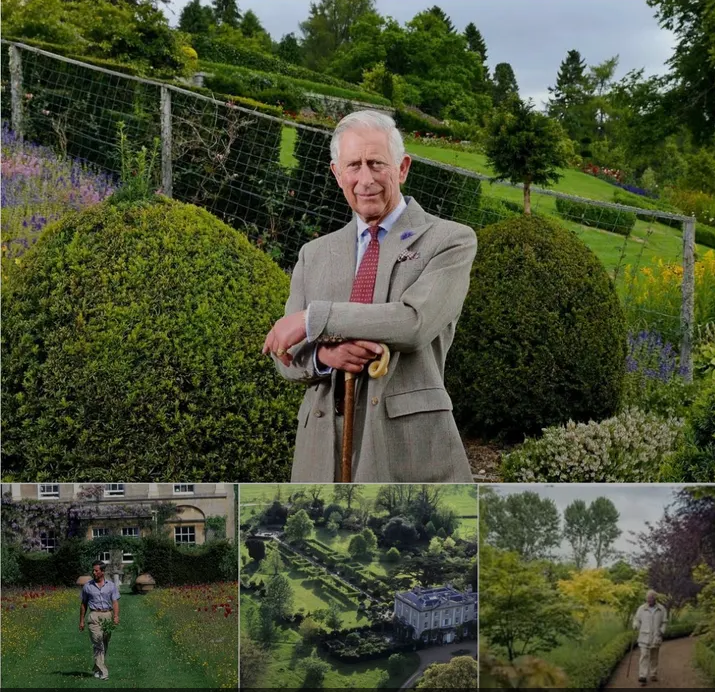
There are places in the world that exist not just as homes, but as reflections of the souls who shape them. Hidden behind tall, unyielding walls in the English countryside lies one of the most quietly extraordinary of them all: Highgrove House.
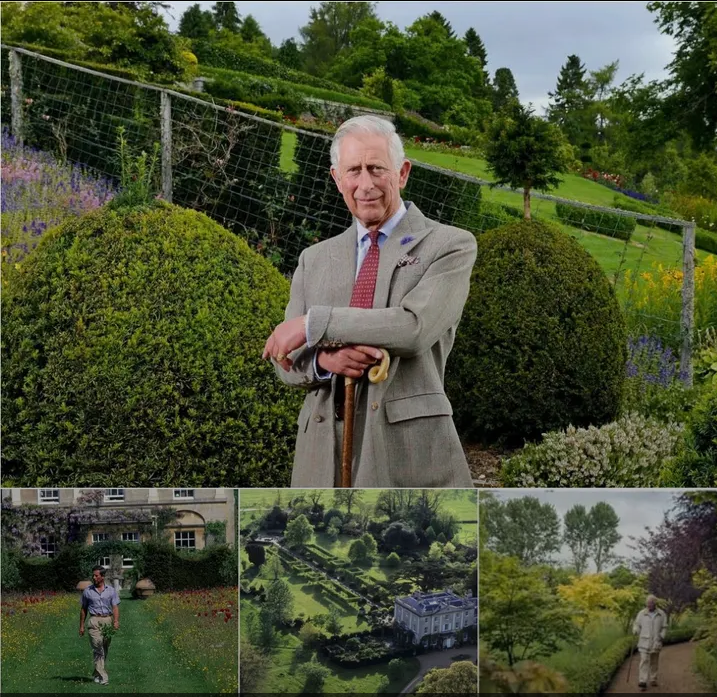
For decades, people have driven past it without ever truly seeing it.
No glimpses of manicured lawns.
No sweeping views of royal grandeur.
No obvious signs of the life unfolding within.
Just walls—high, deliberate, and unwavering.
And yet, behind those walls exists something far more intimate than a palace. Something softer. More human. More revealing than any public appearance or royal ceremony could ever be.
Because Highgrove is not just where King Charles lives.
It is where he became himself.
A Hidden World Few Have Ever Seen
To the outside world, Highgrove has always been a mystery.
Unlike the grandeur of Buckingham Palace or the historic weight of Windsor Castle, this countryside estate has remained largely out of sight, almost intentionally so. Even locals who pass by daily see nothing more than its protective barriers—silent guardians of a deeply personal space.
And that’s exactly how Charles III wanted it.
Because Highgrove was never meant to impress.
It was meant to protect.
The Escape From a Life Lived in Public
For a man born into a life where privacy is nearly impossible, Highgrove became something rare: a sanctuary.
Long before he ascended the throne, Charles sought refuge here—not from duty, but from the relentless gaze that follows royalty everywhere. Within these walls, he could step away from expectations and reconnect with something simpler, something grounding.
Nature.
Silence.
Time.
While the world saw a prince bound by tradition, Highgrove saw a man searching for meaning beyond it.
A Garden Unlike Any Other
What truly sets Highgrove apart isn’t the house itself.
It’s what surrounds it.
Over the years, the gardens of Highgrove have become legendary—not for their symmetry or extravagance, but for their philosophy. Every path, every tree, every bloom reflects a deeply personal vision shaped by Charles’s lifelong passion for the environment.
Long before sustainability became a global movement, he was already quietly practicing it here.
Organic farming.
Biodiversity.
Harmony with nature rather than control over it.
This wasn’t landscaping.
It was a belief system brought to life.
And in many ways, it became one of the earliest glimpses into the values that would later define his public role.
A King Ahead of His Time
There was a time when Charles III was often misunderstood.
His advocacy for environmental issues was once dismissed as unconventional, even eccentric. But today, as the world grapples with climate change and sustainability, those same ideas feel not just relevant—but urgent.
And Highgrove stands as quiet proof that he never wavered.
Every garden bed, every carefully nurtured ecosystem tells the same story: this was never a passing interest. It was a lifelong commitment.
The Emotional Weight of a Home
But Highgrove is more than philosophy and landscape.
It is memory.
It is history.
It is where moments of joy and sorrow unfolded away from public view.
Within these walls, Charles experienced the complexities of family life, the pressures of royal duty, and the personal challenges that shaped him in ways the world could never fully see.
It is impossible to speak of Highgrove without acknowledging its connection to Diana, Princess of Wales.
For a time, this was a shared space—a place where a royal marriage played out not just in public, but in private. The echoes of that chapter remain, woven into the very fabric of the estate.
And yet, Highgrove endured.
Evolved.
Changed.
Just as he did.
A Glimpse Inside: Why It Matters Now
For years, the world has been kept at a distance from this deeply personal place.
Which is why the recent decision by Charles III to offer a rare glimpse inside has captured so much attention.
It’s not just curiosity.
It’s something deeper.
Because in an age where transparency matters more than ever, this moment feels like an invitation—not into luxury, but into understanding.
What people expected to see was opulence.
What they found instead was something far more compelling.
Warmth.
Character.
A sense of lived-in authenticity that feels almost disarming for a royal residence.
The Details That Speak Volumes
It’s often the smallest details that reveal the most.
A quiet corner filled with books.
A garden path worn by years of reflection.
A space that feels less like a stage—and more like a life.
These are the elements that have sparked conversation.
Because they challenge the perception of royalty as distant and untouchable.
Instead, they paint a picture of a man deeply connected to his surroundings, his values, and his inner world.
The Power of Privacy in a Public Life
There is something profoundly powerful about choosing what to reveal—and what to protect.
For decades, Highgrove remained hidden, not out of secrecy, but out of necessity. It was one of the few places where Charles could exist without performance, without expectation.
And perhaps that’s why this recent glimpse feels so significant.
Because it wasn’t forced.
It was chosen.
A Legacy Rooted in Soil
When people think about legacy, they often imagine monuments, titles, or historic achievements.
But sometimes, legacy looks like something quieter.
A garden.
A philosophy.
A way of living that influences not just a nation, but a mindset.
Highgrove is not just a home.
It is a living legacy—one that continues to grow, evolve, and inspire.
The Man Behind the Crown
It’s easy to see the crown.
The ceremonies.
The titles.
The responsibilities.
But moments like this—moments where the walls come down, even slightly—offer something far more valuable.
They reveal the man behind it all.
A man who finds peace in nature.
Who values sustainability over spectacle.
Who has spent decades shaping not just a garden, but a worldview.
Why America Is Paying Attention
For audiences in the United States, there has always been a fascination with the British royal family—a blend of history, drama, and tradition that feels both distant and strangely familiar.
But stories like this resonate on a different level.
Because they are not about royalty.
They are about humanity.
About finding refuge in a chaotic world.
About staying true to your beliefs, even when they are misunderstood.
About creating something meaningful, quietly and consistently, over time.
These are universal themes.
And they are what make Highgrove more than just a royal residence.
The Moment That Changes Everything
As viewers watched the rare footage, one thing became clear:
This wasn’t just a tour.
It was a statement.
A subtle, powerful shift in how Charles III chooses to be seen.
More open.
More human.
More connected.
And for many, it changed everything.
Final Reflection: What Lies Beyond the Walls
For years, people have passed by Highgrove without seeing it.
But now, in a way, they finally have.
Not through its walls—but through its meaning.
Because what lies behind those walls isn’t just a house or a garden.
It’s a life.
A philosophy.
A quiet reminder that even in the most public of roles, there is value in creating a space that belongs entirely to you.
And perhaps that’s the most powerful revelation of all.
That behind the crown, behind the history, behind the walls…
There is simply a man, tending to his garden, shaping his legacy—one season at a time.