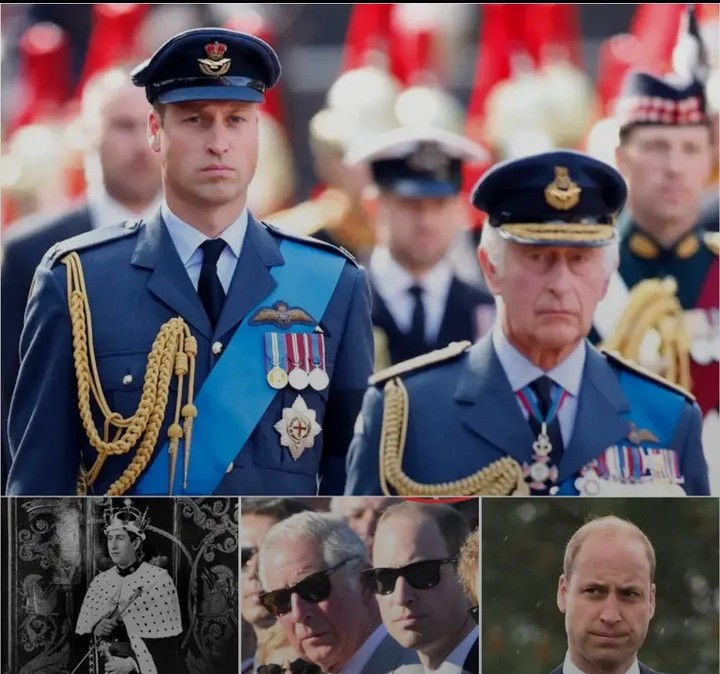
While palace aides keep insisting that the Royal Family’s biggest problem is Prince Harry, insiders now say that narrative is nothing more than a convenient distraction. Behind closed doors, the real crisis is far uglier, far more dangerous — and far closer to the throne. According to multiple royal sources, the relationship between King Charles and Prince William has collapsed into open hostility, exposing a power struggle that threatens the very stability of the monarchy.
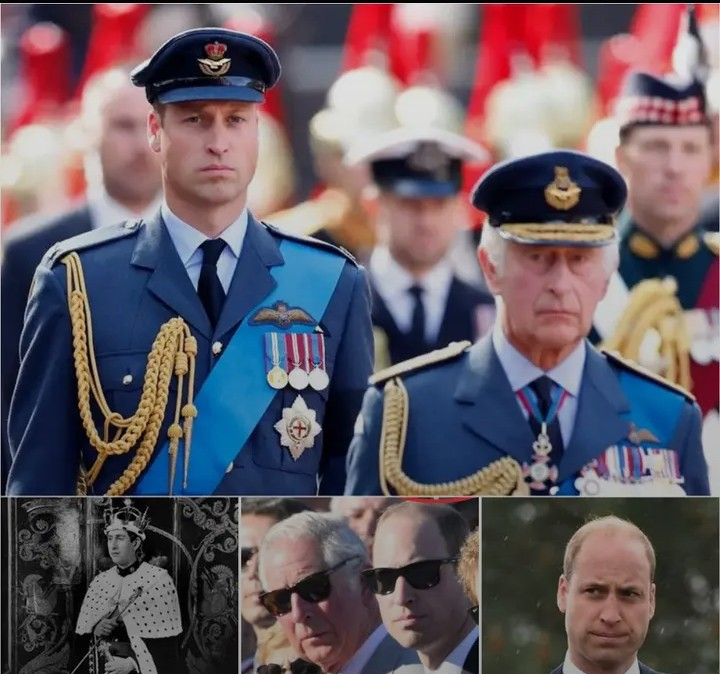
This is no “ordinary family disagreement.” This is a cold war between a reigning king and an heir who no longer feels the need to pretend.
Sources quoted by royal journalist Rob Shuter paint a bleak picture: father and son are barely speaking, trust has evaporated, and resentment has replaced respect. One insider bluntly described the situation as “toxic,” adding that the atmosphere inside palace walls is “angrier than anyone outside realizes.”
The breaking point became impossible to ignore when Prince William deliberately skipped King Charles’ Windsor Castle film premiere — a personal passion project for the monarch. Palace officials rushed to downplay the absence, but insiders were far more honest. This was not a diary clash. It was a message.
“William wanted Charles to feel it,” one source claimed. “And he did.”
In royal terms, this was nothing short of a slap in the face. Joint appearances are the monarchy’s favorite weapon against rumors, and William knows that better than anyone. His refusal to show up was widely interpreted as a calculated act of defiance — a public signal that the heir is no longer willing to play along.
What makes this rift especially explosive is the shift in power dynamics. Charles may wear the crown, but everyone knows his reign is finite. William, by contrast, represents the future — and he knows it. That awareness has reportedly transformed his behavior.
“William will be king,” an insider said flatly. “And he’s stopped pretending otherwise.”
null
Unlike Harry, who is often dismissed within royal circles as emotional and impulsive, William is described as something far more threatening: controlled, strategic, and immovable. Courtiers say Charles finds this infinitely harder to manage. Harry explodes and retreats. William digs in and waits.
That difference has turned disagreements into stalemates — and stalemates into simmering fury.
At the heart of the conflict is a brutal truth few royal watchers want to admit: Charles and William are too alike. Both are stubborn. Both are convinced of their own moral authority. Both believe they know what is best for the Crown — and neither is prepared to step aside.
“They clash because they’re mirror images,” a palace source admitted. “Neither bends. Neither forgets.”
The irony is painful. The monarchy has spent years portraying itself as united against Harry’s “betrayals,” yet insiders now suggest the Duke of Sussex has become a convenient scapegoat — a lightning rod diverting attention from a far more dangerous fracture at the top.
Because this time, there is no exile to California. No convenient villain across the Atlantic. This fight is happening inside the institution, between the man wearing the crown and the man waiting to take it.
And unlike previous royal dramas, this one cannot be brushed aside with staged smiles and choreographed walkabouts.
If insiders are to be believed, reconciliation is not imminent. Pride is entrenched. Anger is raw. And both sides believe time is on their side.
The monarchy may survive scandals, divorces, and rogue princes. But a prolonged war between a king and his heir? That’s a crisis no amount of palace spin can fix.
For now, the public is being fed a familiar fairy tale of duty and continuity. Behind the scenes, however, the House of Windsor appears to be rotting from the top down — and the silence between Charles and William may be the loudest warning yet.