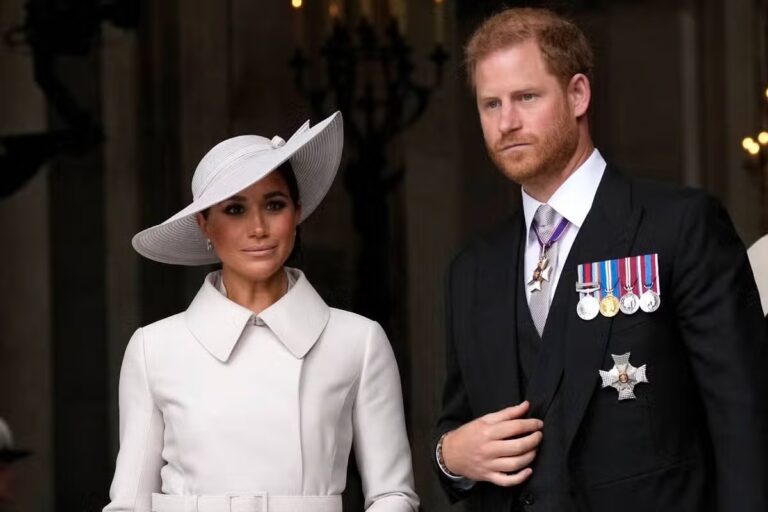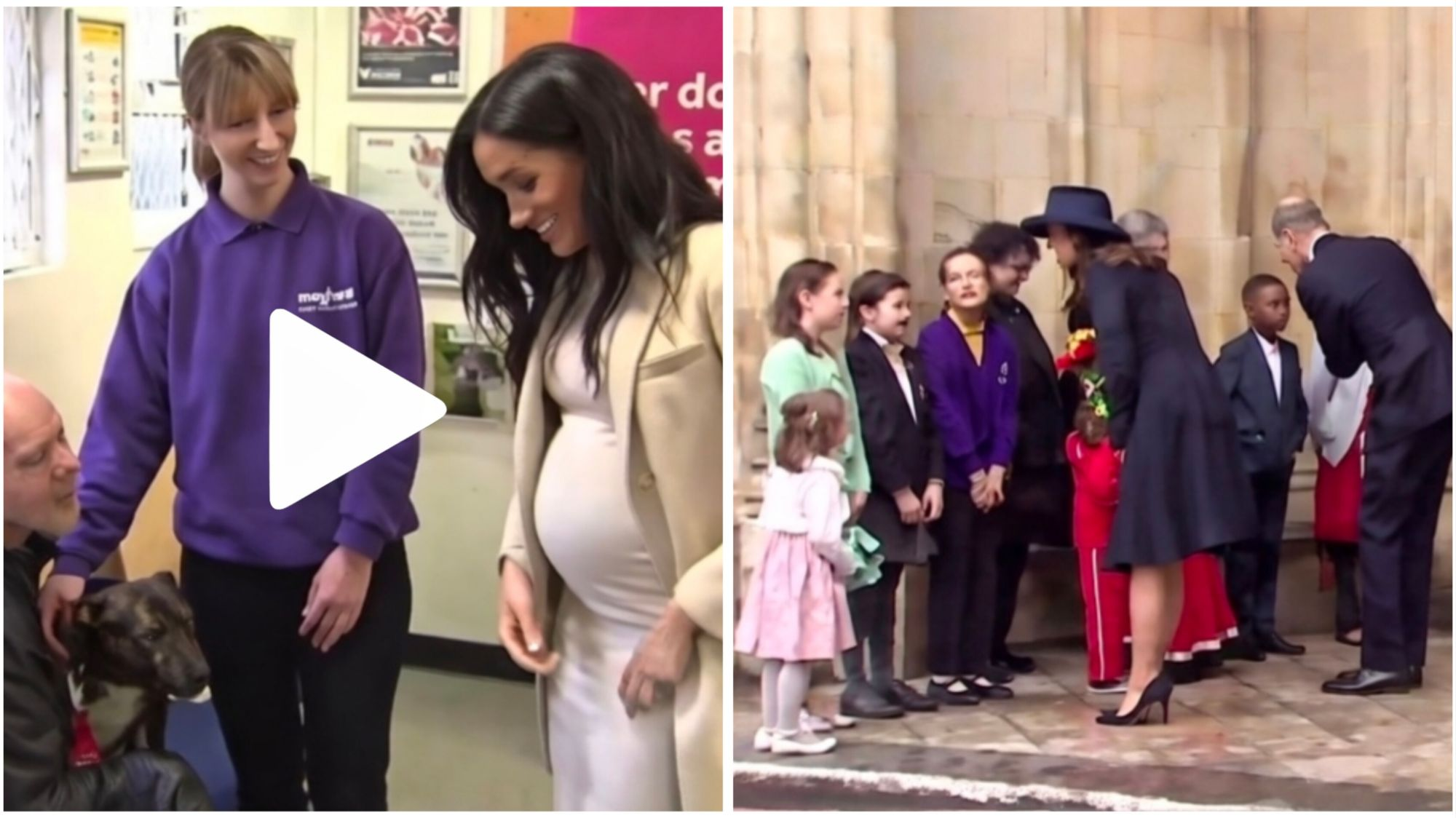
In the glamorous yet scrutinized world of British royalty, pregnancies have always been under the microscope. But few comparisons have sparked as much heated debate – and raised as many eyebrows – as the stark differences between **Meghan Markle**’s and **Princess Catherine**’s (formerly known as Kate Middleton) experiences during their third trimesters.
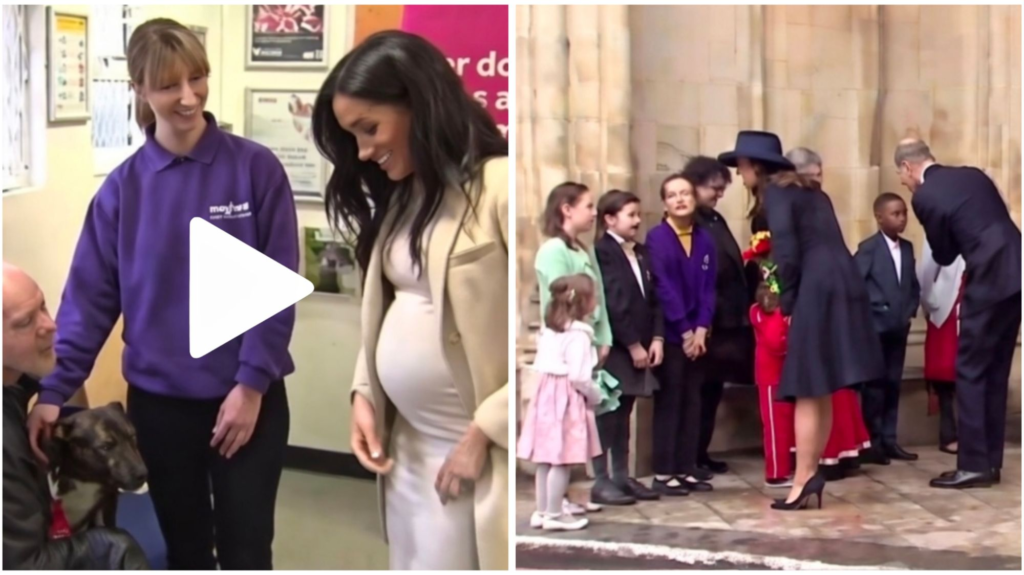
While one future royal mother appeared to defy the physical limitations that come with a full-term baby bump, the other seemed visibly restricted by the very same condition. Insiders, royal watchers, and everyday moms are asking the burning question: How was Meghan able to perform deep squats with her knees glued together and bend over without a hint of struggle, while Catherine – the picture of poise – often appeared unable to bend or squat at all due to her prominent belly?
Let’s dive into the details that have royal fans buzzing.
Meghan Markle, the Duchess of Sussex, carried her first child, Prince Archie, in 2019. As she entered the later stages of pregnancy – well into her third trimester – footage and photos from public engagements captured something extraordinary. In one widely circulated clip from an animal charity visit, Meghan effortlessly dropped into a full squat, knees pressed tightly together, to interact with a dog. She maintained perfect balance, rose smoothly without assistance, and showed zero signs of discomfort or awkwardness from her large bump getting in the way.
Multiple observers noted the precision: knees together, no spreading of the legs for room, no wobbling, no need for support. Even in heels, she executed the movement with the ease of someone far less encumbered. Other moments showed her bending deeply forward – reaching for objects or pets – with her belly prominently on display, yet without the expected compression or restriction.
Experts and everyday pregnant women have weighed in online, with many expressing astonishment. Forums and social media threads are filled with comments like: “In the third trimester, your center of gravity shifts dramatically, and that bump makes knees-together squatting nearly impossible without major adjustments.” Yet Meghan appeared to do it repeatedly, flawlessly.
Contrast this with Princess Catherine’s pregnancies. Across her three journeys – carrying Prince George (2013), Princess Charlotte (2015), and Prince Louis (2018) – Catherine was open about the challenges. She battled severe hyperemesis gravidarum, which forced reduced schedules and left her drained. In her third trimesters, photos and videos show a different story: a rounded, protruding belly that visibly impacted mobility.
While Catherine gracefully crouched to engage with children – often a signature move – these were typically wide-stance positions or supported efforts, and even then, she appeared measured. Bending at the waist or attempting tight squats looked difficult; her bump seemed to create a natural barrier, forcing adaptations like keeping her back straighter or avoiding deep forward leans altogether. Royal observers noted how she often used clothing tricks or positioning to manage comfort, and her public appearances in late pregnancy were more limited compared to Meghan’s active schedule.
The differences couldn’t be more striking. Meghan’s athletic background (yoga, fitness routines) may have played a role in her apparent flexibility and core strength. Some praise her as an inspiration for “pregnant power,” showing that with the right preparation, women can stay remarkably mobile even late in pregnancy. Others point out that Catherine’s pregnancies were medically more taxing, with extreme nausea affecting energy and strength levels.
But for many royal insiders and commentators, the contrast goes beyond fitness. It highlights two very different approaches to royal motherhood: one seemingly effortless and boundary-pushing, the other dutifully traditional yet visibly challenged by biology.
Critics of Meghan have long dissected these moments, with some conspiracy corners even questioning authenticity (claims long dismissed by medical experts and official records). Supporters, however, see it as proof of her strength and independence – a woman who refused to let pregnancy slow her down.
Catherine, ever the professional, powered through despite hardships, earning admiration for her resilience under pressure. Her pregnancies were marked by grace in adversity, with her glowing appearances masking the private struggles.
So what does this all mean? Is it simply a tale of two very different bodies and pregnancies? Or does it reveal deeper truths about how the two duchesses navigated the physical – and public – demands of royal life?
One thing is clear: in the third trimester, when most women are waddling and guarding their bumps, Meghan Markle was squatting like a pro, while Princess Catherine’s belly appeared to dictate far more limitations. The images speak volumes – and the internet won’t stop talking about it anytime soon.
What do YOU think? Is this proof of superhuman fitness, or something else entirely? The royal pregnancy debate rages on… 👑