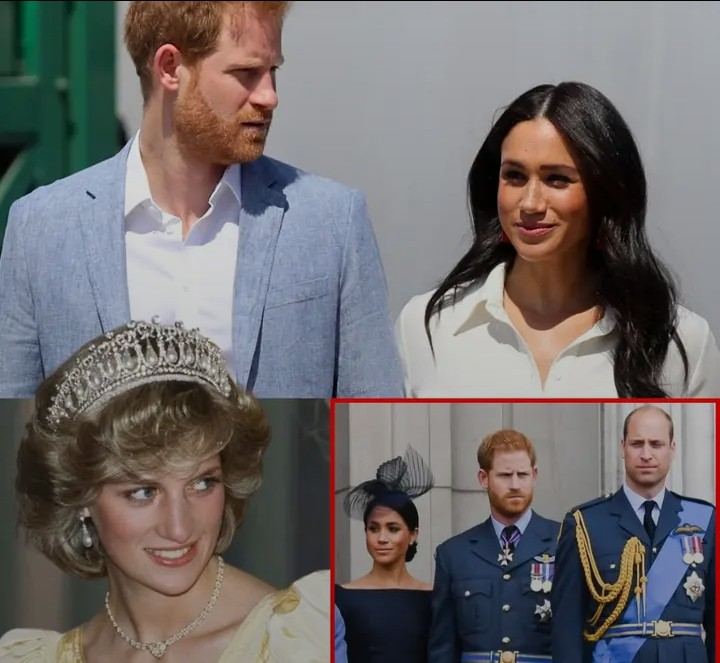
Tensions between Prince William and Prince Harry are reportedly escalating once again, this time over what sources describe as a deeply sensitive issue: the legacy of their late mother, Diana, Princess of Wales. According to recent reports, William is said to be furious over the possibility of a new documentary project marking the 30th anniversary of Diana’s death, a project allegedly being developed within Harry and Meghan Markle’s ongoing media ventures.Meghan Markle, Prince Harry get apology for baby Archie pics – Los Angeles Times
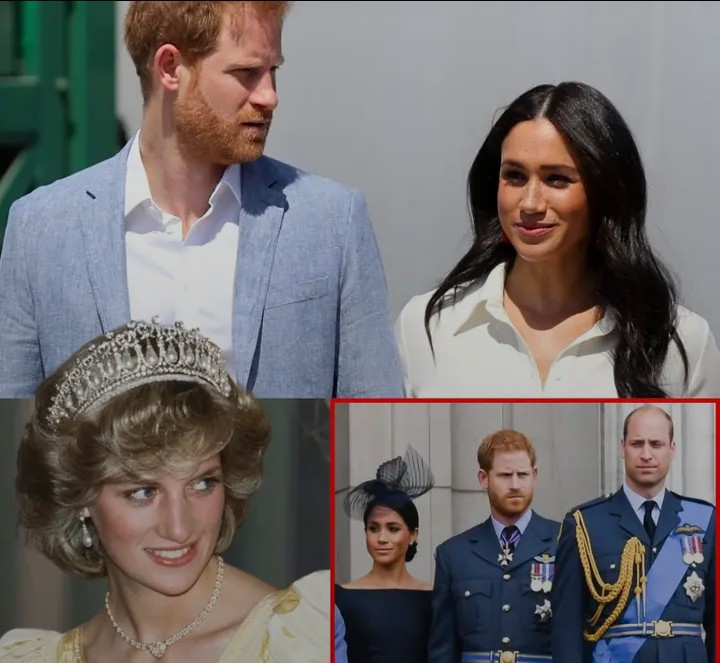
The heart of the conflict appears to revolve around an informal understanding the brothers reportedly reached years ago. Around the 20th anniversary of Diana’s passing, both William and Harry participated in major televised tributes and documentaries. At that time, insiders claimed they had privately agreed not to continue revisiting their mother’s story for large-scale commercial productions. The understanding, while never legally binding, was said to be rooted in mutual respect and a shared desire to protect Diana’s memory from overexposure.
Now, nearly three decades after the tragedy that reshaped the royal family, that understanding is believed to be under strain. Harry and Meghan, who signed a high-profile content deal with Netflix, have built much of their post-royal identity around storytelling. While there has been no official confirmation of a Diana-centered documentary, speculation alone has reportedly been enough to spark intense concern within William’s circle.Prince Harry and Meghan Markle issue statement after UK law change | Royal | News | Express.co.uk
Those close to the Prince of Wales suggest he views any new commercial retelling of Diana’s life as crossing a line. For William, it is said to be less about control and more about preservation. One commentator noted that, from his perspective, Diana’s legacy belongs to history and to her charitable impact, not to the entertainment marketplace. The idea of revisiting her most painful chapters for global streaming audiences is, in the words of one royal watcher, “deeply unsettling.”
Supporters of Harry see the matter differently. They argue that as Diana’s son, he has every right to tell his own story and to reflect on his mother’s influence in whatever format he chooses. Some observers point out that Harry has often framed his public work as continuing Diana’s humanitarian spirit. In that sense, a tribute project could be seen not as exploitation but as homage. Still, critics question whether commercial partnerships inevitably blur that distinction.Royal wedding: Prince Harry and Meghan Markle’s big day, explained | Vox
There are also practical considerations. Legal experts have quietly suggested that William would face significant obstacles if he attempted to block any such production. There is no known written agreement preventing either brother from speaking about their mother. At most, it appears to have been a moral pact rather than a contractual one. As one media analyst remarked, “You can’t litigate sentiment.” Even so, the very discussion of potential legal action underscores how fragile relations have become.
Public reaction has been predictably divided. Some readers express sympathy for William, arguing that the repeated revisiting of royal trauma risks turning personal grief into serialized content. Others see the controversy as another chapter in a long-running family drama that has already played out through interviews, memoirs, and documentaries. The debate reflects a broader cultural tension: when does personal storytelling become public spectacle?
The situation is further complicated by the Sussexes’ broader media trajectory. Since stepping back from official royal duties, Harry and Meghan have positioned themselves as independent voices, unbound by palace constraints. Their previous projects, including candid interviews and docuseries, have drawn both praise and criticism. Each new venture is therefore scrutinized not only for its content but for what it signals about their ongoing relationship with the monarchy.
For William, who is steadily preparing for his future role as king, stability and discretion are seen as paramount. Advisors reportedly believe that reopening emotionally charged narratives could undermine efforts to present a forward-looking image of the institution. One royal commentator observed that William’s approach tends to emphasize continuity and restraint, qualities he may feel are incompatible with another high-profile retelling of Diana’s story.
At its core, this unfolding dispute appears to be about more than a documentary. It touches on memory, ownership, and the evolving identities of two brothers who once stood united in shared grief. The 30th anniversary of Diana’s death will inevitably prompt reflection around the world. Whether that reflection becomes a new flashpoint within the royal family remains to be seen.
For many readers, the most poignant aspect is the reminder that behind the headlines are two sons shaped by the same loss. Yet as their paths continue to diverge — one anchored within the monarchy, the other forging a commercial media career abroad — the question lingers: can Diana’s legacy ever truly belong to just one vision?