When Prince Harry and Meghan Markle announced in January 2020 that they intended to step back as senior working royals, the decision detonated like a shockwave through Buckingham Palace. What followed was the now-infamous “Megxit summit,” a high-stakes family meeting designed to determine whether a compromise could preserve both the institution and the couple’s desire for independence. According to palace insiders, the reality behind those closed doors was far more complex — and more consequential — than previously understood.How Meghan partied while the Fab Four fell: Did Duchess’s ultra lavish New York baby shower take place while William confronted Harry over her ‘abrasive’ nature – before pushing him into a
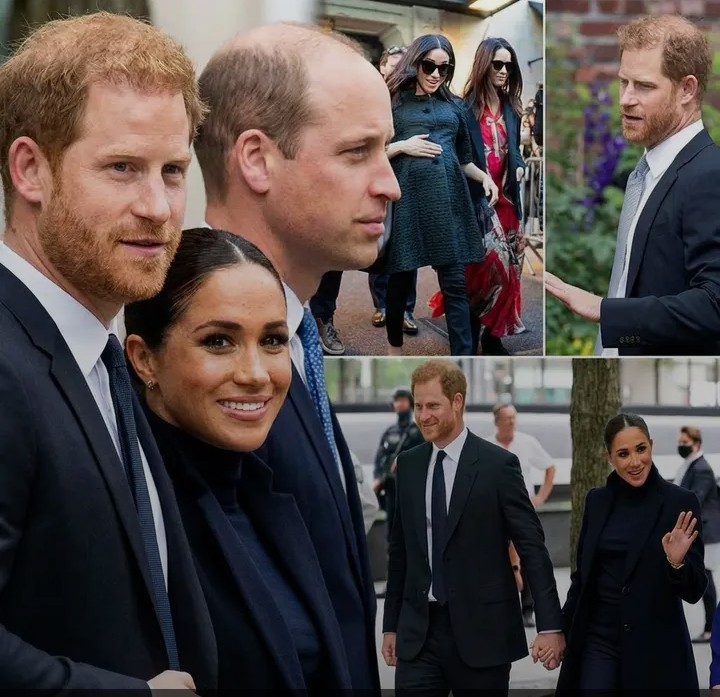
At the center of the negotiations stood Elizabeth II, described by multiple sources as calm but deeply concerned. Despite internal resistance, particularly from Prince William, the late monarch reportedly explored ways to accommodate her grandson. Insiders claim she was open to discussing a transitional model that might have allowed Harry and Meghan limited royal duties alongside private pursuits. “Her Majesty wanted clarity, not conflict,” one former courtier is said to have revealed. “She was willing to bend — but she needed a plan.”Prince Harry and Meghan Markle New York City Trip: Details, Photos
That plan, however, never materialized. According to accounts echoed in royal editor Russell Myers’ book William & Catherine: The Intimate Inside Story, palace staff repeatedly asked the Sussexes how a “half-in, half-out” arrangement would function in practice. Could commercial contracts coexist with royal representation? How would conflicts of interest be avoided? What would accountability look like? The response, insiders suggest, was frustratingly vague. One senior source summarized it bluntly: “We kept asking for a tangible proposal. We got nothing concrete in return.”It Looks Like Prince Harry and Meghan Markle Are Already Redecorating Their $14.7 Million Mansion | Vanity Fair
The absence of specifics, combined with the couple’s reported intention to pursue lucrative commercial agreements, is said to have hardened opposition within the royal household. For William, according to those familiar with the mood at the time, the issue was less personal and more structural. The monarchy’s credibility depends on clear boundaries. If one working royal could monetize status while retaining official duties, what precedent would that set? “It wasn’t about denying them happiness,” a former aide commented. “It was about protecting the framework that holds everything together.”
Observers note that the Queen’s willingness to consider compromise reflected both affection and pragmatism. She had weathered decades of constitutional and personal crises, often opting for measured adaptation over dramatic rupture. Yet insiders now claim that one decisive action by the Sussexes extinguished that final opening: the unilateral public announcement of their plans before details had been finalized. By declaring their departure on social media without prior agreement, they reportedly left the Palace scrambling. “That was the moment trust fractured,” said a source close to the institution. “It forced the Queen’s hand.”
In the days that followed, Harry attended the summit in the United Kingdom while Meghan returned to Canada to be with their infant son. Commentators at the time noted the symbolism of Harry facing the negotiations largely alone. Supporters argue he was navigating an impossible position — balancing loyalty to his wife with duty to his family. Critics, however, suggest the strategy miscalculated the depth of institutional resistance.
Public reaction remains divided even years later. Some readers express sympathy, framing the couple’s exit as a modern assertion of autonomy within an archaic system. Others see the episode as a failure of diplomacy. “If you want reform, you bring solutions,” one columnist recently wrote. “You don’t drop ultimatums.” That sentiment continues to resonate among those who believe the Sussexes underestimated the monarchy’s need for operational clarity.
Another lingering tension lies in language itself. Harry has criticized the term “Megxit,” describing it as misogynistic and rooted in online trolling. His argument found support among advocates who viewed the label as unfairly targeting Meghan. Yet palace insiders insist that terminology was never the central issue. “The real debate was structural,” a former staff member reflected. “It was about whether you can serve the Crown and serve commercial interests simultaneously.”
Years after the summit, the consequences are evident. The Sussexes reside in California, building independent careers while maintaining intermittent ties to royal causes such as the Invictus Games. Meanwhile, the monarchy has recalibrated around a streamlined group of working members. The question that lingers in many quarters is whether a different outcome might have emerged had a detailed, collaborative proposal been placed on the table in 2020.
For some observers, the most striking element of the leaked accounts is the suggestion that the Queen’s patience had limits. She was prepared to explore options, insiders say, but not at the cost of institutional coherence. Once that line was crossed, compromise became untenable. “Mercy without structure becomes chaos,” one veteran royal correspondent remarked. “And chaos is the one thing the monarchy cannot afford.”
Whether history ultimately judges the Sussexes as pioneers of a new royal model or as architects of a preventable rupture remains to be seen. What is clear is that the Megxit summit marked a decisive turning point — not merely in family dynamics, but in the evolving identity of the modern British monarchy.