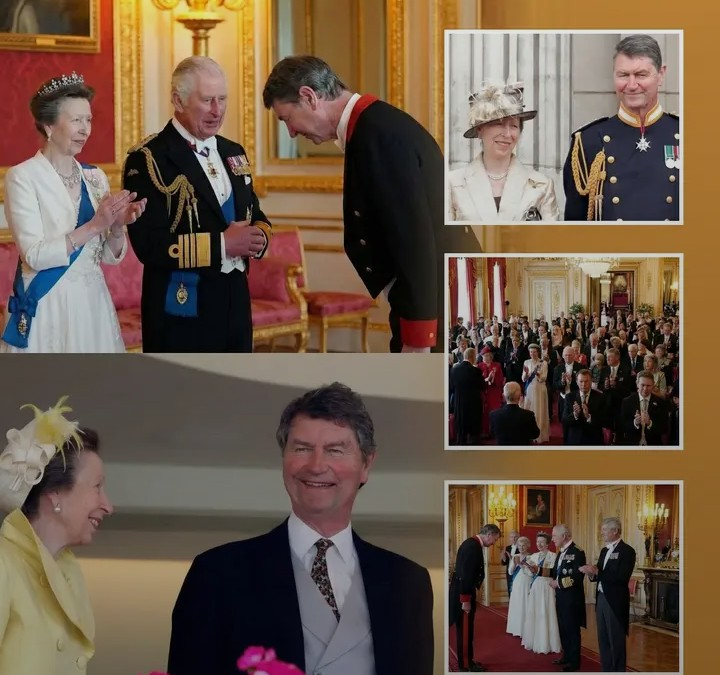
In what many royal observers are calling a quiet but historic shift, King Charles III has formally recognized Sir Timothy Laurence for his decades of loyalty and service — a gesture that breaks with long-standing royal custom and signals a deeper evolution within the monarchy. While the move may appear ceremonial on the surface, insiders and commentators suggest it carries symbolic weight far beyond a simple honor.
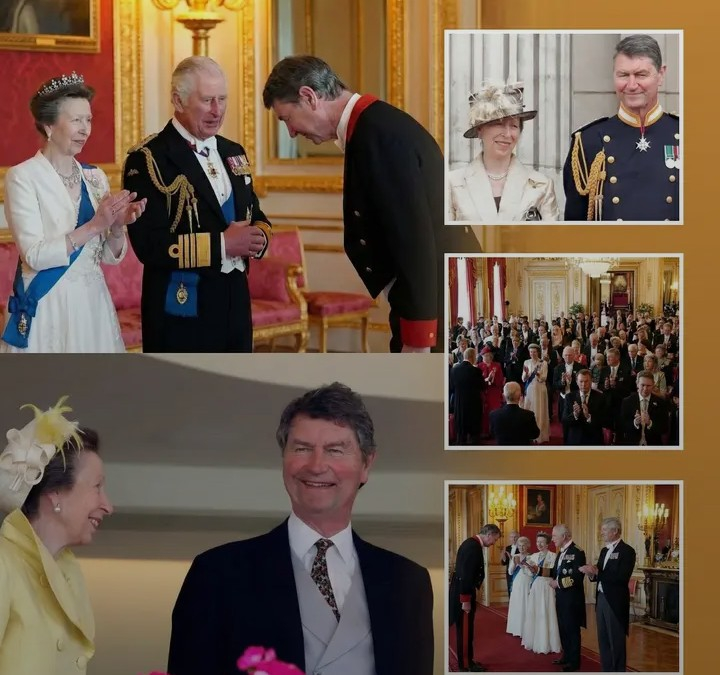
For centuries, the British monarchy has operated within rigid structures of hierarchy, lineage, and inherited status. Titles traditionally flowed through bloodlines or aristocratic privilege. Yet Sir Timothy, a former Royal Navy commander with no royal birthright, has now been publicly acknowledged in a way that elevates not his lineage, but his service. Married to Princess Anne since 1992, he has spent more than thirty years standing quietly beside one of the hardest-working members of the royal family, rarely seeking attention and never attempting to overshadow the institution he supports.
Born in 1955 and educated at the Royal Naval College, Sir Timothy built a respected naval career long before entering royal life. His transition into the monarchy was notably understated. Unlike some royal spouses who quickly become public figures in their own right, he maintained a low profile, attending engagements when required but largely remaining behind the scenes. Royal historians often describe him as “the definition of discreet.” That discretion, some now argue, is precisely what makes this recognition significant.
One palace observer remarked, “This is Charles rewarding substance over spectacle.” That sentiment appears to resonate widely. King Charles has long spoken about streamlining and modernizing the monarchy, seeking to balance tradition with relevance in a rapidly changing Britain. By honoring Sir Timothy in a meaningful way, he sends a message that dedication, competence, and loyalty matter more than inherited grandeur.
Critics of the monarchy have frequently accused it of clinging too tightly to outdated structures. In that context, this decision reads as deliberate. A constitutional expert recently noted that such recognition “may seem small, but symbols are the language of monarchy.” By elevating a non-aristocratic spouse based on merit and decades of service, the King appears to be redefining what influence within the royal orbit looks like.
There are also implications for internal royal dynamics. Princess Anne has consistently ranked among the most respected working royals in public opinion polls. Her tireless schedule and no-nonsense approach have earned admiration across political lines. Acknowledging her husband’s contributions can be interpreted as reinforcing the value of that work ethic. It strengthens the perception of a united, duty-first inner circle — a contrast some commentators subtly draw when referencing the California-based branch of the family.
Though never explicitly stated, comparisons inevitably arise with Prince Harry and Meghan, Duchess of Sussex, whose post-royal lives in Montecito have been marked by public interviews, media ventures, and outspoken criticism of the institution. One media analyst commented, “Charles is showing that recognition comes through commitment to the Crown, not public negotiation with it.” Whether intentional or not, the timing fuels conversation about contrasting approaches to royal identity.
Public reaction has largely leaned positive. Many see the gesture as overdue recognition for a man who has supported the monarchy without fanfare. Social commentators point out that in a society increasingly skeptical of inherited privilege, honoring visible service helps maintain legitimacy. “If the monarchy wants to survive another century,” one columnist wrote, “it must prove that contribution outweighs pedigree.”
Still, traditionalists may feel uneasy. Breaking precedent, even symbolically, always risks backlash from those who view continuity as sacred. Yet King Charles appears willing to take calculated steps toward reform. His reign has been marked by subtle adjustments rather than dramatic upheaval, and this move fits that pattern — evolutionary rather than revolutionary.
Beyond palace walls, the broader message resonates clearly: titles alone no longer define relevance. In a modern constitutional monarchy, moral authority is strengthened when recognition aligns with effort and responsibility. Sir Timothy Laurence’s acknowledgment underscores that the Crown’s future may depend less on inherited rank and more on demonstrated commitment.
As the monarchy navigates an era of scrutiny, transparency demands, and generational change, this moment stands as a reminder that institutions endure by adapting. Sir Timothy’s decades of quiet loyalty have now been formally affirmed. More importantly, the gesture suggests that King Charles is reshaping the framework of royal influence — carefully, symbolically, but unmistakably.
In that recalibration of values, the message is clear: service speaks louder than status.