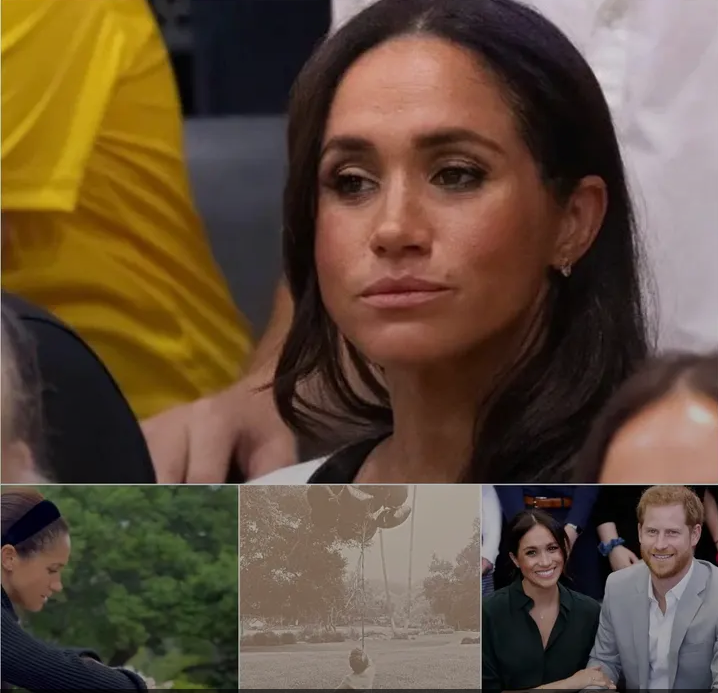
In her latest social media update, Meghan Markle once again offered the public a carefully curated glimpse into her private life. The videos, soft in tone and filled with spring imagery, showed her arranging flowers, reading poetry, and sharing quiet, affectionate moments with Prince Harry. At first glance, the content appeared to reinforce a narrative of calm domesticity—an image of a family grounded in simple pleasures. Yet, as with many of their recent appearances, it wasn’t what was shown that captured the most attention, but rather what was missing.
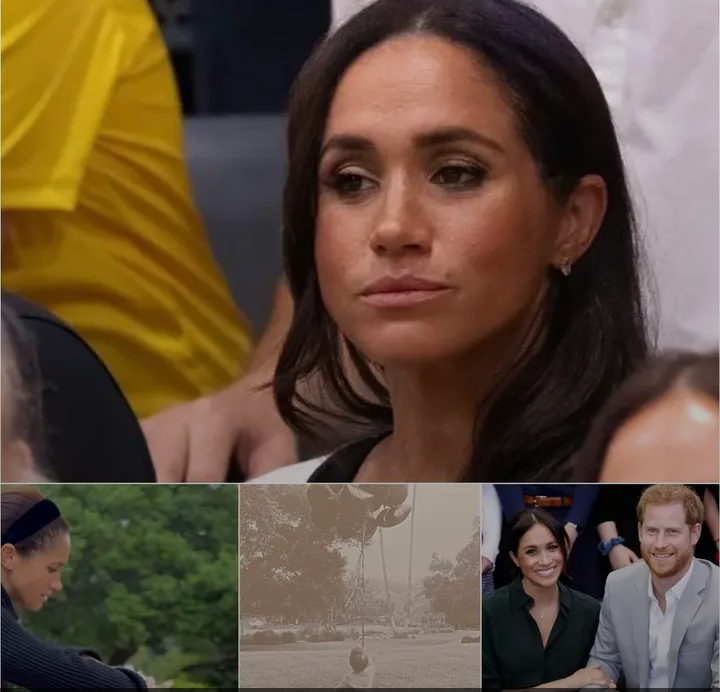
Prince Harry praised his wife’s flower arranging skills in a new video shared by Meghan Markle
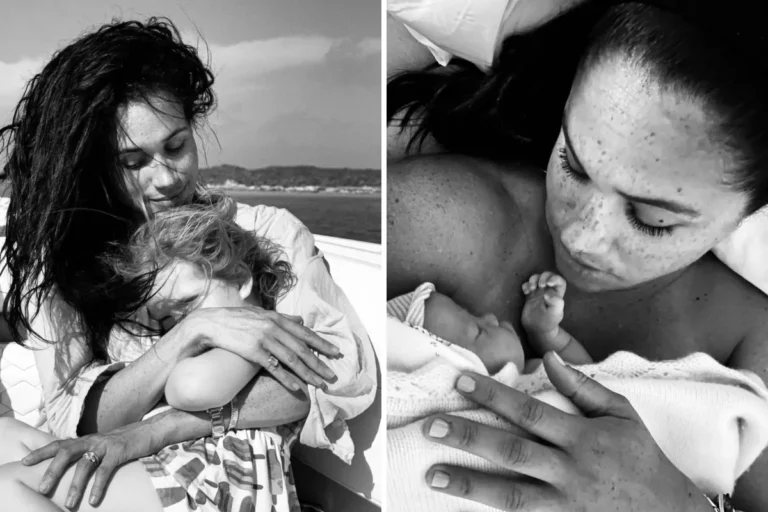
Among the gentle visuals and fleeting glimpses of their home life, one detail stood out immediately to viewers: the presence of their daughter Lilibet, and the continued absence of their son Archie. In one clip, Lilibet’s distinctive red hair could be seen as she played near the family’s chickens, adding a rare and intimate element that quickly spread across media platforms. However, Archie was nowhere to be seen. For many observers, this was not a new occurrence—but it is one that is becoming increasingly difficult to ignore.
archie 2nd birthday photo
The contrast has sparked a wave of speculation online. Why does Lilibet appear, even if only briefly, while Archie remains entirely out of view? Some supporters argue that this is simply a matter of timing or personal choice, noting that the couple have long expressed a desire to protect their children’s privacy. Others, however, are less convinced. “It’s the pattern that raises eyebrows,” one commentator observed. “If privacy is the goal, why show one child at all?”
Meghan Markle puts Prince Archie at risk with a massive dumpster fire
This question becomes more pointed when placed within the broader context of Meghan’s current public strategy. The recent videos are not isolated moments; they follow a series of efforts to reshape her image amid ongoing scrutiny over business ventures and media projects. By sharing scenes of motherhood, creativity, and family warmth, she appears to be leaning into a softer, more relatable persona. In that narrative, Lilibet’s presence—symbolic, carefully framed, and visually striking—plays a powerful role.
Yet the absence of Archie complicates that narrative. It introduces a gap that audiences instinctively try to fill, often with their own assumptions. Some have suggested that he is simply being kept out of the spotlight due to his age or personal comfort. Others speculate about logistical reasons, such as schooling or differing routines. Still, more critical voices question whether there is a deliberate imbalance in how the children are presented to the world.
Compounding the situation are ongoing reports and commentary from individuals described as being close to the Sussexes. While none offer definitive answers, they contribute to an atmosphere of uncertainty. These perspectives often hint at internal dynamics or strategic decisions that are not immediately visible to the public. Whether accurate or not, they feed a narrative that continues to evolve with each new appearance—or absence.
At the same time, it is important to recognize the complexity of managing public and private boundaries at this level of visibility. Every image shared, every detail revealed, carries weight far beyond its original intent. What may begin as a simple family moment can quickly become a focal point for analysis, debate, and even criticism. In this environment, even silence—or in this case, absence—can speak volumes.
There is also a broader cultural context at play. Public fascination with the children of high-profile figures is nothing new, but it often comes with conflicting expectations. Audiences demand authenticity while simultaneously scrutinizing every perceived inconsistency. The Sussexes, who have positioned themselves as advocates for privacy and mental well-being, find themselves navigating a particularly delicate balance.
Some observers urge caution in drawing conclusions. “We’re seeing fragments, not the full picture,” one voice noted, emphasizing that social media offers only a curated slice of reality. Others, however, maintain that patterns—especially repeated ones—invite legitimate questions. The tension between these viewpoints reflects the larger divide in public perception of the couple.
Ultimately, what emerges from this latest episode is not a clear answer, but a deepening sense of intrigue. The images Meghan shares continue to shape a narrative of warmth and connection, yet they also leave gaps that invite interpretation. Whether those gaps are intentional or incidental remains unclear.
What is certain, however, is that the conversation is no longer about a single video or a single moment. It has become part of a broader story—one in which visibility, absence, and perception are all intertwined. And as that story continues to unfold, even the smallest details can take on unexpected significance.