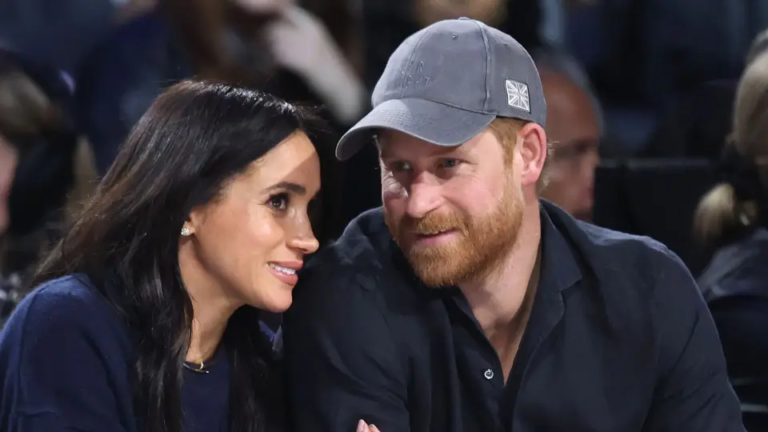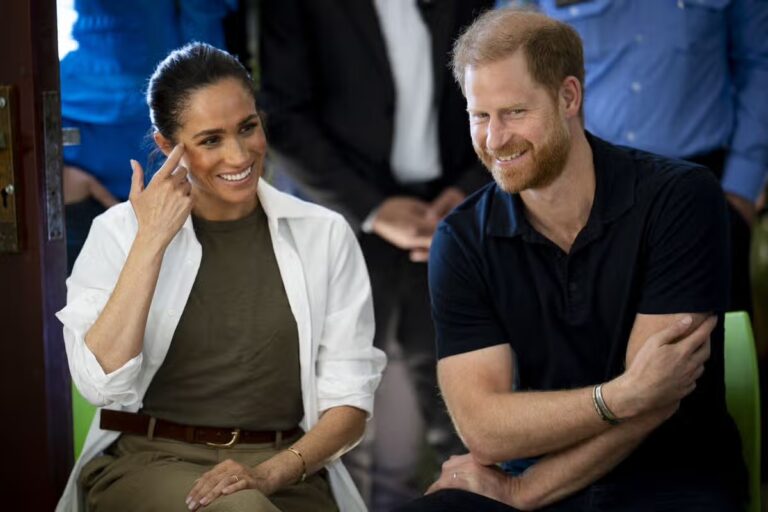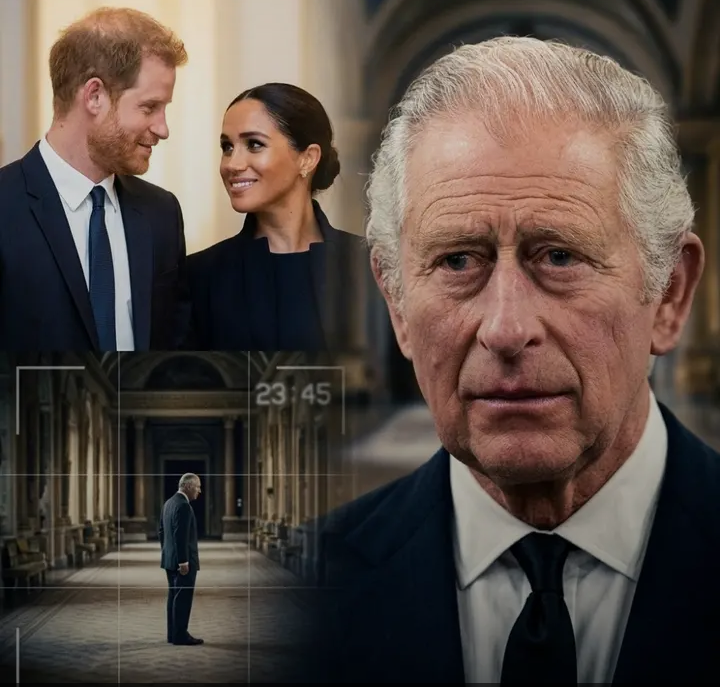
In recent developments surrounding the British royal family, Prince Harry’s reported attempt to arrange a summer reunion with King Charles has been met with a firm and cautious response from the Palace. While the proposal has been publicly framed as a heartfelt effort to reconnect—particularly for the sake of the King meeting his grandchildren—insiders and royal commentators suggest the situation is far more complicated than it appears.
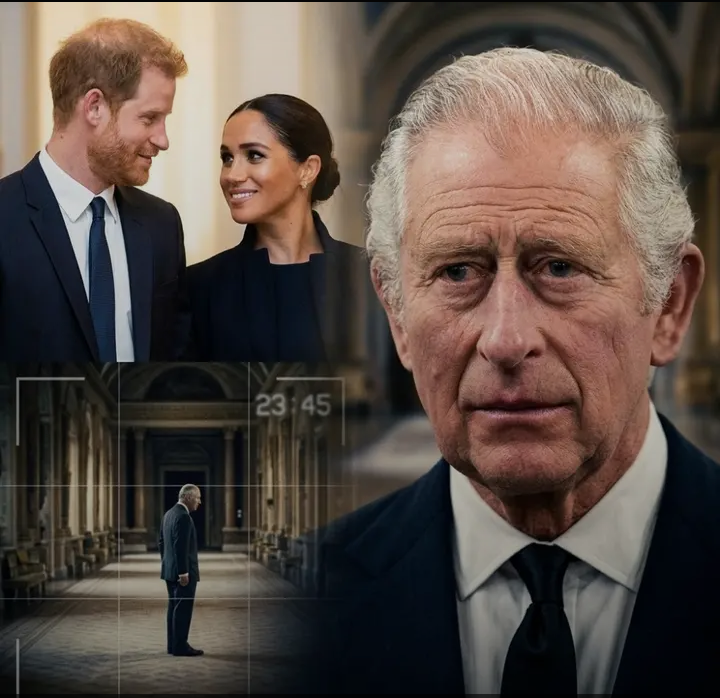
Prince Harry, Meghan Markle Middle East Brawl Exposes Rift
At the center of the issue is not simply whether a meeting will take place, but how it has been approached. According to several reports, Harry did not reach out privately to his father in a traditional or personal manner. Instead, details of the proposed visit emerged through media channels, reportedly via representatives or close sources. This approach has raised eyebrows within royal circles, where discretion and direct communication are typically valued above public messaging.
Prince Harry and Meghan Markle’s Alleged Offer to Princess Eugenie Amid Dad Andrew’s Epstein Scandal — Source
One royal commentator observed that “when family matters are handled through the press, it stops being about family.” This sentiment reflects a broader concern within the Palace: that the method of communication itself undermines trust. For King Charles and senior members of the royal household, the decision to make such intentions public before any private discussion has taken place is seen as both unusual and strategically loaded.
Meghan Markle shares newest look at Archie and Lilibet with Prince Harry in new photo
Trust remains the central issue. Since stepping back from royal duties, Harry has been involved in a series of public disclosures, including interviews and publications that revealed internal family dynamics. These actions, while defended by some as expressions of personal truth, have left lasting damage in terms of confidence. There is a growing reluctance within the royal family to engage in conversations that could later become part of a public narrative.
The request for a meeting at Sandringham has also drawn attention due to the conditions reportedly attached to it. Chief among them is the issue of security. Harry has long argued that his family requires a level of protection comparable to that provided during his time as a working royal. However, under current arrangements, such security is not automatically granted. Critics argue that raising this demand alongside a request for a family visit introduces an additional layer of complexity that makes any agreement more difficult.
From the Palace’s perspective, agreeing to such conditions could set a precedent that blurs the boundaries between private family matters and institutional responsibility. “This isn’t just about a visit,” one analyst noted. “It’s about what that visit represents in terms of status, recognition, and future expectations.” This interpretation suggests that the stakes extend far beyond a single summer meeting.
There is also a growing belief among observers that the timing of this request is not coincidental. With ongoing questions about Harry and Meghan’s public profile and professional ventures, maintaining a connection to the royal family carries significant symbolic value. A reunion—particularly one involving the King—would inevitably attract global attention and potentially reshape public perception.
Some critics go further, suggesting that the public nature of the request places King Charles in a difficult position. If he agrees, he risks reopening unresolved tensions and inviting further scrutiny. If he declines, he may be portrayed as distant or unwelcoming. “It’s a classic pressure tactic,” one media analyst commented. “You create a situation where any response can be interpreted negatively.”
However, not all perspectives are entirely critical. There are those who believe that Harry’s desire to reconnect may still be genuine, even if his approach is flawed. They argue that navigating family relationships under intense global scrutiny is inherently challenging, and that missteps are almost inevitable. “Intentions and methods don’t always align,” one observer noted, suggesting that the situation may be more nuanced than it appears.
Despite these differing views, the Palace’s response has remained consistent: cautious, controlled, and non-committal. There has been no public confirmation of any planned meeting, nor any indication that the reported conditions will be accepted. This measured stance reflects a broader strategy of avoiding escalation while maintaining clear boundaries.
Ultimately, the situation highlights the ongoing tension between private family dynamics and public perception within the modern monarchy. What might, in another context, be a simple request for a visit has become a complex interplay of trust, image, and institutional integrity. The absence of compromise, at least for now, suggests that these underlying issues remain unresolved.
As the summer approaches, attention will likely continue to focus on whether any form of reconciliation is possible. Yet, for many observers, the outcome may matter less than the process itself. The way in which this situation has unfolded—through media, speculation, and competing narratives—has already reinforced one key reality: in today’s royal landscape, even the most personal decisions are rarely private.