The ongoing tensions between Prince Harry and King Charles appear to have reached a new and deeply personal breaking point. What was once seen as a strained but potentially repairable relationship now seems to be hardening into something far more distant. Recent developments suggest that any hopes of a meaningful reconciliation—at least in the near future—have all but collapsed, leaving both sides entrenched in their positions.
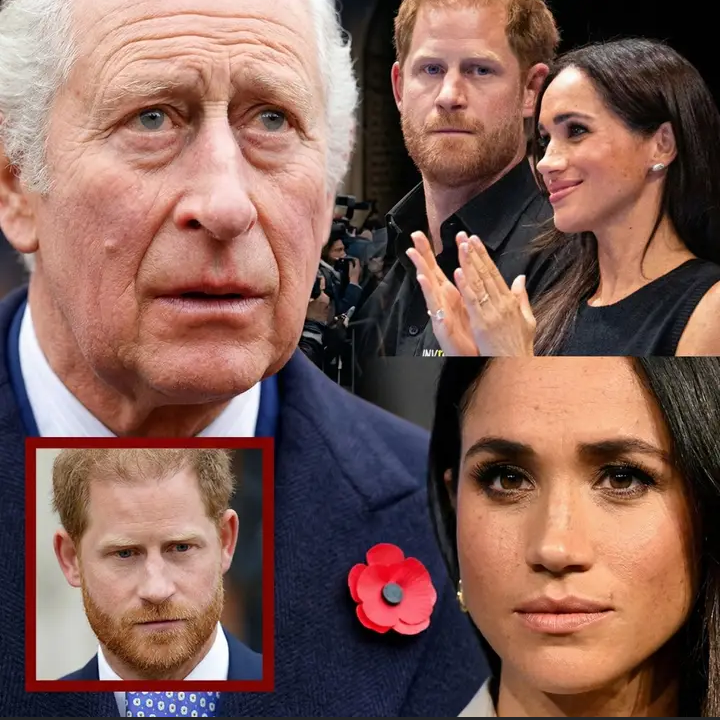
Prince Harry and Meghan Markle’s Departure Brought Charles and Queen Closer
At the center of the controversy lies what many observers describe as a failed attempt by Harry and Meghan to reposition themselves closer to the Royal Family. Reports of a possible return to the UK, framed by some as an effort to reconnect, have instead been interpreted by critics as part of a broader strategy. According to this view, the couple’s intentions were less about emotional healing and more about restoring their public image and influence through renewed royal association.
King Charles Forced Prince Harry to ‘Draw a Line’ With Meghan Markle After Reports the Monarch Doesn’t Know ‘How Much Longer’ He Has Left
This perception has not gone unnoticed within royal circles. King Charles, already navigating the immense pressures of his role and personal health challenges, is said to be deeply affected by the ongoing situation. The idea that private family matters have repeatedly entered the public domain has only added to the strain. For a monarch who values discretion and continuity, such developments are not just inconvenient—they strike at the core of how the institution operates.
What has particularly intensified the situation is the belief that attempts have been made to influence the palace through media pressure. Carefully timed stories, selective leaks, and public statements have created an environment in which private discussions risk becoming public narratives. One royal commentator noted, “It’s not just what is being said, but how it’s being said—and where. That’s what makes it so difficult for trust to rebuild.” This observation reflects a broader concern that communication itself has become part of the conflict.
Trust, once eroded, is notoriously difficult to restore, and this appears to be one of the key obstacles in the current impasse. There are growing indications that King Charles has become increasingly cautious in his interactions with Harry, wary of the potential for private conversations to be exposed or misinterpreted. Past experiences have likely contributed to this mindset, reinforcing a sense of distance that now defines their relationship.
At the same time, Prince William’s stance has reportedly grown even more resolute, further complicating any path toward reconciliation. The already fragile bond between the brothers has deteriorated under the weight of public disclosures and perceived betrayals. For many within the Royal Family, the issue is no longer simply about disagreement, but about maintaining a sense of unity and integrity in the face of ongoing scrutiny.
Public reaction to these developments has been mixed but increasingly vocal. While some continue to sympathize with Harry’s perspective, a significant portion of the audience has expressed frustration with what they see as a pattern of behavior that prioritizes visibility over resolution. “There comes a point where enough is enough,” one observer commented. “If every step toward reconciliation is accompanied by headlines, people begin to question whether reconciliation is really the goal.” Such sentiments highlight the growing divide in how the situation is perceived.
Financial and reputational pressures may also be influencing the Sussexes’ actions. Maintaining relevance outside the structure of the monarchy presents its own challenges, and the appeal of reconnecting—whether symbolically or practically—remains strong. However, without mutual trust and clear boundaries, such efforts risk being interpreted as opportunistic rather than genuine.
For King Charles, the situation represents a difficult balancing act between his roles as a father and as a sovereign. Decisions that might be straightforward in a private context become far more complex when viewed through the lens of public duty. The need to protect the institution, uphold tradition, and manage public perception inevitably shapes the choices he makes, even when they carry personal consequences.
As the story continues to unfold, one thing has become increasingly clear: the relationship between King Charles and Prince Harry has entered a new phase, one defined less by the hope of immediate reconciliation and more by cautious distance. Whether this distance will eventually give way to renewed understanding remains uncertain. For now, however, the sense that “he is no longer King Charles’s Harry” reflects not just a headline, but a deeper shift in a relationship that once seemed unbreakable.